


Encourage Host Roots
When establishing a planting, tuck slenderleaf false foxglove plugs 5–15 cm from shallow-rooted native grasses or forbs so its semi-parasitic roots can easily connect and benefit from shared moisture and nutrients.

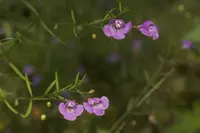
Slenderleaf false foxglove (Agalinis tenuifolia) is a delicate annual wildflower native to much of eastern and central North America. It typically grows in open fields, prairies, and light woodland edges.
Plants have thin, branching stems, very narrow leaves, and small tubular pink to rose flowers that attract late-season pollinators. It is partially parasitic, meaning its roots tap into nearby grasses for some nutrients, which affects how easy it is to establish in gardens.
Because of this hemiparasitic habit, it can be tricky to keep alive without suitable host grasses, so planning site and companions is important when learning how to care for slenderleaf false foxglove. It prefers sunny, well-drained, low-to-moderately fertile soils.

Care Difficulty
Moderate Care

Light Preference
Full Sun

Water Requirements
Moderate Water

Temperature Preference
Cold Hardy

Hardiness Zone
4–9

Soil Texture
Sandy, Loamy, Silty

Soil pH
Acidic (5.5–6.5), Slightly acidic (6.5–7.0)

Soil Drainage
Moist but well-drained

Fertilization
Minimal (feed rarely)
Scan your plant to receive care tips personalized for your specific plant
Available on iOS and Android
This sun-loving annual thrives in open, bright sites with mostly direct exposure.
This species is adapted to dry to moderately moist, well-drained soils and does not like prolonged saturation.
This temperate annual performs best in warm growing seasons and is sensitive to hard frost.
This species grows well in typical outdoor humidity and rarely needs special humidity management.
This hemiparasitic wildflower prefers lean, well-drained mineral soils and does poorly in rich, heavy mixes.
This species is not well suited to container growing and is best established directly in the ground due to its hemiparasitic habit.
This native wildflower usually grows best in lean soils and typically does not need added fertilizer.
Agalinis tenuifolia needs minimal pruning, mainly to keep plants tidy and remove spent material after flowering.
This species is usually grown in the ground; transplant only when necessary because its roots resent disturbance.
Propagation of this hemiparasitic wildflower is usually done by seed rather than vegetative methods.
This short-lived perennial or annual is cold hardy in much of its native range and needs little specific winter care.

Plant Health Check
Not sure what's wrong with your plant? Check your plant's health inside the app.
Many populations rely on the oligolege bee Melissodes agalinis for pollination; this bee specializes on Agalinis species and follows their late-summer blooming period.
This species is hemiparasitic, meaning it photosynthesizes but also taps the roots of nearby grasses and forbs to obtain additional water and nutrients through specialized structures called haustoria.
Agalinis tenuifolia often occurs in dry prairies, open woodlands, and rights-of-way, and its presence can indicate relatively low soil fertility and a history of periodic disturbance such as fire or mowing.

The seeds of Agalinis tenuifolia require a period of cold, moist conditions (cold stratification) to break dormancy, so in natural habitats many seeds remain in the soil seed bank for multiple years until weather patterns create suitable germination conditions.
This species behaves as a true annual. Each plant germinates, grows, flowers, sets seed, and dies within 1 season. Long-term presence in a site depends on successful reseeding rather than individual plant longevity.
Keep your plants happy and healthy with plant identification, disease detection, and easy care guidance.

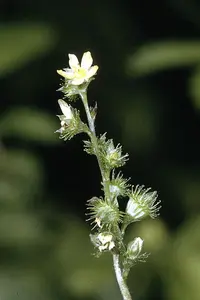
tall hairy agrimony
Agrimonia gryposepala
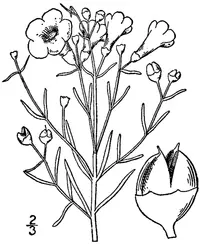
saltmarsh false foxglove
Agalinis maritima
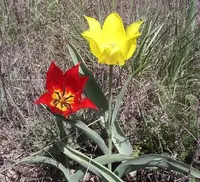
Garden tulip
Tulipa gesneriana
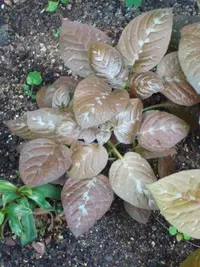
Pseuderanthemum alatum
Pseuderanthemum alatum
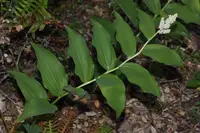
feathery false lily of the valley
Maianthemum racemosum
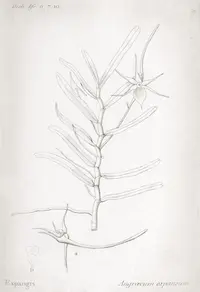
Angraecum expansum
Angraecum expansum
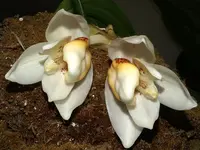
Stanhopea ecornuta
Stanhopea ecornuta
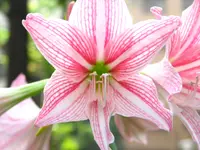
Netted-veined amaryllis
Hippeastrum reticulatum