Metlesics' himantoglossum Care (Himantoglossum metlesicsianum)

About Metlesics' himantoglossum

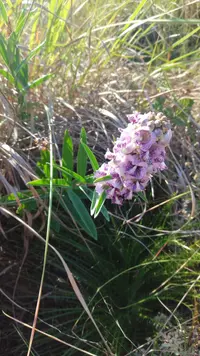
Himantoglossum metlesicsianum, known as Metlesics' himantoglossum, is a terrestrial orchid with a tall, slender flower spike and distinctive, long-lobed flowers. The blooms have intricate markings and a twisted lip that gives the plant a very sculptural look.

This species is native to limited areas in the Mediterranean region, where it grows in open, often calcareous grasslands and light scrub. It has a seasonal growth cycle with a dormant period, which can make it challenging for beginners.

To care for Metlesics' himantoglossum, growers usually need cool to mild conditions, bright but not harsh light, and very well-drained, mineral-rich soil that never stays waterlogged.

Main Plant Requirements

Care Difficulty

Hard Care

Light Preference

Partial Shade

Water Requirements

Moderate Water

Temperature Preference

Cool Climate

Hardiness Zone

Unknown

Soil Texture

Sandy, Loamy, Rocky

Soil pH

Slightly acidic (6.5–7.0)

Soil Drainage

Well-drained

Fertilization

Minimal (feed rarely)

Get Personalized Care Plan

Scan your plant to receive care tips personalized for your specific plant

Available on iOS and Android

How to Care for the Metlesics' himantoglossum

This terrestrial orchid needs bright conditions with mild sun and protection from harsh midday exposure.

  • Provide 4–6 hours of morning sun or late-afternoon sun, with light dappled shade during the strongest midday hours in summer.
  • In its active growth period, Metlesics' himantoglossum thrives in open, lightly shaded sites such as woodland edges or grassland with scattered shrubs.
  • Watch foliage: pale, elongated leaves suggest insufficient light, while scorched or yellowing leaf tips indicate excessive direct midday sun and need for more shade.

This orchid prefers evenly moist but not waterlogged soil, especially during active growth.

  • Water only when the top 2–4 cm of soil feel dry, using a gentle soak that drains freely through the substrate or ground profile.
  • Himantoglossum metlesicsianum needs more moisture in spring and early summer, then gradually reduced watering as foliage yellows and the plant enters dormancy.
  • Signs of excess water include soft, darkened tubers and a sour smell, while persistent leaf droop or wrinkling signals the need for slightly deeper, more thorough watering.

This hardy terrestrial orchid experiences cool winters and mild to warm summers in nature.

  • Aim for 55–75°F (13–24°C) during active growth, with cooler nights that stay above 45°F (7°C) to support strong development.
  • The plant tolerates brief drops to about 23–25°F (-5 to -4°C) when dormant, but prolonged freezes below this range can damage tubers without insulating mulch or snow cover.
  • In summer, growth remains stable up to about 85°F (29°C) if soil stays slightly moist; above this, provide shade and avoid hot, reflective sites that overheat the root zone.

This terrestrial orchid prefers moderately moist air but tolerates the lower humidity found in many homes.

  • Aim for 40–60% humidity to support steady growth and flowering in Metlesics' himantoglossum.
  • Expect curled leaf tips, slow growth, or buds drying before opening when air stays very dry for long periods.
  • Increase humidity with a nearby open tray of water and stones, grouping plants, or using a small humidifier rather than misting leaves.

This species needs a sharply drained yet moisture-retentive mineral-rich mix that prevents waterlogging around the tubers.

  • Use a mix of roughly 40% fine grit or coarse sand, 30% loam, and 30% leafmold or compost to combine drainage with moderate organic matter.
  • Ensure very fast drainage; water should pass through in seconds, leaving the mix just slightly moist rather than wet or compacted.
  • Maintain a slightly alkaline to neutral pH around 7.0–7.8, which matches the calcareous habitats of Himantoglossum metlesicsianum.
  • Improve aeration by avoiding peat-heavy mixes and adding extra grit or fine bark if the medium feels dense or stays wet for more than 1–2 days.

This orchid can be grown in containers if the pot and medium are managed to avoid stagnant moisture around the tubers.

  • Choose a deep, narrow pot so the tubers sit at the correct depth while excess water moves quickly away from the root zone.
  • Use a heavy clay or ceramic pot to keep the tall flowering spikes stable and to reduce sudden swings in moisture levels.
  • Elevate the pot slightly on feet or mesh so drainage holes remain clear and water cannot pool under the container base.

This terrestrial orchid benefits from light, targeted feeding rather than heavy fertilization.

  • Use a balanced, low-strength orchid or general fertilizer (around 10-10-10) diluted to 25–50% of the label rate.
  • Feed during active growth in spring and early summer every 4–6 weeks, only on moist substrate.
  • Avoid compost or heavy organic feeds that can stay wet and rot the tubers.
  • Stop feeding Metlesics' himantoglossum by late summer to allow natural dormancy.

Himantoglossum metlesicsianum needs minimal pruning, focused on hygiene rather than shaping.

  • Cut back spent flowering spikes at the base after the seeds mature, using clean, sharp scissors or pruners.
  • Remove only clearly dead, diseased, or yellowed leaves to limit infection risk and maintain airflow.
  • Avoid cutting green, healthy foliage since it supports tuber energy storage for next year’s growth.
  • Disinfect tools with alcohol before and after use to reduce spread of fungal and bacterial problems.

This orchid resents disturbance, so repotting or transplanting must be done rarely and carefully.

  • Consider transplanting only if growth declines, roots circle the pot, or drainage stays poor despite careful watering.
  • Plan any move for late summer to early autumn, once foliage naturally dies back and the plant is dormant.
  • Typically shift to a fresh, free-draining mineral-rich mix every 3–4 years rather than increasing pot size.
  • Handle tubers gently, keep them at the same depth, water lightly after replanting, and maintain stable conditions to reduce shock.

Propagation of Himantoglossum metlesicsianum is specialized and usually left to conservation or expert growers.

This hardy terrestrial orchid usually tolerates normal outdoor winters in suitable climates with modest protection.

  • In cold regions, add a light, dry mulch layer (fine bark, leaf litter) over the dormant tuber zone after foliage dies back.
  • Ensure soil or substrate drains well so tubers do not sit in cold, saturated conditions that promote rot.
  • Container-grown plants in very cold or wet climates can be overwintered in a cold, frost-free, bright shelter.

Care Tips

Mesh pot lining

Line slotted orchid pots with a fine plastic or nylon mesh before adding the medium to prevent the fine roots and tubers from escaping while still allowing strong aeration around the root zone.

Shaded summer protection

Move plants in containers to a bright but lightly shaded position during the hottest part of summer and use a shade cloth of about 30% density to reduce stress and leaf scorch on this cool-growing terrestrial orchid.

Careful tuber division

Divide clumps only when multiple healthy tubers are visible, gently separating them by hand and replanting each with its growth point just below the surface to maintain flowering performance.

Winter rain management

In regions with very wet winters, keep containers under a rain shelter or cold frame to prevent waterlogging of the resting tubers while still allowing good air circulation.

Targeted slug control

Place physical barriers such as copper tape around pots and set simple beer traps nearby before buds emerge, since preventive slug and snail control is often more effective than treating damage after it appears when caring for Metlesics' himantoglossum.

Common Pests and Diseases

Aphids

This pest feeds on tender flower stalks and buds, sucking sap and causing distortion and sticky honeydew on Himantoglossum spikes.

Solution

Rinse colonies off gently with a focused stream of water, then spot-treat remaining clusters with insecticidal soap or a ready-to-use neem oil spray, avoiding open flowers when possible. Reduce excess nitrogen fertilization and encourage natural predators such as lady beetles by avoiding broad-spectrum insecticides nearby.

Slugs and snails

These pests chew irregular holes in leaves and can strip young rosettes and emerging flowering shoots, especially in moist, shaded orchid habitats.

Solution

Hand-pick at dusk or after rain, and use physical barriers such as copper tape or sharp grit around individual plants. If damage is severe, place iron phosphate slug pellets at a distance from the plants, following label instructions to protect wildlife.

Spider mites

This pest becomes a problem in hot, dry conditions, causing fine webbing and pale, stippled leaves on stressed plants, especially in cultivation or under cover.

Solution

Increase humidity around plants, then wash foliage gently with water to dislodge mites and webbing. Follow with repeated applications of insecticidal soap or a light horticultural oil to the undersides of leaves, checking nearby orchids for spread as part of broader Himantoglossum metlesicsianum care.

Fungal leaf spots

This disease produces small, dark, sometimes concentric spots on leaves that may merge into larger patches under cool, wet conditions.

Solution

Remove and discard affected leaves and plant debris, and avoid overhead watering to keep foliage as dry as possible. Improve air movement and, if spotting continues to spread, apply a targeted fungicide labeled for ornamental orchids during the plant’s active growth period.

Viral mosaic

This disease causes mottled, streaked, or distorted leaves and flowers, often with reduced vigor and irregular flowering over several seasons.

Solution

Remove and destroy suspicious plants, as viral infections are not curable in orchids. Disinfect cutting tools between plants with 70% alcohol or a bleach solution, and avoid sap transfer by not reusing potting material from infected specimens.

Interesting Facts

Critically narrow range

This orchid is endemic to a very small area in eastern Crete, meaning it occurs naturally nowhere else in the world and occupies only a handful of sites within that region.

Hybrid origin hypothesis

Many botanists consider this species likely of hybrid origin, probably involving Himantoglossum samariense and another closely related taxon, based on intermediate floral features and genetic data.

Long, twisted lip

Its flowers have a characteristically elongated, ribbon-like labellum (lip) that often twists and curls, creating the distinctive lizard- or man-shaped appearance typical of this group of orchids but with a particularly exaggerated form in this species.

Botan icon

Did you know?

The species was only formally described in the early 2000s, making it one of the more recently recognized large European orchids, and its discovery highlighted how incompletely documented the Mediterranean orchid flora still is, even in relatively well-studied regions.

FAQs about Metlesics' himantoglossum

This orchid usually flowers once per year, producing a single flowering spike in late spring or early summer. After blooming, it enters a rest period. Reblooming in the same year is rare, even under excellent cultivation conditions.

Grow Healthy Plants with Botan Care

Keep your plants happy and healthy with plant identification, disease detection, and easy care guidance.

Botan plant care app — identify plants on mobile

Explore More Plants