Angraecum expansum Care

Angraecum expansum

About Angraecum expansum

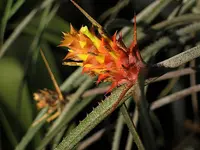
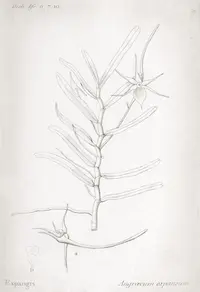
Angraecum expansum is an epiphytic orchid, typically growing on trees rather than in soil. It forms compact clumps with fleshy leaves and thick, aerial roots.

The plant produces star-shaped, usually pale flowers that are often night-scented and adapted for moth pollination. It is native to Madagascar, where it grows in warm, humid forests.

This species can be moderately challenging, as it dislikes stagnant moisture yet needs constant humidity and good air flow. Understanding how to care for Angraecum expansum starts with providing stable warmth, bright filtered light, and an open, fast-draining orchid medium.

Main Plant Requirements

Care Difficulty

Hard Care

Light Preference

Bright Indirect Light

Water Requirements

Regular Water

Temperature Preference

Tropical / Frost Sensitive

Hardiness Zone

12–13

Soil Texture

Sandy, Organic-rich

Soil pH

Acidic (5.5–6.5)

Soil Drainage

Well-drained

Fertilization

Light (every 4–6 weeks)

Get Personalized Care Plan

Scan your plant to receive care tips personalized for your specific plant

Available on iOS and Android

How to Care for the Angraecum expansum

This orchid prefers bright, gentle light that mimics high, broken forest canopy conditions.

  • Provide 6–8 hours of bright, filtered light each day, such as dappled shade outdoors or shaded greenhouse conditions, for stable flowering of Angraecum expansum.
  • Allow soft morning sun but protect from strong midday and afternoon sun; leaves should stay medium green, not yellowed or bleached.
  • In summer, shift slightly deeper into shade; in winter, move to a brighter position or use supplemental light if days are very short.

Watering should keep roots evenly moist but never stagnant or waterlogged.

  • Water when the potting mix or mount surface feels just barely dry, typically after the top 2–3 cm have dried, then flush thoroughly so water runs freely through.
  • Reduce watering frequency in cooler months, allowing a slightly longer dry interval; increase in warm, bright weather while still avoiding constant saturation.
  • Watch roots and leaves: firm, silvery roots and plump leaves indicate good hydration, while black, mushy roots or yellowing lower leaves suggest overwatering and poor drainage.

This species grows best in warm to intermediate conditions with stable, frost-free temperatures.

  • Aim for 65–80°F (18–27°C) by day and 60–68°F (16–20°C) at night for steady growth and flowering.
  • Protect from cold; growth slows below about 55°F (13°C), and extended exposure under 50°F (10°C) can cause leaf damage or root stress.
  • In hot spells above 85°F (29°C), increase air movement and humidity and keep it shaded from harsh sun to prevent heat stress and leaf scorch.

This orchid prefers consistently moist air and reacts clearly to low humidity.

  • Aim for 60–80% humidity, as drier air below about 50% slows growth and shortens flower life.
  • Watch for limp, wrinkled leaves and stalled root tips as signs of humidity stress rather than underwatering.
  • Increase humidity with a fine-mist humidifier, humidity tray, or grouping plants, while keeping air gently moving to prevent fungal issues.

This epiphytic orchid grows best in a very airy, fast-draining medium rather than standard potting soil.

  • Use a coarse mix of medium bark, chunky perlite or pumice, and a little sphagnum moss to hold some moisture without clogging air spaces.
  • Aim for slightly acidic to neutral conditions around pH 5.5–6.5, which suits most orchid fertilizers and supports root health.
  • Ensure water drains through in seconds; if the mix stays wet or compacts, increase bark or inert chunks to improve aeration.
  • Avoid dense peat, garden soil, or fine compost, which suffocate roots and quickly lead to rot in Angraecum expansum.

This species is well suited to container growing when the pot supports its epiphytic root system.

  • Choose a heavy or wide-based pot to prevent tipping as the plant becomes taller and more one-sided in growth.
  • Use slotted or net orchid pots so roots can attach and excess water leaves the medium quickly after watering.
  • Select pot materials like terracotta when extra evaporation is helpful, or plastic in drier homes to slow moisture loss from the mix.

This orchid benefits from light, consistent feeding during active growth while avoiding salt buildup in the medium.

  • Use a balanced orchid fertilizer (around 20-20-20) diluted to 1/4–1/2 strength in low-mineral water.
  • Feed Angraecum expansum every 2–3 weeks during the warm, bright growing season.
  • Reduce feeding to 1× month or stop entirely in winter when growth slows.
  • Flush the pot with plain water monthly to remove accumulated fertilizer salts.

This species needs only minimal pruning focused on hygiene rather than shaping.

  • Carry out any pruning at the end of flowering or during active growth, not in mid-winter rest.
  • Remove dead flower spikes at the base with clean, sharp scissors or snips.
  • Trim only dead, shriveled, or blackened roots and leaves to limit infection risk.
  • Avoid cutting healthy green pseudostems to preserve future flowering potential and plant form.

This epiphytic orchid prefers infrequent repotting, mainly when the medium breaks down or roots outgrow the pot.

  • Check for crowded, circling roots, declining vigor, or soggy, decomposed bark as signs it needs repotting.
  • Plan to repot every 2–3 years, ideally in spring as new roots begin to emerge.
  • Gently tease roots free, remove dead or mushy roots, and place into fresh, airy orchid bark with good drainage.
  • Water lightly for 1–2 weeks after repotting to limit root stress, then resume normal watering once new growth appears.

Propagation is possible but slow and usually reserved for experienced growers or specialized collections.

  • Division is the most practical method, done in spring when new roots start.
  • Select a healthy clump of Angraecum expansum and divide so each section has at least 3–4 strong growths and active roots.
  • Pot divisions into fine, moist, well-drained orchid bark and maintain high humidity (60–70%) with bright, indirect light.
  • Avoid heavy watering until new root tips and fresh leaf growth show that divisions have re-established.

This orchid is frost-sensitive and must be kept above freezing in winter conditions.

  • Maintain indoor temperatures around 60–70°F in winter, avoiding cold drafts and sudden drops.
  • Move container plants indoors before outdoor temperatures fall below 55°F.
  • Provide bright, filtered light and slightly drier conditions while growth slows.
  • Ensure good air circulation to prevent fungal issues in cool, low-evaporation conditions typical of winter.

Care Tips

Mounting strategy

Mount plants on cork or hardwood with a thin pad of long-fiber sphagnum only around the roots, leaving root tips exposed so they dry quickly and stay well aerated.

Airflow management

Position a small, quiet fan to create constant gentle air movement across leaves and roots, which helps prevent fungal spotting and keeps mounted roots healthy in high humidity setups.

Root-friendly hydration

Use a fine-mist sprayer to wet aerial roots in the morning until they turn from silvery to green, then allow them to dry fully by evening to reduce rot risk.

Repotting timing

Schedule repotting or remounting just as new root tips start to appear so the plant can anchor quickly into fresh material with minimal setback while growing Angraecum expansum.

Light acclimation

Increase light levels gradually over 2–3 weeks by moving the plant a little closer to the light source every few days, watching for slight leaf yellowing as the upper safe limit rather than sudden scorch.

Common Pests and Diseases

Scale insects

This pest attaches firmly to leaves, roots, and flower spikes, appearing as small brown or whitish bumps and excreting sticky honeydew. Symptoms include yellowing leaves, weakened growth, and sooty mold growing on the honeydew in humid growing areas.

Solution

Remove heavily infested leaves or spikes and gently scrape or wipe insects from roots and leaves with cotton swabs dipped in isopropyl alcohol, taking care not to damage the velamen (the spongy root covering). Improve air movement, reduce overcrowding, and repeat alcohol swabbing weekly until no new scale appears; in severe cases, use a systemic insecticide labeled for orchids according to directions.

Mealybugs

These insects form white, cottony clusters at leaf bases, on flower stems, and around the roots, often hiding in tight crevices of the compact plant. This pest feeds on sap, causing leaf yellowing, distorted new growth, and a general decline in vigor.

Solution

Isolate affected plants, then dab visible mealybugs with isopropyl alcohol on cotton swabs and rinse gently with lukewarm water to remove residues. Inspect leaf bases, behind labels, and root zones weekly, repeating alcohol treatments and, if needed, applying a low-toxicity systemic insecticide until no new insects are seen; this is a core step in Angraecum expansum care instructions.

Bacterial leaf rot

This disease causes rapidly expanding, water-soaked, translucent patches on leaves that may turn brown and emit a foul odor, especially under high humidity and poor air circulation. Symptoms include sudden leaf collapse starting from a damaged area or water-sitting point.

Solution

Immediately remove and discard affected leaf sections with a sterile blade, cutting well into healthy tissue, and keep cuts dry. Improve air movement, keep water off the foliage, avoid overhead watering late in the day, and treat nearby leaves with a bactericide labeled for orchids if the spread continues.

Fungal leaf spots

This disease presents as small, dark, often circular spots on leaves that may merge into larger blotches under cool, damp conditions. Symptoms include cosmetic damage and, in severe cases, premature leaf drop that weakens flowering.

Solution

Trim out badly spotted leaves or sections with sterilized tools and keep the plant drier on the foliage while maintaining root moisture. Increase spacing and airflow, avoid extended leaf wetness, and apply a broad-spectrum fungicide labeled for orchids if new spots keep appearing.

Spider mites

These insects thrive on Angraecum kept too dry and warm, leading to fine webbing on leaf undersides, silvery stippling, and a dull, dusty appearance. Symptoms include gradual leaf yellowing and reduced vigor, often starting on older foliage.

Solution

Rinse both sides of the leaves thoroughly with a firm stream of lukewarm water and gently wipe to remove mites and webbing, repeating every few days for several cycles. Raise ambient humidity to 50–70%, improve air movement without drafts, and, if infestation persists, use a miticide or insecticidal soap labeled for mites, applied to all leaf surfaces and repeating as directed.

Interesting Facts

Madagascar upland specialist

This species is native to the highlands of eastern Madagascar, where it grows as an epiphyte on trees in moist evergreen forest, often in cooler, misty conditions compared with many lowland tropical orchids.

Unusual flower posture

Its greenish to cream flowers are held on short, stiff pedicels that keep them slightly outward and downward from the stem, a posture thought to expose the nectar spur more effectively to visiting moths at night.

Variable spur length

The nectar spur of this orchid is relatively thick and moderately long compared with some other Angraecum species, and shows noticeable variation in length between individuals, which may reflect adaptation to different local hawkmoth pollinators.

FAQs about Angraecum expansum

This species typically blooms once a year, often in the cooler or drier season in its native range. Flowering is concentrated but may last several weeks when the plant is mature and growing well.

Grow Healthy Plants with Botan Care

Keep your plants happy and healthy with plant identification, disease detection, and easy care guidance.

Botan plant care app — identify plants on mobile

Explore More Plants