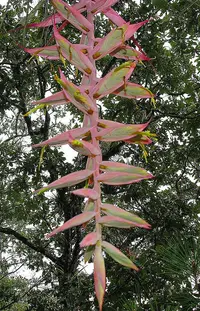
saltmarsh false foxglove Care (Agalinis maritima)

saltmarsh false foxglove

About saltmarsh false foxglove

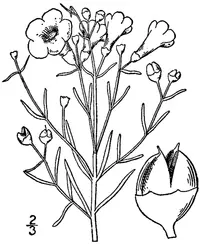
Saltmarsh false foxglove (Agalinis maritima) is a small, annual wildflower native to coastal salt marshes of eastern North America. It typically grows in low clumps with slender, branching stems.

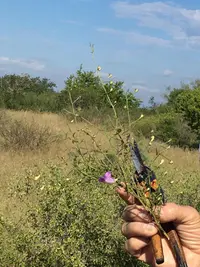
The plant bears delicate, tubular pink to purple flowers that resemble true foxgloves, often blooming late in summer. Fine, narrow leaves and a somewhat airy habit give it a light, open look.

Agalinis maritima is a hemiparasitic species, meaning it taps into nearby plant roots for some of its nutrients. This trait makes it more challenging to cultivate in gardens.

Those who want to learn how to care for saltmarsh false foxglove should know it prefers sunny, open sites with consistently moist, salty or brackish soils similar to its natural marsh habitat.


Main Plant Requirements

Care Difficulty

Hard Care

Light Preference

Full Sun

Water Requirements

Aquatic

Temperature Preference

Cool Climate

Hardiness Zone

5–9

Soil Texture

Sandy, Silty, Organic-rich

Soil pH

Slightly acidic (6.5–7.0), Neutral (7.0)

Soil Drainage

Waterlogged tolerant

Fertilization

Minimal (feed rarely)

Get Personalized Care Plan

Scan your plant to receive care tips personalized for your specific plant

Available on iOS and Android

How to Care for the saltmarsh false foxglove

This coastal annual needs strong sun to flower and stay compact.

  • Provide full sun for 6–8 hours daily; saltmarsh false foxglove thrives in open, unshaded sites near coasts and tidal marshes.
  • Plant where it receives early morning to midafternoon sun; light dappled shade late in the day is acceptable but dense shade reduces bloom and weakens stems.
  • Avoid shading by taller vegetation; in late summer, monitor encroaching plants and remove or trim them so the canopy stays open.

This species is adapted to moist, sometimes saturated, coastal soils rather than strict watering routines.

  • Aim for consistently moist soil; allow only the top 1–2 cm to lose surface sheen before the next tidal or irrigation event if grown away from marsh edges.
  • Choose sandy or loamy soil with good drainage but regular moisture; Agalinis maritima declines in compacted, stagnant water with a sulfur smell, a sign of poor aeration.
  • Watch foliage for cues: grayish, drooping leaves and slow growth indicate drought stress, while yellowing, soft stems suggest chronic overwatering or low-oxygen roots.

This coastal annual prefers mild to warm conditions and does poorly with hard frost.

  • Best growth occurs around 65–80°F (18–27°C), especially during the main growing and flowering period in summer.
  • Plants tolerate short heat spells up to about 90°F (32°C) if soil moisture is stable, but prolonged extremes above this can stunt growth and shorten flowering.
  • Treat it as frost-sensitive; temperatures near 32°F (0°C) can damage or kill plants, so germination and establishment should follow the last expected frost in your area.

This coastal annual prefers humid air but tolerates short dry spells if soil moisture is stable.

  • Aim for 50–80% humidity, similar to moist coastal air, especially in warm weather.
  • Dry indoor air can cause leaf yellowing and faster wilting, especially during flowering.
  • Increase humidity outdoors with grouped pots or shallow water trays nearby, avoiding direct misting on flowers.

This species needs loose, sandy to sandy-loam soil with consistent moisture and high aeration.

  • Use a mix of roughly 60% sand, 20–30% loam or compost, and 10–20% fine grit to mimic coastal substrates.
  • Ensure rapid drainage; soil should feel moist but never waterlogged, or roots may rot and growth will stall.
  • Aim for slightly acidic to neutral pH around 6.0–7.0, avoiding strongly alkaline conditions that lock up nutrients.
  • Avoid heavy clay or compacted soil; lighten dense mixes with coarse sand and fine gravel to improve air spaces.

This species can be grown in containers if the pot replicates its shallow, fast-draining coastal habitat.

  • Select a wide, shallow pot to match its relatively fine root system and prevent prolonged saturation at depth.
  • Choose unglazed terracotta over plastic if extra evaporation is needed to keep the mix airy in wet climates.
  • Raise containers on pot feet or bricks so drainage holes stay clear and excess water escapes rapidly after rain or watering.

This coastal annual is adapted to low-nutrient soils and usually needs no fertilizer when grown in natural or similar conditions.

Agalinis maritima requires only minimal pruning, mainly to keep plants tidy and healthy.

  • Cut back spent flower stems in late summer or early fall to neaten appearance and reduce self-seeding if desired.
  • Remove dead, diseased, or storm-damaged shoots as needed using clean, sharp scissors or hand pruners.
  • Avoid heavy structural pruning, since plants are short-lived annuals and major cutting does not improve performance.

This species is rarely kept in containers; focus on careful outdoor transplanting of nursery-grown seedlings.

  • Transplant in early spring or early fall, when temperatures are mild and soil is consistently moist but not waterlogged.
  • Look for crowded plug trays or roots circling small cells as a cue that seedlings should be moved into the ground.
  • Handle roots gently, disturbing them as little as possible, and water thoroughly after planting to reduce transplant shock.
  • Space plants in sandy, well-drained, slightly salty soil that mimics natural saltmarsh conditions for best establishment.

Saltmarsh false foxglove is typically propagated from seed under conditions that mimic its coastal habitat.

  • Sow fresh seeds in late fall or very early spring so they experience natural cold, which can improve germination.
  • Use a gritty, well-drained, low-fertility mix and keep it evenly moist, not saturated, under bright light.
  • Press seeds onto the surface; many germinate better with light, so avoid deep covering with soil.
  • Transplant young seedlings carefully once they have several true leaves, minimizing root disturbance to support establishment.

This annual completes its life cycle in one season, so mature plants generally need no specific winter care.

  • Allow some seedheads to dry and drop in place if natural reseeding is desired for the next year.
  • In restoration or garden settings, avoid heavy winter soil disturbance so seeds remain in the upper soil layer.
  • Container-grown seedlings in cooler regions can be overwintered in a cold frame to buffer extreme temperature swings.

Care Tips

Salinity Management

If planting inland, periodically top-dress the bed with a small amount of washed sea salt or saline irrigation water to mimic coastal conditions, but test the soil first and increase salinity gradually to avoid shocking the roots.

Host Plant Pairing

Establish compatible native grasses or small forbs nearby, such as saltmeadow cordgrass, to support this hemiparasitic species, then sow seeds of saltmarsh false foxglove close to the host roots so the young plants can form haustorial connections.

Tidal Moisture Simulation

In non-tidal gardens, water in a cycle that allows the soil to be moist and then briefly on the drier side, rather than constantly wet, to emulate the fluctuation of natural saltmarsh conditions.

Seed Bank Renewal

Allow some plants to complete their full life cycle and shed seed in place each year, then avoid deep cultivation of the area so the natural seed bank can maintain a self-sustaining population.

Low-Competition Zones

Create narrow, open strips in the planting area with minimal tall competition and only low-growing hosts, since caring for saltmarsh false foxglove is easier when it is not heavily shaded or crowded by aggressive perennials.

Common Pests and Diseases

Leaf spot fungi

This disease causes small tan to dark-brown spots on leaves that may merge and lead to premature leaf drop, especially in warm, humid coastal weather. Symptoms include thinning foliage and reduced vigor in stressed plants.

Solution

Remove and discard heavily spotted foliage to reduce inoculum, and avoid overhead watering in garden or restoration plantings. Improve air movement around clumps and, if disease is persistent in high-value conservation settings, a targeted application of a broad-spectrum fungicide labeled for ornamental wildflowers may be used according to local regulations.

Powdery mildew

This disease appears as a white or grayish, powder-like coating on leaves and young stems, often during late summer when nights are cool and humidity is high. Symptoms include distorted growth and gradual decline in photosynthesis if coverage becomes heavy.

Solution

Increase spacing between plants and reduce shade to lower humidity around foliage, and remove the most affected shoots to slow spread. In sites where powdery mildew recurs, apply a preventative sulfur or potassium bicarbonate product labeled for ornamentals, following label directions carefully.

Aphids

These insects feed on tender stems and flower stalks, causing slight curling, yellowing, or stunting, and may be accompanied by sticky honeydew on nearby foliage. This pest is typically most noticeable on lush growth in nutrient-enriched or disturbed saltmarsh edges.

Solution

Dislodge colonies by spraying plants with a firm stream of clean water and, where feasible, encourage natural predators such as lady beetles by avoiding broad-spectrum insecticides nearby. If populations remain high on small plantings, spot-treat with an insecticidal soap or horticultural oil, applied in the cooler part of the day and rinsed from leaves if salt residue accumulates.

Salt marsh grasshoppers

These insects chew irregular holes and notches in leaves and can rapidly defoliate small clumps during late summer in some marsh systems. Symptoms include ragged foliage and in severe cases partial loss of flowering stems.

Solution

For small restoration or garden plots, hand-collect grasshoppers in the cool morning and exclude them with fine mesh or floating row cover where site conditions permit. In larger conservation settings, manage surrounding vegetation structure to support natural predators and birds, and avoid unnecessary nitrogen enrichment that can attract dense grasshopper populations.

Stem borers

These insects tunnel inside stems, causing wilting, browning, or breakage of individual shoots, sometimes with small entry holes or frass visible. Symptoms include scattered dead stems even when roots and surrounding foliage appear healthy.

Solution

Promptly cut and remove wilted or hollow stems below the borer tunnel and discard them away from the site to break the life cycle. In small, carefully managed populations, monitoring for early wilting and removing affected stems is usually sufficient, while systemic insecticides should be avoided in conservation plantings due to non-target impacts.

Interesting Facts

Specialized saltmarsh habitat

This species is naturally restricted to coastal saltmarshes and brackish shorelines along the Atlantic, where it tolerates saline and periodically flooded soils that would quickly kill many other flowering plants.

Hemiparasitic lifestyle

Agalinis maritima is hemiparasitic, meaning it can photosynthesize but also taps into the roots of neighboring plants with specialized organs called haustoria to obtain additional water and dissolved nutrients.

Late-season nectar source

The pink, tubular flowers appear mainly in late summer to early fall and provide nectar for bees and other insects at a time when many other saltmarsh plants have already finished flowering, supporting late-season pollinators in coastal ecosystems.

Botan icon

Did you know?

Along much of its North American range, Agalinis maritima is considered regionally rare or declining because of coastal development, marsh drainage, and sea-level rise, and in some states it is formally listed as threatened or endangered, making its remaining natural populations a conservation concern.

FAQs about saltmarsh false foxglove

This species is a short-lived annual. It completes its life cycle in one growing season, then dies after setting seed. For continued presence in the garden, allow seed to mature and self-sow each year.

Grow Healthy Plants with Botan Care

Keep your plants happy and healthy with plant identification, disease detection, and easy care guidance.

Botan plant care app — identify plants on mobile

Explore More Plants