Stanhopea ecornuta Care

Stanhopea ecornuta

About Stanhopea ecornuta

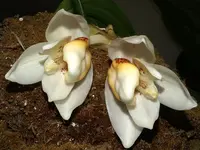
Stanhopea ecornuta is a tropical orchid species known for its dramatic, pendant flower spikes that emerge downward from the pot or basket. The large, waxy flowers are usually cream to yellow with contrasting markings and a strong, complex fragrance that appears for only a short blooming period.

This orchid grows as an epiphyte, anchoring its thick pseudobulbs and roots onto bark or other coarse material rather than typical potting soil. It occurs naturally in parts of Central and South America, in warm, humid forests with good air movement. Gardeners who want to learn how to care for Stanhopea ecornuta should be prepared to provide stable humidity, shade to bright filtered light, and regular moisture with excellent drainage.

Main Plant Requirements

Care Difficulty

Hard Care

Light Preference

Partial Shade

Water Requirements

Keep Soil Moist

Temperature Preference

Tropical / Frost Sensitive

Hardiness Zone

Unknown

Soil Texture

Peaty, Organic-rich

Soil pH

Acidic (5.5–6.5)

Soil Drainage

Moist but well-drained

Fertilization

Moderate (every 2–4 weeks)

Get Personalized Care Plan

Scan your plant to receive care tips personalized for your specific plant

Available on iOS and Android

How to Care for the Stanhopea ecornuta

This orchid prefers bright, filtered light that mimics high-canopy forest conditions.

  • Provide 6–8 hours of bright, indirect light each day, such as dappled shade under a tree or 40–60% shade cloth.
  • Allow gentle morning sun but protect from strong midday and afternoon sun, which can scorch leaves and pseudobulbs.
  • In summer, increase shade slightly; in winter, reduce shading so Stanhopea ecornuta still receives enough light for flowering.

Watering should keep the roots moist but never stagnant in heavy, airless media.

  • Irrigate thoroughly when the top 2–3 cm of the medium feels just barely dry, letting excess drain out completely.
  • Increase watering frequency in active growth and warm weather; reduce slightly in cooler months while avoiding a full dry-out.
  • Watch for yellowing, soft pseudobulbs as a sign of overwatering and shriveled, wrinkled pseudobulbs as an indicator of underwatering.

This species performs best in intermediate to warm conditions with a clear day–night drop.

  • Aim for daytime temperatures of 70–80°F (21–27°C) and nights around 60–65°F (16–18°C) during active growth.
  • Avoid temperatures below 50°F (10°C); brief drops to 45°F (7°C) may be tolerated but risk stress and slowed growth.
  • Protect from heat above 90°F (32°C) with shade and increased air movement, as excessive heat combined with high light can scorch tissues.

This orchid needs high, stable humidity to flower and maintain healthy foliage.

  • Aim for 60–80% humidity; it tolerates brief dips to 50% but not prolonged dry air.
  • Crisping leaf tips, stalled growth, and buds aborting before opening indicate humidity stress.
  • Use a cool-mist humidifier, grouped plants, and an open-mesh basket over damp LECA or pebbles to raise humidity without waterlogging.

Stanhopea ecornuta grows best in a very loose, airy, fast-draining epiphytic mix rather than traditional soil.

  • Use a chunky mix of medium orchid bark, sphagnum moss, and perlite or pumice to keep roots aerated.
  • Ensure water drains within seconds; the mix should feel springy and open, never compact or muddy.
  • Aim for slightly acidic to neutral conditions, around pH 5.5–7, which suits most orchid bark-based media.
  • Avoid fine potting soil, peat-heavy mixes, or materials that stay soggy and restrict oxygen around the roots.

This species is very suitable for container growing in hanging baskets or perforated pots that allow flowers to emerge downward.

  • Choose a wide, shallow basket so new growths have horizontal space while the medium stays evenly aerated.
  • Line basket sides lightly with coarse coconut husk or mesh so the mix stays in place but air still moves freely.
  • Suspend the basket from a secure hook or frame to keep the plant stable when heavy, pendulous flower spikes develop.

This epiphytic orchid benefits from light, targeted feeding during its active growth to support flowering without burning roots.

  • Use a balanced orchid fertilizer (around 20-20-20) diluted to 1/4–1/2 strength in low-mineral water.
  • Feed Stanhopea ecornuta every 2–3 weeks during spring–summer when new pseudobulbs and roots are developing.
  • Stop or greatly reduce feeding in fall–winter, offering only plain water while growth slows.
  • Avoid heavy compost or slow-release pellets in the basket, which can retain excess salts and stay too wet.

Pruning needs for this orchid are minimal and focus on cleanliness rather than shaping.

  • After flowering, remove spent flower spikes at the base using sterile, sharp scissors or pruners.
  • Cut away dead, shriveled pseudobulbs and dry leaf bases to improve air movement and reduce disease risk.
  • Trim only clearly damaged or rotting tissue, leaving healthy bulbs and leaves to support future flowering.
  • Disinfect tools with alcohol before and between cuts to limit spread of fungal or bacterial problems in Stanhopea ecornuta.

This orchid prefers to stay undisturbed and is typically grown in slatted baskets or net pots that allow downward flower spikes.

  • Plan to repot or remount every 2–3 years, or when the medium has broken down or roots severely crowd the basket.
  • Best timing is late winter to early spring, just before active root growth starts, to reduce stress on Stanhopea ecornuta.
  • Gently tease roots free, remove decayed medium, and place the plant so new growths face the open side of the basket.
  • Use a coarse, fast-draining mix such as large bark and sphagnum, keep shading moderate, and water lightly for 1–2 weeks after disturbance.

Propagation of this orchid is done mainly by careful division of mature clumps rather than by seed at home.

  • Divide only well-established plants with at least 6–8 healthy pseudobulbs to maintain vigor after separation.
  • Carry out division in late winter or early spring, aligning with the start of new root growth for faster recovery.
  • Use a sterile, sharp knife to separate sections with 3–4 bulbs each, keeping attached roots as intact as possible.
  • Re-establish divisions in airy baskets with coarse orchid mix, warm temperatures, and high humidity (60–80%) to encourage new roots.

This tropical orchid is not frost tolerant and needs sheltered winter conditions in most temperate climates.

  • Move basket-grown plants indoors or into a heated greenhouse before temperatures drop below 50°F.
  • Maintain a cool to intermediate range of about 55–65°F in winter to suit Stanhopea ecornuta while it rests.
  • Reduce watering so the medium approaches dryness between waterings, but do not allow pseudobulbs to shrivel severely.
  • Ensure good air movement and avoid cold drafts around foliage to limit fungal issues in low winter light.

Care Tips

Choose perforated baskets

Grow plants in shallow, rigid baskets with large side slits so the downward-facing spikes can emerge freely without deforming or rotting inside the medium.

Layered, loose potting

When repotting, place coarser bark or clay pellets at the bottom and finer material on top to keep the core evenly moist while allowing the thick roots and flower spikes to move through the mix without obstruction.

Secure plant firmly

Tie rhizomes gently to the basket frame with soft ties so new growth points stay stable, which reduces root damage and helps developing spikes push straight through the medium.

Use hanging orientation

Suspend the basket so the base is level with your eyes or higher, giving flower spikes enough vertical space to hang fully and reducing accidental breakage during caring for Stanhopea ecornuta.

High-airflow placement

Position plants where a gentle, constant air current can pass through the basket from side to side, which helps the fleshy roots dry evenly and reduces fungal spotting on buds and blooms.

Common Pests and Diseases

Spider mites

This pest thrives on Stanhopea foliage in warm, dry air and can build up quickly on the undersides of leaves in basket-grown plants. Symptoms include fine webbing, dull or stippled leaves, and gradual leaf yellowing.

Solution

Increase humidity around the plant, rinse foliage thoroughly with a strong but gentle stream of lukewarm water, and repeat weekly until numbers drop. For persistent infestations, use a horticultural oil or insecticidal soap labeled for orchids, ensuring thorough coverage of leaf undersides while improving air movement to help the plant dry quickly after treatment.

Scale insects

These insects often settle on pseudobulbs, leaf midribs, and flower spikes, feeding on sap and excreting sticky honeydew that encourages sooty mold. Symptoms include small, dome-shaped or flattened bumps that can be scraped off and slowed growth of the plant.

Solution

Manually remove visible scale with a cotton swab dipped in isopropyl alcohol, focusing on crevices around pseudobulbs and under leaf sheaths. Follow up with several applications of insecticidal soap or a light horticultural oil at 7–10 day intervals, and isolate the plant from other orchids until no new scale appears.

Slugs and snails

These pests are strongly attracted to moisture and organic basket media, hiding during the day and feeding at night on young roots, new shoots, and developing flower spikes. Symptoms include irregular holes, missing root tips, and damaged buds or flowers.

Solution

Inspect the plant and hanging basket at night with a flashlight and hand-pick any slugs or snails, especially from the underside and edges of the basket. Use iron phosphate slug bait around growing areas, keep benches and walls clean and dry, and hang baskets away from walls or surfaces that allow slugs to climb up to the plant.

Bacterial soft rot

This disease affects thick Stanhopea leaves and pseudobulbs in very humid, stagnant air, especially when water sits in leaf bases. Symptoms include rapidly spreading, water-soaked lesions with a foul odor and tissue that collapses into a soft, mushy mass.

Solution

Immediately remove and discard all affected tissue with a sterile blade, cutting back into firm, healthy material, and keep cut surfaces dry. Improve air circulation, avoid wetting the foliage late in the day, space plants to dry quickly, and disinfect tools and bench surfaces to prevent spread to other orchids.

Fungal leaf spot

This disease develops when foliage stays wet for long periods in shaded orchid houses, especially on older leaves. Symptoms include small yellow to brown spots that may enlarge, coalesce, or develop dark centers surrounded by a yellow halo.

Solution

Remove heavily marked leaves and any dead leaf bases, then keep water off the foliage as much as possible and increase air movement around the plant. If new spots continue to appear, apply a fungicide labeled for ornamental orchids according to the label and adjust watering so leaves dry within a few hours after irrigation as part of overall Stanhopea ecornuta care instructions.

Interesting Facts

Pendant flower habit

This species produces its inflorescences downward from the base or sides of the basket, so the large, fragrant flowers hang below the plant rather than above it, an adaptation linked to its natural epiphytic lifestyle on tree branches.

Specialized pollinator lure

The flowers release a complex, sweet–spicy fragrance that is strongest for a short period and is believed to target specific male euglossine (orchid) bees, which collect floral scents used in their mating displays.

Distinctive sepal shape

Unlike many related Stanhopea species that have hornlike sepal tips, this orchid lacks the typical cornu (horn) on the sepals, a feature reflected in the name ecornuta, meaning without horns.

Botan icon

Did you know?

In its native range from Panama to Colombia, this orchid grows as an epiphyte in humid, lower montane forests, where its short-lived but spectacular flowers open in succession so that individual blooms may last only a few days, yet the overall flowering display can extend over a longer period during the blooming season.

FAQs about Stanhopea ecornuta

Lack of flowering usually comes from insufficient light, inadequate maturity of pseudobulbs, or staying too dry in the active growth period. This orchid also needs a distinct, slightly cooler, drier rest to set strong flower spikes.

Grow Healthy Plants with Botan Care

Keep your plants happy and healthy with plant identification, disease detection, and easy care guidance.

Botan plant care app — identify plants on mobile

Explore More Plants