Pot weight check
Use the weight of the container as a guide and water only when the pot feels noticeably lighter, which helps avoid chronic overwatering in large, heavy palm tubs.

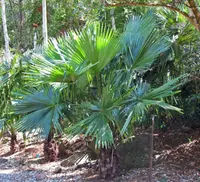
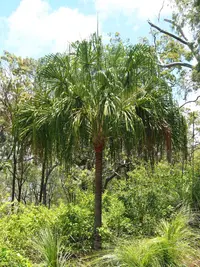
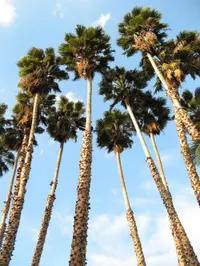
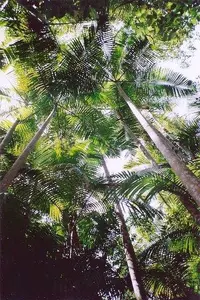
Livistona speciosa is a fan palm known for its large, glossy, circular leaves with radiating segments and a strong, solitary trunk. It forms an elegant crown that can look architectural indoors or in sheltered outdoor spaces in warm climates.
This species is native to Southeast Asia, where it grows in tropical lowland forests and coastal areas. It prefers warm, humid conditions and steady moisture, but the roots need free-draining soil to avoid rot.
Livistona speciosa grows slowly and can become a sizeable specimen over time, so space and long-term planning are important. With adequate light, consistent watering, and protection from cold, it is moderately easy to care for Livistona speciosa.

Care Difficulty
Moderate Care

Light Preference
Partial Sun

Water Requirements
Regular Water

Temperature Preference
Tropical / Frost Sensitive

Hardiness Zone
10–11

Soil Texture
Sandy, Loamy, Organic-rich

Soil pH
Acidic (5.5–6.5), Slightly acidic (6.5–7.0)

Soil Drainage
Moist but well-drained

Fertilization
Minimal (feed rarely)
Scan your plant to receive care tips personalized for your specific plant
Available on iOS and Android
This palm prefers bright, indirect light that mimics high, filtered tropical sun.
This species prefers evenly moist, well-drained soil rather than cycles of drought and saturation.
This palm favors warm, frost-free conditions similar to lowland tropical climates.
This species benefits from moderately humid air but copes with typical home conditions.
This palm prefers deep, moist, well‑aerated soil that drains freely yet holds some organic moisture.
This species can be grown in large containers when given enough root space and stable support.
This palm benefits from modest, consistent feeding during the warm growing season.
Pruning is mainly used to maintain safety and remove spent foliage rather than shape this palm heavily.
This species is usually grown in the ground, so focus on careful transplanting of young plants.
Propagation of this palm is typically done from seed and requires patience and warmth.
This tropical palm is sensitive to frost and benefits from active winter protection in cooler climates.

Plant Health Check
Not sure what's wrong with your plant? Check your plant's health inside the app.
This species develops very large, stiff, fan-shaped leaves with many narrow segments that can form an almost circular crown, an adaptation that maximizes light capture in open tropical habitats.
It is naturally distributed in parts of mainland Southeast Asia and nearby regions, where it grows in lowland tropical forests and coastal areas, often on well-drained soils exposed to high heat and humidity.
In its native regions, the durable leaf blades have traditionally been used for thatching and temporary shelter materials, taking advantage of their toughness and resistance to tearing when dried.
This palm has a moderate growth rate. In warm, frost-free climates, expect trunk height to increase roughly 15–30 cm per year once established. Growth slows in containers or cooler regions due to reduced root activity.
Keep your plants happy and healthy with plant identification, disease detection, and easy care guidance.