Protect tender crown
Install a simple temporary canopy or shade cloth during heatwaves or cold snaps to protect the soft crown and emerging spear leaves, which are more sensitive than mature fronds.


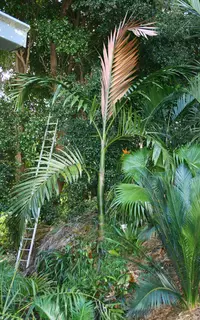
The Piccabeen palm, Archontophoenix cunninghamiana, is a fast-growing feather palm valued for its tall, slender trunk and graceful, arching fronds. It forms a smooth, ringed gray trunk topped with a dense crown of green leaves, giving a classic tropical look.
This species is native to the rainforests and moist valleys of eastern Australia, where it grows in warm, humid conditions with regular rainfall. In cultivation it prefers bright, filtered light, consistent moisture, and well-drained, organic-rich soil.
Its tolerance of cool conditions compared with many tropical palms makes it relatively manageable in mild climates, though it dislikes long dry spells and strong winds. Understanding how to care for Piccabeen Palm helps it establish steadily and maintain a clean, attractive canopy.

Care Difficulty
Moderate Care

Light Preference
Partial Sun

Water Requirements
Regular Water

Temperature Preference
Tropical / Frost Sensitive

Hardiness Zone
10–11

Soil Texture
Sandy, Loamy, Organic-rich

Soil pH
Acidic (5.5–6.5), Slightly acidic (6.5–7.0)

Soil Drainage
Moist but well-drained

Fertilization
Light (every 4–6 weeks)
Scan your plant to receive care tips personalized for your specific plant
Available on iOS and Android
Archontophoenix cunninghamiana prefers bright, gentle light similar to a bright forest edge.
This palm prefers consistently moist but not waterlogged soil, especially during active growth.
This species grows best in mild, frost-free climates with warm, humid air.
This palm prefers consistently moist air and benefits from moderate to high humidity.
This palm grows best in deep, moist, well-aerated soil that drains freely but does not dry out quickly.
This species adapts reasonably well to container growing when given enough root space and drainage.
This palm benefits from steady, moderate feeding to support fast trunk and frond growth.
Pruning for this palm is minimal and mainly focused on cleanliness and safety rather than shaping.
Container and young landscape plants respond best to careful, infrequent moves that limit root disturbance.
This species is propagated almost exclusively from seed, which needs warmth and patience to sprout.
This palm is only mildly cold tolerant and benefits from protection in regions with frost or freezing temperatures.

Plant Health Check
Not sure what's wrong with your plant? Check your plant's health inside the app.
In its native eastern Australian range, this palm often appears first in disturbed or open sites and later grows up into the rainforest canopy, gradually tolerating more shade as it matures.
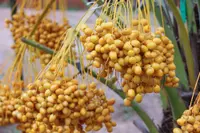
Its bright red fruit are an important food source for native birds such as topknot pigeons and various parrots, which disperse the seeds through their droppings.
Unlike many feather palms from the tropics, this species naturally occurs in cooler, high-rainfall regions and tolerates occasional light frosts in the wild.

This palm is one of the main native species lining the famous palm avenues of several Australian subtropical cities, where it has been planted for more than a century as a tall, uniform street and park tree due to its straight trunk and self-cleaning crown.
Growth is moderately fast in warm, frost-free climates, often adding 30–90 cm in height per year once established. Adequate moisture, organic-rich soil, and regular feeding improve vigor, while cool temperatures or dryness noticeably slow growth.
Keep your plants happy and healthy with plant identification, disease detection, and easy care guidance.