Mounting orientation
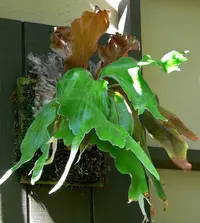
When grown mounted, fix the rhizome so new growth faces slightly downward on the slab or cork, which allows roots to anchor quickly and keeps developing pseudobulbs from trapping water around their bases.

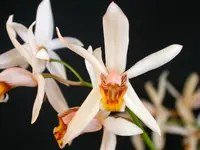
Coelogyne viscosa is an epiphytic orchid, meaning it often grows attached to trees rather than in soil. It forms small pseudobulbs with narrow leaves and delicate, usually pale flowers.
This species is native to parts of Southeast Asia, where it grows in humid forests with filtered light and good air movement. It is considered a plant for growers who already have some orchid experience, mainly due to its preference for stable moisture and humidity.
Those learning how to care for Coelogyne viscosa should know it prefers bright, indirect light, regular watering, and a very free-draining orchid medium that never stays waterlogged.

Care Difficulty
Hard Care

Light Preference
Partial Shade

Water Requirements
Keep Soil Moist

Temperature Preference
Tropical / Frost Sensitive

Hardiness Zone
11–12

Soil Texture
Peaty, Organic-rich, Loamy

Soil pH
Acidic (5.5–6.5)

Soil Drainage
Moist but well-drained

Fertilization
Moderate (every 2–4 weeks)
Scan your plant to receive care tips personalized for your specific plant
Available on iOS and Android
This species prefers bright, soft light that mimics a lightly shaded forest canopy.
This orchid favors consistently moist but airy conditions around its roots.
This species prefers cool- to intermediate-warm conditions with modest daily temperature swings.
This orchid needs consistently high humidity to maintain healthy leaves and flowers.
This species grows best in a loose, airy epiphytic mix that drains quickly but holds some moisture.
This orchid is well suited to container growing, especially in shallow orchid pots or baskets.
This orchid benefits from light, consistent feeding during active growth.
Pruning needs are minimal and focus on hygiene rather than shaping.
Repotting maintains healthy roots and supports steady growth.
Propagation is usually done by division of mature clumps.
This orchid is not frost hardy and needs shelter in cool climates.

Plant Health Check
Not sure what's wrong with your plant? Check your plant's health inside the app.
This orchid is naturally found in humid, mossy montane forests of Southeast Asia, where it often grows as an epiphyte on tree trunks or occasionally on rocks in consistently moist but well-aerated conditions.
The species name viscosa refers to the sticky or viscid surfaces on parts of the flower, a feature that likely helps pollen adhere to visiting insects and improves pollination efficiency.
Its pale flowers are reported to have a noticeable fragrance and are produced on relatively short inflorescences arising from the pseudobulbs, often appearing in small clusters rather than on long arching sprays typical of some related species.
This species usually flowers once a year, often in late winter to spring, depending on temperature and light. Pseudobulbs typically need to mature fully before producing short inflorescences with several small, pale flowers.
Keep your plants happy and healthy with plant identification, disease detection, and easy care guidance.