Early trellis training
Install a sturdy trellis, wires, or mesh before active growth starts, then gently wind young vines onto the support weekly so stems harden in the desired direction and do not tangle or break later.

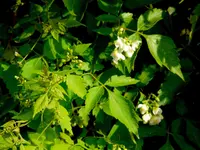
Showy balloonvine, Cardiospermum grandiflorum, is a fast-growing, twining vine known for its inflated, papery seed capsules and delicate, divided leaves. It often scrambles over fences, shrubs, and trees, creating a dense green curtain dotted with small white flowers and lantern-like pods.
This species is native to tropical and subtropical regions of Africa but is now naturalized in many warm climates and can become invasive outdoors. It grows vigorously in warm, frost-free areas, so containment and regular pruning are important. Understanding how to care for showy balloonvine starts with providing sun, well-drained soil, and consistent moisture without waterlogging.

Care Difficulty
Moderate Care

Light Preference
Full Sun

Water Requirements
Moderate Water

Temperature Preference
Tropical / Frost Sensitive

Hardiness Zone
9–11

Soil Texture
Sandy, Loamy, Organic-rich

Soil pH
Acidic (5.5–6.5), Slightly acidic (6.5–7.0)

Soil Drainage
Well-drained

Fertilization
Light (every 4–6 weeks)
Scan your plant to receive care tips personalized for your specific plant
Available on iOS and Android
This vigorous climber prefers bright conditions and responds strongly to light levels.
Watering should keep the soil lightly moist but never saturated for healthy vine growth.
This species grows best in warm, frost-free conditions and slows markedly in cool weather.
This vine prefers moderately humid air but adapts to typical indoor levels if not extremely dry.
This climber grows best in loose, well-aerated, free-draining soil that does not stay waterlogged.
This vigorous vine is suitable for container growing if the pot supports its fast top growth and root spread.
This vigorous vine responds well to modest feeding during active growth but does not need heavy fertilization.
Pruning helps Cardiospermum grandiflorum stay manageable, flower well, and avoid becoming invasive in mild climates.
This fast-growing climber is more often transplanted outdoors than kept long term in containers.
New plants are most commonly raised from seed, though softwood cuttings are also possible.
This warm-climate vine is frost sensitive and needs protection in regions with cold winters.

Plant Health Check
Not sure what's wrong with your plant? Check your plant's health inside the app.
This species forms large, inflated, three-lobed seed capsules that dry to a papery texture and open to reveal black seeds marked with a pale heart-shaped patch, a feature that inspired its common name balloon vine or heart seed vine.
The vine climbs vigorously using branched tendrils that coil around supports, allowing it to reach tree canopies and man-made structures and form dense curtains of foliage in mild, frost-free climates.
In parts of Australia, South Africa, and some subtropical regions, this species is listed as an environmental weed because it smothers native vegetation and spreads readily along rivers, disturbed ground, and forest edges.

In regions where it has become invasive, dense growth of this vine can alter native plant communities so strongly that land managers use targeted mechanical removal and herbicide programs to preserve local biodiversity.
This vine spreads quickly by seeds and stems and is considered invasive in many warm regions. It can smother nearby vegetation. Use strong support, regular pruning, and prompt seed pod removal when growing showy balloonvine in gardens.
Keep your plants happy and healthy with plant identification, disease detection, and easy care guidance.