


Night-scent placement
Position the plant where evening air can move past the flowers, such as near a patio, balcony, or open window, to disperse its strong night fragrance without trapping humid air around the foliage.

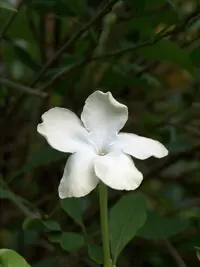
American brunfelsia (Brunfelsia americana) is an evergreen shrub known for its fragrant, creamy white tubular flowers that open at night and fade by morning. It typically forms a medium-sized, bushy plant with glossy green leaves.
This species is native to the Caribbean, where it grows in warm, humid coastal areas. In cultivation it is often grown in containers or sheltered outdoor spots in frost-free climates.
The plant prefers bright, filtered light, evenly moist but well-drained soil, and good air movement. With stable warmth and regular moisture, it is moderately demanding but manageable for growers who learn how to care for American brunfelsia.

Care Difficulty
Moderate Care

Light Preference
Partial Sun

Water Requirements
Regular Water

Temperature Preference
Tropical / Frost Sensitive

Hardiness Zone
10–11

Soil Texture
Sandy, Loamy, Organic-rich

Soil pH
Acidic (5.5–6.5), Slightly acidic (6.5–7.0)

Soil Drainage
Moist but well-drained

Fertilization
Light (every 4–6 weeks)
Scan your plant to receive care tips personalized for your specific plant
Available on iOS and Android
This species thrives in bright, warm conditions that mimic its tropical origin.
Watering should keep the root zone evenly moist but never saturated.
Stable warm temperatures support strong growth and consistent flowering.
This shrub prefers moderately humid air and reacts quickly to very dry conditions.
This species performs best in loose, moisture-retentive but fast-draining soil.
This shrub adapts well to container growing when the pot supports its root system and moisture needs.
Nutrient support helps Brunfelsia americana sustain flowering and healthy foliage in containers or poor soils.
Thoughtful pruning keeps Brunfelsia americana compact, branching well, and flowering more evenly.
Container-grown plants and young landscape specimens benefit from careful transplanting that limits root disturbance.
This species is most often propagated from semi-ripe stem cuttings for consistent flowering and growth habit.
In mild climates Brunfelsia americana tolerates cool conditions but is sensitive to hard frost and sustained freezing.

Plant Health Check
Not sure what's wrong with your plant? Check your plant's health inside the app.
This species opens its white, tubular flowers at night and releases a strong, sweet fragrance that peaks after dark, timed to attract nocturnal moth pollinators.
Freshly opened flowers are creamy white and gradually age to yellow, which helps pollinators distinguish newly rewarding blooms from older ones.
It is naturally distributed in the Caribbean region, often occurring in lowland coastal habitats where it experiences warm temperatures and high humidity year-round.

Historical records show that this plant was cultivated in European glasshouses by the 18th century, valued primarily for its intense night fragrance rather than its appearance.
Lack of blooms usually comes from insufficient maturity, nutrient imbalance, or heavy pruning at the wrong time. Avoid high-nitrogen fertilizer, prune lightly after flowering only, and ensure the plant experiences a slight seasonal rest to set buds.
Keep your plants happy and healthy with plant identification, disease detection, and easy care guidance.

Rose-camphor Storksbill
Pelargonium englerianum
beautiful sobralia
Sobralia decora
dotted hawthorn
Crataegus punctata
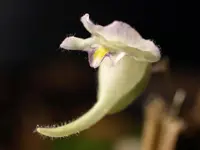
Utricularia jamesoniana
Utricularia jamesoniana
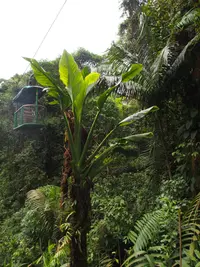 POPULAR
Philodendron Cobra
Monstera standleyana
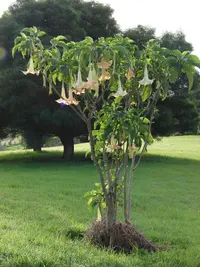
angel's-trumpet
Brugmansia × candida
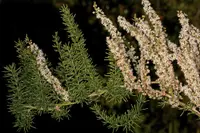
Sprenger's asparagus
Asparagus aethiopicus
 POPULAR
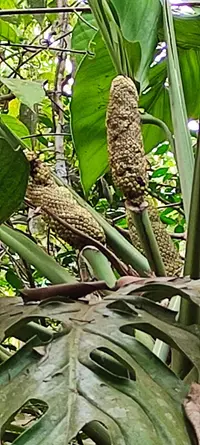
Monstera lechleriana
Monstera lechleriana