Stake Tall Canes
Install slim bamboo stakes or mesh supports early in the season and tie the canes loosely with soft ties to keep the tall, brittle stems upright and reduce breakage from wind or handling.

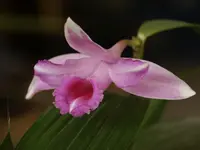
Sobralia decora, often called beautiful sobralia, is a tall, reed-like orchid with broad, pleated leaves and large, short-lived but showy flowers. The blooms resemble small Cattleya orchids and usually appear along the upper stems, giving the plant a soft, ornamental look.
This species is native to humid, montane forests of Central America, where it grows as a terrestrial or lithophytic orchid in bright, filtered light. It tends to form clumps and can become a sizable plant, which affects how suitable it is for limited indoor spaces.
Beautiful sobralia prefers consistently moist, airy substrates and good humidity, but it dislikes stagnant conditions. Understanding how to care for beautiful sobralia starts with providing light shade, regular moisture, and excellent drainage around its roots.

Care Difficulty
Moderate Care

Light Preference
Partial Shade

Water Requirements
Keep Soil Moist

Temperature Preference
Tropical / Frost Sensitive

Hardiness Zone
10–11

Soil Texture
Loamy, Peaty, Organic-rich

Soil pH
Acidic (5.5–6.5), Slightly acidic (6.5–7.0)

Soil Drainage
Moist but well-drained

Fertilization
Light (every 4–6 weeks)
Scan your plant to receive care tips personalized for your specific plant
Available on iOS and Android
This orchid prefers bright, gentle light that mimics high, filtered forest edges.
This species prefers evenly moist conditions without staying waterlogged.
This orchid thrives in mild, consistently warm conditions with no frost exposure.
This orchid prefers sustained moderate to high humidity to keep canes and blooms healthy.
Sobralia decora prefers a loose, airy, moisture-retentive but fast-draining substrate similar to terrestrial orchid mixes.
This species adapts well to container growing when the pot supports its tall, reed-like growth habit.
Sobralia decora benefits from light, consistent feeding during the active growing season.
Pruning Sobralia decora is mainly about hygiene and maintaining a manageable clump.
Container-grown Sobralia decora occasionally needs repotting to maintain healthy roots and sustained flowering.
Sobralia decora is most reliably propagated by division of mature clumps rather than by seed.
This orchid is frost-tender and needs thoughtful winter care in most temperate climates.

Plant Health Check
Not sure what's wrong with your plant? Check your plant's health inside the app.
Individual flowers typically last only a single day, opening in the morning and often fading by evening, yet the plant can bloom repeatedly over many weeks from successive buds along the cane-like stems.
This species is native to cool, humid cloud forests of Central America, especially at mid to high elevations where it often grows at forest edges and clearings with bright but filtered light.
The flowers are pale to deep rose or lilac with a striking white lip and yellow throat, and many plants produce a light, sweet fragrance that helps attract pollinating insects in their native range.

Historical herbarium records and field observations indicate that this species has long been used as a parent in breeding large, showy hybrid sobralias because of its relatively robust growth and reliable flowering habit in cultivation.
Lack of blooms usually comes from insufficient light, overly warm nights, or no slight cool-down between seasons. Overfertilizing with nitrogen also favors foliage over flowers. Moderate root crowding and a short drier rest can encourage reliable flowering.
Keep your plants happy and healthy with plant identification, disease detection, and easy care guidance.