Control Ground Spread
Edge beds with a shallow spade cut or flexible edging once or twice a year to prevent the mat-forming habit from creeping into lawns or paths while still allowing dense coverage where desired.

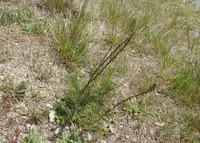
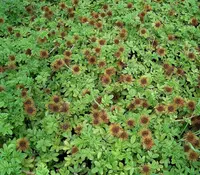
Australian sheep's bur (Acaena agnipila) is a low, mat-forming perennial in the rose family, grown mainly as a groundcover. It forms dense carpets of finely divided, fern-like foliage that stays close to the soil surface.
The plant is native to parts of Australia and New Zealand, where it often occupies open, sunny, and well-drained sites. Its small, burr-like seed heads can cling to fur or clothing, which affects where it may spread in a garden.
Acaena agnipila tends to be fairly tough once established but dislikes heavy, waterlogged soils. Light, free-draining soil and moderate moisture generally make it easier to care for Australian sheep's bur.

Care Difficulty
Moderate Care

Light Preference
Full Sun

Water Requirements
Moderate Water

Temperature Preference
Cool Climate

Hardiness Zone
7–9

Soil Texture
Sandy, Loamy, Rocky

Soil pH
Slightly acidic (6.5–7.0), Neutral (7.0)

Soil Drainage
Well-drained

Fertilization
Minimal (feed rarely)
Scan your plant to receive care tips personalized for your specific plant
Available on iOS and Android
This low mat-forming perennial prefers bright, open conditions but tolerates some shade.
This groundcover prefers evenly moist, well-drained soil rather than constant wetness.
This hardy perennial copes well with cool conditions but has limits at both temperature extremes.
This species is tolerant of a wide humidity range and rarely needs special humidity management.
This plant prefers light, free-draining soil that never stays waterlogged.
This species is suitable for container growing, especially for small groundcover displays on patios or balconies.
This low-growing perennial needs only light feeding to maintain compact, healthy mats.
Pruning Acaena agnipila is mainly about tidying the mat and maintaining dense, low growth.
This species is usually grown as a groundcover, so care focuses on transplanting small clumps rather than frequent repotting.
This plant is commonly propagated to extend groundcover patches or start new areas.
This hardy groundcover usually needs minimal winter attention in most temperate gardens.

Plant Health Check
Not sure what's wrong with your plant? Check your plant's health inside the app.
This species is naturally restricted to New Zealand, where it occurs in open, often montane habitats, making it a geographically localized member of the Acaena genus.
Its seed heads form dark, spiny burrs that readily attach to animal fur and clothing, an adaptation that aids dispersal but also makes it a minor nuisance in grazed areas.
The plant typically forms low, dense mats that can help stabilize soil surfaces, especially in open, disturbed sites with exposure to wind and sun.
This species forms a low, mat-forming ground cover that can spread steadily via stems and seed. In suitable conditions it may edge into nearby areas, so edging, regular trimming, and prompt removal of unwanted seedlings help control it.
Keep your plants happy and healthy with plant identification, disease detection, and easy care guidance.