


Seasonal Division
Lift and divide crowded clumps every 3–4 years in early spring or early fall to maintain vigor and prevent the center of the plant from dying out.

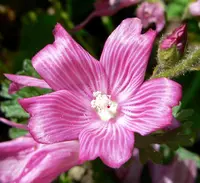
Dwarf checkerbloom (Sidalcea malviflora) is a compact, clumping perennial in the mallow family, grown mainly for its airy spires of pink, cup-shaped flowers. Its foliage forms low, rounded mounds of lobed green leaves, with flower stems rising above, giving a light, meadow-like look.
This species is native to western North America, especially California, where it grows in open, sunny habitats and dry meadows. It is generally easy to grow in well-drained soil with full sun and moderate moisture, and those conditions guide how to care for dwarf checkerbloom in gardens.
Once established, it tolerates some drought, making it suitable for low-maintenance borders, wildflower plantings, and pollinator-friendly spaces.

Care Difficulty
Moderate Care

Light Preference
Full Sun

Water Requirements
Moderate Water

Temperature Preference
Cold Hardy

Hardiness Zone
5–9

Soil Texture
Sandy, Loamy, Organic-rich

Soil pH
Acidic (5.5–6.5), Slightly acidic (6.5–7.0)

Soil Drainage
Moist but well-drained

Fertilization
Minimal (feed rarely)
Scan your plant to receive care tips personalized for your specific plant
Available on iOS and Android
This sun-loving perennial flowers best with strong light in mild to warm climates.
This plant prefers consistently moist but not soggy soil, especially during active growth and flowering.
This species handles a range of outdoor temperatures but grows and flowers best in mild conditions.
This species tolerates a wide humidity range and usually does not need special humidity management outdoors.
This perennial prefers well-structured, free-draining soil that stays slightly moist but never waterlogged.
This plant can be grown in containers if the pot is chosen to support its deep, spreading roots and upright stems.
Sidalcea malviflora benefits from light feeding in poorer soils but often grows well without heavy fertilization.
Pruning Sidalcea malviflora is mainly about tidying and supporting repeat flowering.
This perennial is usually grown in garden beds, so care focuses on transplanting young plants rather than frequent repotting.
Sidalcea malviflora is commonly propagated by seed and division for maintaining healthy stands.
This species is generally cold hardy in temperate climates and needs only modest winter care in the ground.

Plant Health Check
Not sure what's wrong with your plant? Check your plant's health inside the app.
This species is naturally restricted to the western side of the California Coast Ranges, where it occupies open grassy slopes, coastal scrub, and woodland edges, often on well-drained, seasonally dry soils.
In mild coastal climates it can flower from late spring into mid-summer, producing successive flushes of pink blossoms that support bees and other pollinators over an extended period.
The flowers show the characteristic fused column of stamens found in the mallow family (Malvaceae), a structure that helps present pollen efficiently to visiting insects.
This species is highly attractive to bees, butterflies, and other pollinating insects due to its open, nectar-rich flowers. Planting several together can create a small pollinator patch and improve pollination for nearby garden plants.
Keep your plants happy and healthy with plant identification, disease detection, and easy care guidance.

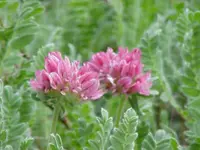
Mountain Kidney-vetch
Anthyllis montana
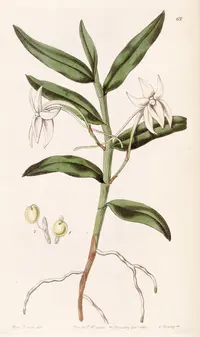
Angraecum mauritianum
Angraecum mauritianum
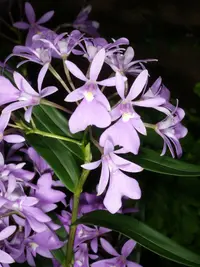
Epidendrum centropetalum
Epidendrum centropetalum
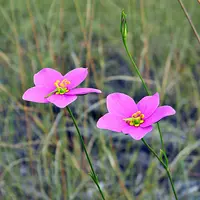
largeflower rose gentian
Sabatia grandiflora

Coral orchid
Rodriguezia lanceolata
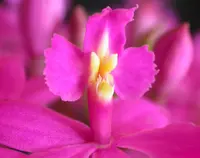
Epidendrum denticulatum
Epidendrum denticulatum
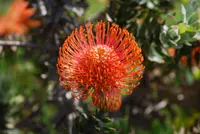
red pincushion-protea
Leucospermum cordifolium
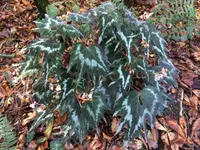
Cut-leaved Begonia
Begonia palmata