Shaded ground cover
In mild, frost-free climates, use the plant as a loose ground cover under taller shrubs or trees, allowing it to spread in dappled shade while still protecting it from direct overhead sun.

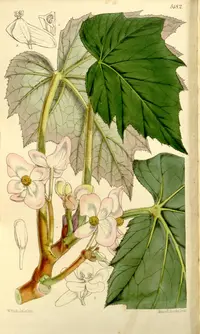
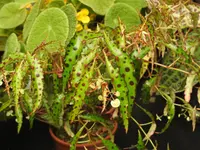
Cut-leaved begonia, Begonia palmata, is a rhizomatous perennial from humid forests in parts of Asia. It naturally grows on shaded slopes, rocky outcrops, and forest edges. The plant forms loose clumps of palm-shaped, deeply divided leaves, often with a slightly glossy surface and red-tinged stems. In suitable conditions it produces small, delicate clusters of pink or white flowers above the foliage. Its preference for shade, steady moisture, and airy, well-drained soil makes it moderately easy to grow if its forest-like environment is imitated. Those who care for Cut-leaved Begonia should focus on stable indoor conditions and protection from strong sun or drying drafts.

Care Difficulty
Moderate Care

Light Preference
Partial Shade

Water Requirements
Keep Soil Moist

Temperature Preference
Tropical / Frost Sensitive

Hardiness Zone
9–11

Soil Texture
Loamy, Silty, Organic-rich

Soil pH
Acidic (5.5–6.5), Slightly acidic (6.5–7.0)

Soil Drainage
Moist but well-drained

Fertilization
Light (every 4–6 weeks)
Scan your plant to receive care tips personalized for your specific plant
Available on iOS and Android
This species prefers bright, filtered light similar to a lightly shaded forest edge.
This plant prefers evenly moist, fast-draining soil that never stays soggy for long.
This species grows best in mild, frost-free conditions with stable temperatures.
This species prefers moderately humid air and reacts quickly to very dry conditions.
Begonia palmata grows best in a loose, airy, organic-rich medium that drains rapidly but does not dry out too fast.
This species adapts well to container culture when excess water is managed carefully.
Begonia palmata benefits from modest, consistent feeding during the active growing season.
Pruning Begonia palmata is mainly about tidiness and encouraging compact, leafy growth.
Begonia palmata in containers appreciates occasional repotting to refresh soil and give roots space.
Begonia palmata is commonly propagated from stem cuttings and divisions taken in the growing season.
Begonia palmata is not very frost tolerant and benefits from simple winter protection in colder regions.

Plant Health Check
Not sure what's wrong with your plant? Check your plant's health inside the app.
This species occurs naturally from the eastern Himalayas through southern China to Southeast Asia, typically in moist, shaded forests and along mountain streams, showing a strong preference for cool, humid montane habitats.
The leaves are palmately divided into narrow, finger-like lobes, which increases edge area and helps shed water quickly on steep, wet slopes where the plant commonly grows.
Individual plants carry both male and female flowers on the same inflorescence, a common trait in the genus, and the winged seed capsules help the tiny seeds disperse efficiently by wind and gravity on forested slopes.
Lack of flowers usually comes from low light, excessive nitrogen fertilizer, or the plant being too young. Provide bright, indirect light, use a balanced fertilizer at modest strength, and avoid repeatedly cutting off developing flower stalks.
Keep your plants happy and healthy with plant identification, disease detection, and easy care guidance.