Angraecum mauritianum Care

Angraecum mauritianum

About Angraecum mauritianum

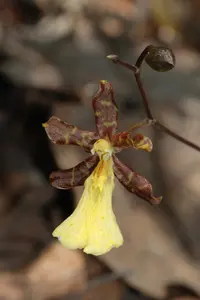
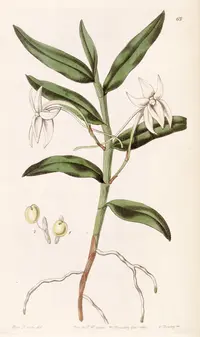
Angraecum mauritianum is a small epiphytic orchid that typically grows on trees or rocks, forming compact clumps of arching, narrow leaves. It produces star-shaped, usually white flowers with a long spur, giving a delicate but structured appearance.

This species is native to Mauritius and nearby islands in the western Indian Ocean, where it experiences bright light, moving air, and regular moisture with good drying between rains. It is considered moderate in difficulty, mainly because it dislikes stale air, soggy roots, and sudden changes.

Gardeners who learn how to care for Angraecum mauritianum usually focus on stable warmth, bright indirect light, and a very free-draining orchid medium.

Main Plant Requirements

Care Difficulty

Hard Care

Light Preference

Bright Indirect Light

Water Requirements

Regular Water

Temperature Preference

Tropical / Frost Sensitive

Hardiness Zone

Unknown

Soil Texture

Sandy, Organic-rich

Soil pH

Acidic (5.5–6.5)

Soil Drainage

Well-drained

Fertilization

Light (every 4–6 weeks)

Get Personalized Care Plan

Scan your plant to receive care tips personalized for your specific plant

Available on iOS and Android

How to Care for the Angraecum mauritianum

This species prefers bright, gentle light similar to high, filtered forest conditions.

  • Provide 4–6 hours of bright, indirect light daily; early morning sun with dappled or filtered light for the rest of the day works well for Angraecum mauritianum.
  • Tolerates light partial shade, but growth and flowering decline if kept in dim conditions or deep shade for long periods.
  • Avoid harsh midday and late-afternoon sun, which can scorch leaves; increase shade or distance from the light source during strong summer sun.

Watering should keep roots moist but never stagnant, mimicking frequent light rain with rapid drainage.

  • Water when the medium feels just barely dry at the surface; do not allow roots to sit in water or the mix to remain soggy.
  • Use a very free-draining orchid mix; water thoroughly, then let excess drain completely to reduce the risk of root rot and leaf yellowing from overwatering.
  • In warmer, brighter seasons, you may need to water more often, while cooler, darker periods call for reduced watering if growth slows.

This orchid does best in warm, stable conditions with mild night drops.

  • Aim for daytime temperatures of 70–80°F (21–27°C) and nights around 60–68°F (16–20°C) for steady growth.
  • Protect the plant from temperatures below 55°F (13°C); brief drops to 50°F (10°C) may be tolerated but can slow growth or stress roots.
  • High heat above 86–90°F (30–32°C) is tolerated only with increased humidity and airflow; always shield from hot, dry drafts and sudden temperature swings.

This species prefers moderately humid air but adapts if managed carefully.

  • Aim for 50–70% humidity to support steady growth and flower production.
  • Leaves curling, wrinkling, or developing dry brown tips indicate air is too dry.
  • Increase humidity with a nearby pebble tray, clustered plants, or a small room humidifier rather than misting heavily.

This orchid needs an airy, fast-draining medium rather than traditional potting soil.

  • Use a loose epiphytic mix of medium bark, perlite, and a small amount of sphagnum moss for moisture retention.
  • Ensure rapid drainage so water runs through within seconds, leaving roots moist but never waterlogged.
  • Maintain a slightly acidic to neutral root environment, roughly pH 5.5–7, by avoiding lime-rich additives.
  • For Angraecum mauritianum, keep the mix chunky and open to maximize aeration around the fine roots.

This species is well suited to container culture in baskets or small pots.

  • Choose a pot just slightly larger than the root mass so the coarse mix does not stay wet for too long.
  • Use slotted or basket-style containers to keep the medium airy and allow lateral root attachment.
  • Select heavier clay or a weighted cachepot if the foliage makes the plant top-heavy, to prevent tipping after watering.

This orchid benefits from light, consistent feeding during active growth but is sensitive to excess salts.

  • Use a balanced orchid fertilizer (e.g., 20-20-20) diluted to 1/4–1/2 strength in low-mineral water.
  • Feed Angraecum mauritianum every 2–3 weeks in spring and summer when producing new roots and leaves.
  • Reduce feeding to monthly or stop in late fall and winter as growth slows.
  • Flush the potting medium with plain water monthly to clear accumulated fertilizer salts.

Pruning needs are minimal and mainly focus on hygiene and maintaining a compact, healthy plant.

  • Best time to prune Angraecum mauritianum is after flowering, when you can clearly see spent spikes.
  • Remove dead, yellowing, or damaged leaves and completely dry flower spikes with clean, sharp scissors.
  • Do not cut live green roots or firm leaves, as this can slow growth and reduce future flowering.
  • Sterilize tools with alcohol before each use to limit the spread of fungal and bacterial disease.

Repotting keeps the roots aerated and prevents the fine orchid mix from breaking down and staying too wet.

  • Repot every 2–3 years in spring when new root tips appear, or when roots circle the pot or escape drainage holes.
  • Choose a slightly larger pot with excellent drainage and a fresh fine bark or bark-perlite orchid mix.
  • Gently loosen roots from the old medium, remove dead brown roots, and keep firm white or green roots intact.
  • After repotting Angraecum mauritianum, keep medium just slightly moist and shaded for 1–2 weeks to reduce transplant stress.

This species is usually propagated vegetatively by divisions, as seed culture requires sterile laboratory conditions.

  • Best season for division is spring, just before or as new roots start to grow actively.
  • Select a well-established plant with multiple growths, ensuring each division keeps at least 3–4 healthy leaves and viable roots.
  • Use a sterile, sharp blade to separate sections, then dust cut surfaces lightly with powdered cinnamon to reduce rot risk.
  • Pot each division in a fine, well-drained orchid mix and maintain high humidity, bright shade, and stable warmth for rooting.

Cool winter conditions slow growth, so adjust water and temperature to prevent chill damage and root rot.

  • Angraecum mauritianum is not frost hardy; maintain indoor temperatures around 60–70°F in winter.
  • Move any outdoor containers indoors before nights drop below 55°F and place in bright, indirect light.
  • Water less often, allowing the orchid mix to dry slightly between waterings, but do not let roots stay bone dry for long.

Care Tips

Mounting technique

Mount the plant on cork or hardwood with a thin pad of sphagnum only under the roots, then secure it with soft ties so new roots can grip the surface and dry quickly between waterings.

Air movement management

Use a small oscillating fan on a low setting to maintain constant, gentle air movement around the foliage and roots, which helps prevent rot and improves gas exchange in dense growing spaces.

Targeted root hydration

Instead of soaking the whole plant, use a squeeze bottle or narrow-spout watering can to direct water only to the root zone and mounting medium, reducing the risk of water sitting in leaf bases.

Seasonal light adjustment

Shift the plant slightly closer to a bright window or increase artificial light intensity in winter to compensate for shorter days, then move it a little back in summer to avoid stress from excessive light.

Flower spike protection

Once a spike emerges, avoid moving or rotating the plant, and provide a thin stake with soft ties if the spike leans, so developing flowers are not damaged by handling or accidental bumps during Angraecum mauritianum care instructions.

Common Pests and Diseases

Scale insects

This pest feeds on sap along the stems and leaf bases, often appearing as small brown or off‑white bumps. Symptoms include sticky honeydew on leaves and a gradual decline in vigor and flowering.

Solution

Isolate the plant, then gently scrape or wipe insects off with a cotton swab dipped in 70% isopropyl alcohol, repeating weekly until no new scale appears. Improve air movement around the orchid and, if the infestation is persistent, use a horticultural oil labeled for orchids applied according to directions, taking care to avoid spraying in strong light or high heat.

Mealybugs

These insects hide in leaf axils, between roots and mount, and on flower spikes, producing white cottony masses. This pest weakens the plant by sucking sap and can stunt growth or deform new leaves and roots.

Solution

Remove visible mealybugs with cotton swabs dipped in 70% isopropyl alcohol and rinse the plant gently with lukewarm water to dislodge hidden insects. For recurring problems, apply an insecticidal soap or horticultural oil safe for orchids, treating every 7–10 days for several cycles while also checking nearby orchids for infestation, which is key in Angraecum mauritianum care instructions.

Spider mites

These insects thrive in warm, dry conditions and often affect plants grown indoors or in low humidity. Symptoms include fine webbing on the undersides of leaves, tiny pale speckles, and a dull, grayish leaf surface.

Solution

Increase humidity to 50–70%, rinse foliage thoroughly under a gentle stream of lukewarm water, and wipe leaf undersides to remove mites and webbing. In persistent cases, use an insecticidal soap or a miticide labeled for ornamental plants, repeating applications as directed and ensuring better airflow to prevent reinfestation.

Bacterial leaf spot

This disease starts as soft, water‑soaked patches on leaves that may turn brown or black with a yellow halo. Symptoms include rapid expansion of lesions in warm, wet conditions and a foul smell from severely affected tissue.

Solution

Immediately remove and discard affected leaves with a sterile blade, cutting well into healthy tissue, and avoid splashing water on foliage. Improve air circulation, water in the morning so leaves dry quickly, and if spots continue to appear, use a copper‑based bactericide labeled for orchids, applied lightly and not during high heat to avoid leaf burn.

Fungal leaf blight

This disease causes small, dark, sunken spots that may merge into larger patches, especially on older or crowded leaves. Symptoms include slow but persistent expansion of lesions under cool, humid, low‑airflow conditions common in shadehouses and enclosed orchid collections.

Solution

Remove and dispose of affected leaf sections, then adjust spacing and increase airflow around the plant to keep leaves dry between waterings. If the problem persists, apply a systemic fungicide suitable for orchids according to label directions, and avoid wetting foliage in the evening to reduce the chance of reinfection.

Interesting Facts

Mauritius coastal specialist

This small orchid is naturally restricted to lowland coastal forests and scrub on Mauritius, often growing on exposed branches where it receives strong light and steady air movement.

Miniature epiphytic habit

It is a compact epiphytic orchid that anchors to tree bark with relatively fine roots, forming small clumps rather than long pendent chains like some other Angraecum species.

Narrow seasonal flowering

In its native range it tends to flower in a defined warm-season window, producing a limited number of small, pale flowers compared with the large, showy blooms of its relatives.

FAQs about Angraecum mauritianum

This miniature orchid usually produces star-shaped white flowers in the cooler season, often late fall to winter. Under stable conditions it may bloom once a year, sometimes with a lighter secondary flush after a brief rest period.

Grow Healthy Plants with Botan Care

Keep your plants happy and healthy with plant identification, disease detection, and easy care guidance.

Botan plant care app — identify plants on mobile

Explore More Plants