Epidendrum denticulatum Care

Epidendrum denticulatum

About Epidendrum denticulatum

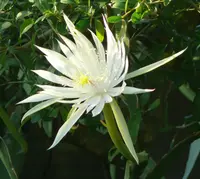
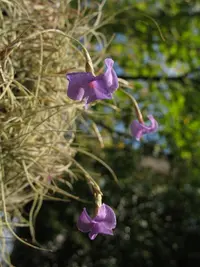
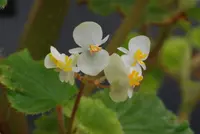
Epidendrum denticulatum is a small to medium-sized epiphytic orchid, typically growing on trees rather than in regular soil. It forms slender, reed-like stems with narrow leaves and produces clusters of delicate, often pink to purple flowers.

This species is native to tropical regions of Central and South America, where it grows in warm, bright, and humid forest habitats. Its relatively compact size and forgiving nature make it suitable for intermediate growers who are comfortable managing orchids.

Light, airflow, and moisture balance are the main factors that influence how to care for Epidendrum denticulatum, since its roots prefer to dry slightly between waterings while still enjoying consistent humidity.

Main Plant Requirements

Care Difficulty

Moderate Care

Light Preference

Partial Sun

Water Requirements

Regular Water

Temperature Preference

Tropical / Frost Sensitive

Hardiness Zone

10–12

Soil Texture

Sandy, Organic-rich

Soil pH

Acidic (5.5–6.5), Slightly acidic (6.5–7.0)

Soil Drainage

Moist but well-drained

Fertilization

Moderate (every 2–4 weeks)

Get Personalized Care Plan

Scan your plant to receive care tips personalized for your specific plant

Available on iOS and Android

How to Care for the Epidendrum denticulatum

This orchid prefers bright, indirect light with some gentle direct sun for best flowering.

  • Provide 4–6 hours of bright, filtered light daily, such as morning sun with light afternoon shade, to support compact growth and blooms in Epidendrum denticulatum.
  • Outdoors, place where it receives early sun and dappled light later; avoid harsh midday summer sun that can cause leaf scorch or yellow, leathery patches.
  • If stems stretch, leaves darken, and flowering declines, increase light exposure gradually over 1–2 weeks to prevent sun stress.

Watering should keep roots evenly moist but never stagnant.

  • Allow the top 1–2 cm of the mix to approach dryness before watering, then soak thoroughly so water drains freely from the growing medium.
  • In warm, active growth, expect to water more often; reduce frequency in cooler months, but avoid letting canes shrivel or leaves flop, which signal underwatering.
  • Watch for limp, yellowing leaves, blackened roots, or a sour smell as signs of overwatering and improve drainage or airflow immediately for this Epidendrum denticulatum.

This species grows best with mild to warm temperatures and good air movement.

  • Aim for 65–80°F (18–27°C) as the main growing range to support consistent root growth and flowering.
  • Protect from cold below 50°F (10°C); brief dips to 45°F (7°C) may be tolerated but repeated exposure slows growth and increases rot risk.
  • In hotter periods above 85°F (29°C), provide shade, strong but gentle airflow, and slightly higher humidity to reduce heat stress and leaf burn.

This orchid prefers moderately humid air for steady growth.

  • Aim for 50–70% humidity, as Epidendrum denticulatum comes from naturally moist but airy environments.
  • Tolerates brief dips to 35–40%, but prolonged dry air causes wrinkled pseudobulbs and crisp leaf tips.
  • Increase humidity with a pebble tray under the pot, grouping plants, or a small room humidifier rather than misting heavily.

This species grows best in a coarse, airy medium that mimics an epiphytic orchid environment.

  • Use a chunky mix of medium bark, perlite or pumice, and a small amount of sphagnum moss for moisture retention.
  • Ensure very rapid drainage; water should run through in seconds and the mix should never stay soggy.
  • Aim for slightly acidic to neutral conditions, around pH 5.5–6.5, which supports nutrient uptake in orchids.
  • Avoid dense garden soil or peat-heavy potting mixes, which reduce aeration and promote root rot in Epidendrum denticulatum.

This orchid is well suited to container culture, including baskets and orchid pots.

  • Choose a tall, narrow pot or basket that lets roots anchor vertically while keeping the medium shallow and airy.
  • Use a slotted or net orchid pot so side openings increase airflow around roots and speed moisture loss.
  • Place the container in a stable cachepot or heavy outer sleeve if the upright growth becomes top-heavy in wind or on balconies.

This orchid benefits from light, consistent feeding during active growth to support flowering and foliage health.

  • Use a balanced orchid fertilizer (around 20-20-20) diluted to 1/4–1/2 strength for Epidendrum denticulatum.
  • Apply every 2–3 weeks in spring and summer when growth and flowering are strongest.
  • Reduce feeding to once a month or stop entirely in fall and winter, especially in low light.
  • Flush the potting medium with plain water monthly to prevent salt buildup from repeated feeding.

Pruning is minimal and focuses on keeping stems tidy and encouraging new flowering growth.

  • Best time for pruning is after a flowering cycle, when spent spikes can be assessed.
  • Cut dry, brown, or damaged stems and leaves with clean, sharp scissors or pruning shears.
  • Remove fully finished flower spikes at the base; this directs energy to new canes and roots in Epidendrum denticulatum.
  • Avoid heavy cutting of green, healthy canes, as they store water and nutrients and support future blooms.

Repotting keeps this epiphytic orchid healthy by refreshing its airy medium and managing crowded roots.

  • Repot every 2–3 years or when roots circle the pot, grow over the rim, or growth slows despite good care.
  • Choose late winter to early spring, just before new roots emerge, to reduce stress and encourage recovery.
  • Use a small pot with fresh, coarse orchid mix; keep the base of canes just above the medium surface.
  • Handle roots gently, trim only dead, mushy sections, and keep the plant shaded and slightly drier for 7–10 days afterward.

Propagation is usually done vegetatively to maintain the exact traits of the parent plant.

  • Most common method is division of mature clumps, separating 3–4 cane sections with healthy roots.
  • Carry out division in late winter or early spring, just before active growth begins in Epidendrum denticulatum.
  • Pot each division into fresh orchid mix, keeping canes upright and roots loosely arranged for good aeration.
  • Maintain warm temperatures, bright filtered light, and slightly higher humidity to support new root growth after division.

This orchid is frost sensitive and needs mild, protected conditions during winter in most climates.

  • For outdoor containers, move plants indoors before temperatures drop near 50°F, using bright, indirect light.
  • Keep indoor temperatures around 60–75°F with good air movement to prevent fungal problems.
  • Water less often in winter, allowing the medium to approach dryness while avoiding complete desiccation.
  • In very mild frost-free zones, grow Epidendrum denticulatum under overhead cover to keep foliage dry and sheltered.

Care Tips

Use vertical mounts

Fix the orchid to a cork slab or hardwood branch with sphagnum and soft ties, keeping canes slightly angled downward to encourage better drainage and more even root aeration.

Segment older canes

When repotting, gently divide congested clumps by separating sections with at least 3–4 healthy canes and an active growth, which helps maintain vigorous flowering plants over many years.

Refresh aerial roots

Direct a gentle stream of lukewarm water over exposed roots for 20–30 seconds during regular watering to flush accumulated salts and keep the velamen layer functioning well.

Rotate for even spikes

Turn the pot or mount 90° every 1–2 weeks so developing inflorescences track light evenly, resulting in more balanced flowering and less leaning of the entire plant.

Quarantine new additions

Isolate any new orchid for 3–4 weeks, inspecting weekly for mites, scale, and snails, which is one of the most effective measures when caring for Epidendrum denticulatum in mixed collections.

Common Pests and Diseases

Scale insects

These insects attach to stems and leaf bases, sucking sap and causing yellowing, stunted growth, and sticky honeydew that can invite sooty mold.

Solution

Isolate the plant, then gently scrape or wipe off visible scale with cotton swabs dipped in isopropyl alcohol and rinse with lukewarm water; for larger infestations, use a horticultural oil spray labeled for orchids, applied in the evening and repeated as directed while improving air movement and avoiding overfertilization that encourages soft, vulnerable growth.

Spider mites

These pests thrive on Epidendrum grown in warm, dry air, causing fine stippling on leaves, dull foliage, and sometimes fine webbing in leaf axils and along pseudobulbs.

Solution

Increase humidity and airflow, then shower the plant thoroughly to wash mites off leaf surfaces; follow with repeated applications of a miticide or insecticidal soap suitable for orchids, ensuring the spray reaches leaf undersides and tight crevices where mites hide.

Soft rot (bacterial)

This disease causes rapidly spreading, water-soaked, foul-smelling lesions at the base of canes or on young growth, which can collapse entire shoots quickly under warm, stagnant conditions.

Solution

Immediately cut away all affected tissue with a sterile blade, dust cuts with ground cinnamon or a bactericide labeled for orchids, then keep the plant drier at the base, increase airflow, and avoid water sitting in leaf axils or on young shoots, especially in warm weather.

Leaf spot (fungal)

This disease produces small, dark, sunken spots on leaves that may coalesce, often starting where water remains on foliage or where old bracts trap moisture near the canes.

Solution

Remove and discard heavily spotted leaves, improve spacing and air circulation around the plant, water early in the day so leaves dry quickly, and apply a broad-spectrum fungicide labeled for orchids if new spots continue to appear, following label intervals carefully.

Mealybugs

This pest hides in tight leaf axils, dried sheaths, and around flower spikes as white, cottony clusters that weaken plants by feeding on sap and excreting sticky honeydew.

Solution

Physically remove visible clusters with cotton swabs dipped in isopropyl alcohol and peel away old, dry sheaths where insects shelter; repeat inspections weekly and, for persistent colonies, apply an insecticidal soap or systemic insecticide registered for orchids, taking care not to oversaturate the roots and aligning with general Epidendrum denticulatum care instructions to keep the plant vigorous and more resistant.

Interesting Facts

Fragrant night blooms

This species produces small, pale flowers with a noticeable sweet fragrance that is often stronger at night, suggesting adaptation to nocturnal moth pollinators in its native habitats of Brazil and surrounding regions.

Fine toothed lip

The species name denticulatum refers to the tiny tooth-like projections along the margin of the flower’s lip, a structural detail used by botanists to distinguish it from closely related Epidendrum species.

Clustered inflorescences

Instead of long, branching flower spikes, this orchid typically bears its blooms in relatively compact clusters, which can open successively over time and extend the overall flowering period when growing in stable conditions.

FAQs about Epidendrum denticulatum

This species typically blooms in warm months, often spring through fall, and can flower multiple times a year if kept in stable conditions. Mature plants may produce successive spikes, giving a long overall flowering season.

Grow Healthy Plants with Botan Care

Keep your plants happy and healthy with plant identification, disease detection, and easy care guidance.

Botan plant care app — identify plants on mobile

Explore More Plants