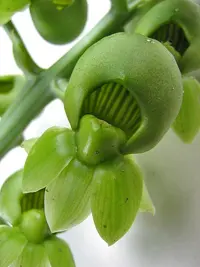
cardinal's-guard Care (Pachystachys spicata)

cardinal's-guard

About cardinal's-guard

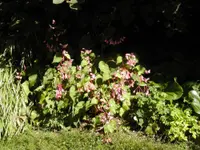
Cardinal's-guard (Pachystachys spicata) is a tropical evergreen shrub grown mainly for its showy flower spikes and lush foliage. It is related to the more common golden shrimp plant but has its own distinct form and bloom structure.

In its native range of tropical Central and South America, it grows in warm, humid forest edges and clearings, often forming dense, shrubby clumps. Stems can become somewhat woody at the base while the upper growth stays soft and leafy.

For those learning how to care for cardinal's-guard, its main needs are consistent warmth, bright filtered light, and evenly moist but well-drained soil, which make it moderate in difficulty rather than truly demanding.

Main Plant Requirements

Care Difficulty

Moderate Care

Light Preference

Partial Shade

Water Requirements

Keep Soil Moist

Temperature Preference

Tropical / Frost Sensitive

Hardiness Zone

10–11

Soil Texture

Loamy, Organic-rich

Soil pH

Acidic (5.5–6.5), Slightly acidic (6.5–7.0)

Soil Drainage

Moist but well-drained

Fertilization

Moderate (every 2–4 weeks)

Get Personalized Care Plan

Scan your plant to receive care tips personalized for your specific plant

Available on iOS and Android

How to Care for the cardinal's-guard

This tropical shrub prefers bright, gentle light to produce steady flowering and compact growth.

  • Provide 3–5 hours of soft morning sun with bright, filtered light the rest of the day; avoid harsh midday sun in summer to prevent leaf scorch.
  • Tolerates light partial shade, but in too much shade flowering decreases and stems stretch; move cardinal's-guard gradually to brighter light if growth becomes leggy.
  • Outdoors, shift containers or adjust positioning seasonally so winter sun is maximized and strong late-spring/ summer afternoon sun (12–4 p.m.) is filtered or shaded.

This species prefers evenly moist but not saturated soil, with slight drying between waterings.

  • Water when the top 2–4 cm of soil feels dry, allowing deeper soil to stay faintly moist; use this finger test instead of a fixed schedule.
  • Ensure fast drainage with a loose, organic-rich soil; standing water around the roots increases risk of yellow leaves, stem rot, and fungus gnats.
  • In cooler seasons or lower light, let the top layer dry a bit deeper and watch for drooping, crisp edges (too dry) versus limp, yellowing leaves (too wet) in Pachystachys spicata.

This plant thrives in warm, frost-free conditions that mimic a humid tropical understory.

  • Aim for 65–80°F (18–27°C) for active growth; short spikes to 85°F (29°C) are tolerated if soil moisture is steady and air is not extremely dry.
  • Protect from cold; growth slows below 60°F (16°C), and damage occurs near 40°F (4°C); even brief frosts can blacken foliage and kill stems.
  • In regions with cool winters, grow it in a protected spot near a warm wall or move containers under shelter so night temperatures remain above 55°F (13°C).

This species prefers warm, moderately humid air to flower and grow well indoors.

  • Aim for 50–70% humidity; sustained air below 40% often leads to crisp leaf edges and poor bud development.
  • Cardinal's-guard tolerates brief dry air from heating or cooling, but prolonged low humidity causes leaf curling and browning tips.
  • Increase humidity with a nearby humidifier, grouped plants, or a pebble tray, but keep foliage dry to limit fungal problems.

This plant grows best in loose, moist, organic-rich substrate that never stays waterlogged.

  • Use a peat- or coco-based mix with 30–40% perlite or coarse bark to keep the root zone airy and free-draining.
  • A loamy structure with plenty of fine roots support and air pockets limits the risk of root rot in Pachystachys spicata.
  • Aim for slightly acidic to neutral pH around 6.0–7.0, which keeps most nutrients available to the plant.
  • Avoid heavy garden soil, pure compost, or mixes that compact quickly, since they hold water too long and suffocate roots.

This species is well suited to container culture, indoors or on sheltered patios.

  • Choose a pot only 2–4 in wider than the root mass so the substrate dries evenly rather than staying wet in the center.
  • Use a stable, heavier container material if grown tall, since the upright flowering stems can become top-heavy in wind or on balconies.
  • Select a shape with more depth than width to give the vertical root system room to anchor and support flowering growth.

Pachystachys spicata benefits from light but consistent feeding during its active growing season.

  • Apply a balanced liquid fertilizer (such as 10-10-10) at 1/2 strength every 4–6 weeks in spring and summer when caring for cardinal's-guard.
  • Use a slow-release granular fertilizer in early spring, scratched lightly into the potting mix or soil surface.
  • Pause or reduce feeding to 1/4 strength every 8–10 weeks in fall and winter, when growth slows.
  • Water before and after feeding to avoid root burn and to distribute nutrients evenly through the root zone.

Pruning Pachystachys spicata maintains a compact shape and encourages more flowering shoots.

  • Carry out main pruning in late winter or early spring before strong new growth begins.
  • Remove dead, damaged, or crossing stems first, using clean, sharp hand pruners or snips.
  • Tip back long or leggy stems by 1/3 to promote branching and denser foliage.
  • After each bloom cycle, lightly trim spent flower spikes to direct energy into new shoots and buds.

This species responds well to periodic repotting or transplanting when root growth becomes crowded.

  • Check for roots circling the pot, pushing through drainage holes, or slowed top growth as signs it needs a larger container.
  • Plan repotting for late winter to early spring, about every 2–3 years for healthy, actively growing plants.
  • Move into a pot 2–5 cm wider with fresh, well-draining mix, keeping the root ball at the same soil level.
  • Handle roots gently, water thoroughly after shifting, and keep in bright, indirect light for 7–10 days to limit transplant stress.

New Pachystachys spicata plants are most commonly produced from softwood stem cuttings.

  • Take 8–12 cm non-flowering tip cuttings in late spring or early summer from vigorous, pest-free shoots.
  • Remove lower leaves, dip the cut end in rooting hormone, and insert into a moist, sterile, well-draining medium.
  • Maintain high humidity (60–80%) and warmth around 70–80°F in bright, indirect light until roots form.
  • After firm rooting, acclimate gradually to lower humidity, then pot each cutting into a nutrient-rich, free-draining mix.

This tropical shrub is frost-sensitive and needs protection in regions with cold winters.

  • In areas below 40°F, grow in containers and move indoors before the first frost, placing it in bright, indirect light.
  • Outdoors in mild climates, add a 5–8 cm mulch layer around the root zone to buffer soil temperature.
  • Avoid cold drafts and keep indoor winter temperatures near 60–70°F with slightly reduced watering to match slower growth.

Care Tips

Pinch For Bushiness

Pinch out the soft tips of each stem after a flush of growth to encourage branching and a fuller, more floriferous plant rather than a few tall, weak shoots.

Timed Flower Deadheading

Remove fading flower spikes just as the last bracts dull in color, cutting back to a pair of healthy leaves to direct energy into new spikes instead of seed production.

Rotate And Reposition

Rotate the pot 90° every 1–2 weeks and shift it slightly closer or farther from the light source seasonally to keep stems upright and prevent lopsided growth.

Prevent Woody Legginess

If lower stems become bare and woody, cut 1–2 of the oldest canes back to 5–10 cm above the soil each spring to stimulate fresh basal shoots and maintain a compact framework.

Use Stem Cuttings

Take 7–10 cm softwood cuttings from non-flowering shoots, root them in a loose, warm medium, and replant around the mother plant to rejuvenate the clump and simplify caring for cardinal's-guard over several years.

Common Pests and Diseases

Spider mites

This pest thrives on Pachystachys foliage in warm, dry indoor or greenhouse conditions, causing fine stippling, dull leaves, and webbing on shoot tips. Symptoms include slowed growth and leaf drop when populations are high.

Solution

Rinse leaves thoroughly with a strong, lukewarm water spray, including leaf undersides, then repeat every few days until activity drops. Increase humidity, improve air movement without cold drafts, and use insecticidal soap or horticultural oil labeled for mites, applied in several cycles to break their life cycle as part of general Pachystachys spicata care.

Mealybugs

These insects shelter in leaf axils, on stems, and around flower spikes, leaving cottony clusters and sticky honeydew on leaves. Symptoms include distorted new growth and sooty mold developing on the sugary deposits.

Solution

Isolate the plant, then dab visible insects with cotton swabs dipped in 70% isopropyl alcohol and wipe crevices carefully. Follow with repeated applications of insecticidal soap or a light horticultural oil, ensuring good coverage of stems and leaf bases, and prune heavily infested shoots if needed.

Aphids

These insects cluster on soft shoot tips and flower spikes, sucking sap and causing curling or misshapen new leaves. Sticky honeydew and occasional sooty mold are common on the foliage below feeding sites.

Solution

Shower the plant with a firm stream of water to dislodge colonies, then repeat as needed. Apply insecticidal soap to young stems and undersides of leaves, monitor flower spikes closely during active growth, and remove heavily infested buds or stems to reduce reinfestation.

Leaf spot

This disease appears as irregular brown or tan spots with darker margins on older leaves, often spreading in crowded, humid conditions. Symptoms include premature yellowing and shedding of affected foliage from the lower part of the plant.

Solution

Remove and discard spotted leaves, then improve spacing, airflow, and watering practices so foliage dries quickly after getting wet. Water at the base, avoid overhead spraying late in the day, and in persistent cases use a broad-spectrum fungicide labeled for ornamental leaf spots, following label directions carefully.

Botrytis blight

This disease affects bracts, flowers, and tender shoots in cool, humid conditions, causing tan to gray lesions and a fuzzy gray mold on affected tissue. Symptoms include blighted flower spikes, mushy shoot tips, and rapid collapse of soft growth after prolonged leaf wetness.

Solution

Promptly remove and discard all affected flowers and stems, then increase ventilation and keep foliage and flower spikes as dry as possible. Reduce crowding, avoid overhead watering during cool periods, and, if needed, apply a fungicide specific for Botrytis on ornamentals while adjusting cultural conditions to prevent recurrence when trying to grow Pachystachys spicata indoors or in greenhouses.

Interesting Facts

Native Andean understory

This species is native to the humid lower slopes of the Andes in countries such as Peru and Ecuador, where it typically grows as an understory shrub in warm, shaded forest edges rather than in full, open sun.

Red-bracted flower spikes

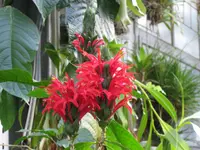
Unlike its relative Pachystachys lutea with yellow bracts, this species produces narrow reddish to brick-red bracts that hold small tubular flowers, which are adapted for pollination by nectar-feeding hummingbirds in its native range.

Shrubby growth habit

In suitable tropical conditions, it forms a compact, many-stemmed shrub typically 60–120 cm tall, with opposite leaves and distinctly elongated, cone-like inflorescences that appear mainly during warm, humid seasons.

FAQs about cardinal's-guard

Lack of flowering is usually linked to insufficient light, low nutrients, or old, unpruned stems. Ensure bright conditions, feed with a balanced fertilizer during active growth, and lightly prune after flowering spikes fade to stimulate new blooming wood.

Grow Healthy Plants with Botan Care

Keep your plants happy and healthy with plant identification, disease detection, and easy care guidance.

Botan plant care app — identify plants on mobile

Explore More Plants