Manage central cup
Rinse and refill the central water cup every 2–3 weeks to prevent salt buildup and mosquito larvae, then let it drain briefly before topping up with fresh, chlorine-free water.

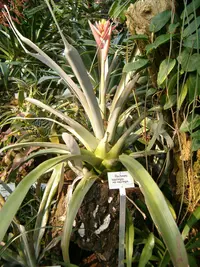
Aechmea aquilega is a tropical bromeliad that forms a stiff rosette of arching, often spiny-edged leaves that collect water in a central cup. It produces tall, colorful flower spikes with long-lasting bracts, followed by small fruits.
This species is native to humid forests of Brazil and nearby regions, where it often grows as an epiphyte on trees, but can adapt to pot culture. It is generally considered moderate in difficulty, as it tolerates indoor conditions if humidity and light are reasonable.
Those learning how to care for Aechmea aquilega should note its preference for bright, filtered light, a free-draining mix, and a consistently filled but clean central cup rather than heavy soil watering.

Care Difficulty
Moderate Care

Light Preference
Bright Indirect Light

Water Requirements
Moderate Water

Temperature Preference
Tropical / Frost Sensitive

Hardiness Zone
10–12

Soil Texture
Sandy, Loamy, Organic-rich

Soil pH
Acidic (5.5–6.5)

Soil Drainage
Well-drained

Fertilization
Light (every 4–6 weeks)
Scan your plant to receive care tips personalized for your specific plant
Available on iOS and Android
This bromeliad prefers bright, filtered light that mimics dappled tropical canopy conditions.
Watering should keep the central cup filled while allowing the potting mix to drain and dry slightly between soakings.
Stable warm conditions support strong foliage and flowering for this bromeliad.
This bromeliad prefers moderately humid air but copes with typical indoor conditions if not kept too dry.
This species prefers a loose, airy medium that drains quickly yet holds some moisture around the roots.
This bromeliad is well suited to container growing due to its compact root system and rosette growth habit.
This bromeliad benefits from light, controlled feeding in containers or nutrient-poor substrates.
Pruning needs are minimal and focus on hygiene and maintaining a tidy rosette.
Repotting is infrequent, mainly to refresh mix or accommodate offsets and crowded roots.
Propagation relies on offsets produced after the main rosette flowers and ages.
This species prefers warm conditions and needs protection from frost in most regions.

Plant Health Check
Not sure what's wrong with your plant? Check your plant's health inside the app.
In its native Atlantic Forest habitats, this species often grows as an epiphyte on tree branches, forming a water-holding rosette or tank that collects rain and organic debris.
The inflorescence typically shows yellowish to orange floral bracts with bluish to violet petals, a color combination that makes it easy to distinguish from many closely related Aechmea species.
Aechmea aquilega is native to the Brazilian Atlantic Forest biome, where it occurs from coastal restingas (sandy coastal vegetation) to humid forest interiors, contributing to local canopy and understory diversity.

The water-filled leaf tanks of Aechmea aquilega function as miniature aquatic ecosystems, providing habitat for insect larvae, small crustaceans, and even amphibian tadpoles, which in turn help recycle nutrients that the plant can absorb.
This bromeliad usually flowers once when mature, then focuses on producing offsets. Lack of bloom often relates to immaturity, insufficient light, or stress. Healthy offsets will eventually flower under stable, bright, warm conditions.
Keep your plants happy and healthy with plant identification, disease detection, and easy care guidance.