Persian Violet Care (Exacum affine)

Persian Violet

About Persian Violet

Persian violet (Exacum affine) is a compact, short-lived flowering plant often grown as a seasonal indoor or patio accent. It forms a low, rounded mound of glossy green leaves topped with many small, flat, starry blooms.

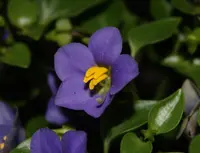
Flowers are usually violet to lavender with a yellow eye and a light fragrance, giving it a delicate, decorative look. It is native to the island of Socotra, off Yemen, where it grows in rocky, humid habitats.

This plant can be somewhat demanding, as it dislikes drying out, overheating, or poor light. To care for Persian Violet successfully, provide bright but indirect light, evenly moist soil, and good air circulation without drafts.

Main Plant Requirements

Care Difficulty

Moderate Care

Light Preference

Bright Indirect Light

Water Requirements

Keep Soil Moist

Temperature Preference

Tropical / Frost Sensitive

Hardiness Zone

10–11

Soil Texture

Loamy, Peaty, Organic-rich

Soil pH

Acidic (5.5–6.5), Slightly acidic (6.5–7.0)

Soil Drainage

Moist but well-drained

Fertilization

Moderate (every 2–4 weeks)

Get Personalized Care Plan

Scan your plant to receive care tips personalized for your specific plant

Available on iOS and Android

How to Care for the Persian Violet

This plant prefers bright, gentle light to produce compact growth and abundant blooms.

  • Provide 4–6 hours of bright, indirect light daily; morning sun with light afternoon shade suits Persian Violet best, especially in warmer regions.
  • Outdoors, position where it gets dappled or filtered light under taller plants; indoors, place near an east or bright north window, shielding from harsh midday sun.
  • Leaves turning pale, scorched, or crispy indicate too much direct sun, while stretched, weak stems and sparse flowering signal insufficient light, especially in winter.

This species needs evenly moist but not waterlogged soil for healthy roots and continuous flowering.

  • Water when the top 2–3 cm of soil feels dry, aiming to keep the root zone slightly moist without letting the pot sit in standing water.
  • Use a free-draining mix and containers with drainage holes so excess water can escape, reducing the risk of root rot in Exacum affine.
  • In cooler seasons or low light, expect slower drying and reduce watering; limp, dull leaves signal thirst, while yellowing lower leaves and a sour smell suggest overwatering.

Stable, mild temperatures support compact growth and longer blooming for this plant.

  • Aim for 65–75°F (18–24°C) for best growth, with only brief exposure down to 60°F (16°C) if kept drier and protected from drafts.
  • Avoid temperatures below 50°F (10°C), since the plant is not frost hardy and prolonged cold can cause leaf drop, root damage, or death.
  • In hot weather above 80°F (27°C), provide shade from strong afternoon sun, increase air movement, and monitor soil moisture more closely to prevent heat stress.

This species prefers moderately humid air and reacts quickly to very dry conditions.

  • Aim for 50–60% humidity to keep foliage turgid and flowering continuous in Persian Violet.
  • It tolerates short spells around 40% but prolonged dry air leads to limp leaves, crisp edges, and flower bud drop.
  • Increase humidity by grouping plants, using a nearby shallow pebble tray with water, or running a small room humidifier.

This plant grows best in a light, moist yet freely draining substrate.

  • Use a fine-textured, peat- or coco-based mix with added perlite to create a loose, airy structure for Exacum affine.
  • Aim for slightly acidic to neutral pH around 6.0–7.0, which supports nutrient uptake and steady flowering.
  • Blend 60–70% soilless potting mix with 20–30% perlite and a small amount of compost for organic matter.
  • Avoid heavy garden soil, pure compost, or mixes that stay waterlogged, which encourage root rot and reduced blooming.

This compact flowering species is well suited to container growing.

  • Choose a pot only 2–4 in wider than the root ball so the medium dries evenly between waterings.
  • Select a relatively shallow container since roots are fibrous and stay near the surface rather than growing deeply.
  • Use lightweight plastic for slower drying or porous terracotta where the environment is humid to balance moisture retention.

This plant benefits from light, consistent feeding during its active growing and flowering period.

  • Use a balanced liquid fertilizer (around 10-10-10 or 20-20-20) at 1/4–1/2 strength for Persian Violet in pots.
  • Feed every 2 weeks in spring and summer when growth and blooming are strongest.
  • Stop or reduce to monthly feeding in fall and winter when growth slows.
  • Avoid organic compost-heavy mixes in small containers, which can stay too wet and cause root issues.

Thoughtful pruning supports compact growth and prolonged flowering in Exacum affine.

  • Pinch back soft shoot tips in early growth to encourage branching and a fuller, dome-shaped plant.
  • Remove spent blooms and their stems to extend the flowering period and reduce seed set.
  • Cut out yellowing, dead, or damaged stems with clean, sharp scissors to limit disease spread.
  • Trim back overly long, leggy stems to maintain an even, dense canopy of foliage and flowers.

Repotting keeps this shallow-rooted plant healthy and blooming well in containers.

  • Check for roots circling the pot, emerging from drainage holes, or unexplained slow growth as signals to repot.
  • Plan to repot every 1 year, ideally in early spring before peak flowering starts.
  • Move to a pot only 2–3 cm wider, using fresh, well-draining mix to limit waterlogging.
  • Handle the root ball gently, loosen only lightly, water thoroughly, then keep in bright, indirect light for several days to reduce stress.

Propagation of this species is most reliable from fresh seed, though stem cuttings are also used.

  • Sow seeds in late winter to early spring on moist, fine seed mix, pressing lightly without covering heavily.
  • Maintain 70–75°F, bright indirect light, and consistently moist substrate until germination.
  • For cuttings, take non-flowering shoot tips, 5–7 cm long, and insert into sterile, moist rooting mix.
  • Provide high humidity, bottom warmth if possible, and gentle airflow to reduce rot while roots develop.

Exacum affine is not frost hardy and requires indoor conditions in regions with cold winters.

  • Move container plants indoors before temperatures drop below 50°F, keeping them in bright, indirect light.
  • Maintain indoor temperatures around 60–70°F with moderate humidity to prevent stress.
  • Water less in winter, letting the top layer of soil dry slightly between waterings to avoid root rot.
  • In mild climates without frost, outdoor plants still benefit from a light mulch to stabilize root-zone temperature.

Care Tips

Rotate During Bloom

Turn the pot 1/4 turn every 3–4 days during active flowering so buds develop evenly around the plant and stems do not lean toward a single light source.

Deadhead With Precision

Remove spent flowers by pinching or snipping them off just above the first pair of healthy leaves to encourage new buds instead of leaving bare, stubby stems.

Plan Short-Term Display

Treat the plant as a seasonal bloomer and replace or propagate after the main flowering flush declines rather than forcing it to perform for multiple years indoors.

Use Cool-Night Rest

Provide slightly cooler nights around 60–65°F for a few weeks after bud formation to extend flowering duration and keep growth compact.

Check For Root Binding

Inspect roots every few months and shift to a slightly wider pot only when you see dense white roots circling the root ball, which helps maintain stable moisture and consistent performance when growing Persian Violet.

Common Pests and Diseases

Aphids

This pest feeds on tender shoots and undersides of leaves, causing distortion, sticky honeydew, and reduced flowering.

Solution

Rinse stems and leaf undersides with a steady stream of lukewarm water, then treat remaining clusters with insecticidal soap or a horticultural oil spray, repeating weekly until new growth appears clean and vigorous.

Whiteflies

These insects congregate on the underside of leaves, causing yellowing, leaf drop, and a fine white flutter when the plant is disturbed.

Solution

Use yellow sticky traps to reduce adults, then spray the leaf undersides with insecticidal soap or neem oil, ensuring repeat treatments every 5–7 days to break the life cycle and support healthy Persian Violet indoor care.

Botrytis blight

This disease causes soft, water-soaked spots on petals and leaves that quickly develop gray, fuzzy mold, especially in cool, humid rooms.

Solution

Remove and discard all affected flowers and foliage, improve air circulation around the plant, avoid wetting the blooms, and apply a labeled fungicide if new lesions continue to appear despite drier, cleaner conditions.

Powdery mildew

This disease appears as white, powdery patches on leaves and stems, which can lead to yellowing and reduced flowering if humidity is high and air is stagnant.

Solution

Increase airflow, avoid overhead watering, remove badly affected leaves, and treat remaining foliage with a sulfur-based or potassium bicarbonate fungicide, repeating as directed until new growth emerges clean.

Interesting Facts

Endemic island origin

This species is native to the island of Socotra, off the coast of Yemen, where it grows on rocky slopes and in crevices in a subtropical climate with pronounced dry periods.

Short‑lived perennial habit

In its native habitat it behaves as a short‑lived perennial, but under cultivation it is most often treated as an annual or biennial because flowering declines after the first vigorous bloom period.

Scent and pollinators

The sweet, sometimes spicy fragrance of its star‑shaped flowers is strongest in warm conditions and is thought to help attract insect pollinators in its native range.

FAQs about Persian Violet

Lack of flowers often comes from low light, excessive heat, or old, exhausted plants. Provide bright, indirect light, moderate temperatures, and regular but light feeding. Pinching spent blooms also helps redirect energy to new buds when growing Persian Violet.

Grow Healthy Plants with Botan Care

Keep your plants happy and healthy with plant identification, disease detection, and easy care guidance.

Botan plant care app — identify plants on mobile

Explore More Plants