Replace After Peak
Treat plants as short-lived perennials and replant every 2–3 years, since older clumps become woody, open in the center, and flower less reliably.

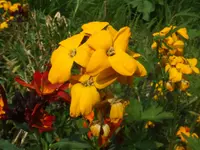
Wallflower, Erysimum × cheiri, is a short-lived perennial often grown as a biennial bedding plant for its dense clusters of fragrant spring flowers. It forms compact, upright mounds with narrow, evergreen to semi-evergreen leaves and flower spikes in yellow, orange, red, or purple tones.
This plant originates from rocky and coastal regions of southern Europe and the Mediterranean, so it adapts well to poor, well-drained soils and exposed sites. It suits borders, rock gardens, and containers where cool weather highlights its bloom.
Erysimum × cheiri is generally easy to grow if given full sun, good drainage, and moderate moisture, but it can decline quickly in very wet or humid conditions. Basic knowledge of how to care for Wallflower helps keep plants vigorous for more than one season.

Care Difficulty
Moderate Care

Light Preference
Full Sun

Water Requirements
Moderate Water

Temperature Preference
Cool Climate

Hardiness Zone
6–9

Soil Texture
Sandy, Loamy, Rocky

Soil pH
Slightly acidic (6.5–7.0), Slightly alkaline (7.0–7.5)

Soil Drainage
Well-drained

Fertilization
Minimal (feed rarely)
Scan your plant to receive care tips personalized for your specific plant
Available on iOS and Android
Erysimum × cheiri flowers best with abundant direct sun and only light afternoon protection in hotter regions.
This species prefers slightly dry, well-drained conditions rather than consistently moist soil.
This plant prefers cool, mild conditions and tolerates moderate cold better than strong heat.
Humidity is rarely a concern for Erysimum × cheiri in typical home or outdoor conditions.
Erysimum × cheiri prefers lean, well-drained, slightly alkaline soil to avoid root problems and short lifespan.
This species can perform well in containers if the potting setup prevents waterlogging and overly rich conditions.
Erysimum × cheiri is modest in its needs but responds well to light, balanced feeding during active growth.
Pruning Erysimum × cheiri keeps plants compact, prolongs flowering, and delays woody decline.
Wallflower is most often transplanted in garden beds rather than maintained long term in containers.
Erysimum × cheiri is commonly renewed by seed or softwood cuttings rather than relying on old plants.
This plant is fairly cold hardy but can suffer in severe or very wet winter conditions.

Plant Health Check
Not sure what's wrong with your plant? Check your plant's health inside the app.
Erysimum × cheiri is a long-cultivated hybrid between closely related wallflower species, and most garden plants do not exist as a stable wild population but persist mainly in old walls, ruins, and gardens as escapes from cultivation.
The flowers are well known for a pronounced clove-like fragrance, especially in the evening, which helps attract night and crepuscular pollinators such as moths in addition to daytime insects.
This plant typically flowers in spring in temperate climates and is often grown as a biennial or short-lived perennial, producing a leafy rosette in the first year and its main flush of flowers in the second year before declining.

Historic European cottage gardens frequently featured this wallflower in masonry walls and graveyards, and Victorian gardeners selected many color forms, which helped turn it into one of the classic spring bedding plants paired with tulips in formal displays.
Poor flowering usually comes from plants getting old, heavy seed production, or nutrient imbalance. Deadhead spent spikes, avoid high-nitrogen fertilizer, and replace woody plants every 2–3 years to maintain strong floral displays.
Keep your plants happy and healthy with plant identification, disease detection, and easy care guidance.