Shear After Flowering
Once the main flush of blooms fades, shear the entire mound back by about one-third to remove spent flower stems and encourage a dense mat of fresh foliage with more repeat flowering.

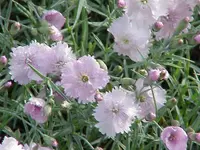
Cheddar pink, Dianthus gratianopolitanus, is a low, mat-forming perennial often used as edging, in rock gardens, or to soften the edges of paths and walls. It forms dense, bluish-green foliage cushions topped with many small, fringed pink flowers that are usually fragrant.
This species is native to rocky slopes and grasslands in parts of central and southern Europe, where it thrives in sunny, well-drained sites. It is generally easy to grow if given full sun, low to moderate moisture, and sharply draining soil, which also shapes how to care for cheddar pink.

Care Difficulty
Easy Care

Light Preference
Full Sun

Water Requirements
Low Water

Temperature Preference
Cold Hardy

Hardiness Zone
3–8

Soil Texture
Sandy, Loamy, Rocky

Soil pH
Slightly acidic (6.5–7.0), Slightly alkaline (7.0–7.5)

Soil Drainage
Well-drained

Fertilization
Minimal (feed rarely)
Scan your plant to receive care tips personalized for your specific plant
Available on iOS and Android
This sun-loving perennial thrives with strong light and cool roots in well-drained soil.
This species prefers slightly dry conditions and is sensitive to prolonged moisture around the roots.
This hardy perennial tolerates a wide temperature range but flowers best in cool to mild conditions.
This alpine species prefers relatively dry air and does not need extra humidity.
This species needs lean, sharply drained soil to stay healthy and long-lived.
This species is well suited to container growing, especially in sunny patios and rock-garden troughs.
Dianthus gratianopolitanus benefits from modest feeding to support flowering without producing weak, lush growth.
Pruning helps Dianthus gratianopolitanus stay compact, extend blooming, and prevent the clumps from becoming woody.
Cheddar pink is usually grown in borders or rock gardens, so transplanting in-ground plants is more common than repotting.
Dianthus gratianopolitanus is commonly propagated to refresh older clumps and increase plants for edging or rock gardens.
This species is quite cold hardy but benefits from simple winter care, especially in colder regions or containers.

Plant Health Check
Not sure what's wrong with your plant? Check your plant's health inside the app.
This species naturally occurs on sunny, rocky limestone slopes and cliffs in central Europe, forming low, mat-like cushions tightly anchored in shallow, alkaline soils.
The small, frilled, pink flowers produce a noticeable clove-like fragrance that attracts pollinating insects, especially during warm, still weather.
It keeps compact, bluish-green, needle-like leaves year-round, building dense cushions that help protect the root zone from temperature swings and moisture loss.

The specific epithet gratianopolitanus refers to the old Latin name of Grenoble in France (Gratianopolis), indicating that this species was first described from plants collected in that region.
Lack of flowers usually comes from too little sun, overly rich or high‑nitrogen fertilizer, or old, unpruned stems. Deadhead faded blooms, avoid heavy feeding, and ensure a bright, open position to restore flowering.
Keep your plants happy and healthy with plant identification, disease detection, and easy care guidance.