Pot marigold Care (Calendula officinalis)

Also known as: calendula, marigold
Pot marigold

About Pot marigold

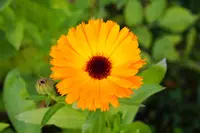
Pot marigold, Calendula officinalis, is a cool-season flowering annual valued for its bright, daisy-like blooms in yellow and orange tones. Plants usually form low, bushy clumps with soft, slightly sticky leaves and continuous flowers over a long season in mild climates.

This species originates from the Mediterranean region but is now widely grown in gardens and containers across temperate areas. It is generally easy to grow, forgiving of minor care mistakes, and often used as a starter plant for new gardeners who want to learn how to care for Pot marigold.

It prefers full sun, moderately fertile, well-drained soil, and regular but not excessive moisture, making it suitable for many home garden conditions.

Main Plant Requirements

Care Difficulty

Easy Care

Light Preference

Full Sun

Water Requirements

Moderate Water

Temperature Preference

Cool Climate

Hardiness Zone

2–11

Soil Texture

Sandy, Loamy, Organic-rich

Soil pH

Acidic (5.5–6.5), Slightly acidic (6.5–7.0)

Soil Drainage

Well-drained

Fertilization

Light (every 4–6 weeks)

Get Personalized Care Plan

Scan your plant to receive care tips personalized for your specific plant

Available on iOS and Android

How to Care for the Pot marigold

Calendula officinalis performs best in bright, direct sun with some protection from extreme afternoon heat.

  • Provide 6–8 hours of direct sunlight daily, ideally with strong morning sun and lighter afternoon exposure to reduce scorching.
  • Allow light partial shade in very hot summers; flowering may decrease slightly, but foliage stays healthier and less stressed.
  • Avoid locations shaded for more than 4–5 hours, as Pot marigold will stretch, produce fewer blooms, and become more prone to disease in low light.

Calendula officinalis prefers evenly moist, well-drained soil that is allowed to dry slightly between waterings.

  • Water when the top 2–4 cm of soil feels dry, aiming for thorough soaking that reaches the root zone without leaving standing water.
  • Reduce watering in cool or rainy periods and increase modestly during hot, dry weather, especially on sandy or fast-draining soils.
  • Watch for yellowing, limp leaves and soggy soil as signs of overwatering, while drooping, crisp foliage and very dry soil indicate underwatering.

This cool-season annual prefers mild temperatures and tolerates light frost better than intense heat.

  • Aim for active growth at 55–70°F (13–21°C), when flowering is strongest and plants remain compact and sturdy.
  • Tolerates light frost down to about 25–28°F (-4 to -2°C), but hard freezes below this can kill plants, especially young seedlings.
  • Handles short periods of 80–90°F (27–32°C) but prolonged heat reduces blooms; in hot summers, expect slower growth and more rapid decline later in the season.

Humidity is rarely a limiting factor for this species and typical indoor or outdoor levels are usually adequate.

This species prefers moderately fertile, well-drained ground that does not stay saturated.

  • Use a loose loam or sandy loam enriched with 20–30% mature compost to support steady flowering.
  • Aim for slightly acidic to neutral pH around 6.0–7.0 for balanced nutrient availability in Calendula officinalis.
  • Improve drainage and aeration by blending in coarse sand or fine horticultural grit, especially in heavy or compacted substrates.
  • Avoid dense clay, waterlogged spots, or purely peat-based mixes, which promote root rot and weak growth.

This species grows well in containers when given stable moisture and adequate root space.

  • Select a pot at least 20–25 cm wide and deep so roots can spread and the plant does not dry out too quickly.
  • Choose a heavier terracotta or ceramic container outdoors to reduce tipping as the plant becomes leafy and top-heavy.
  • Use a free-draining mix and elevate the pot slightly on feet or bricks so drainage holes never sit in standing water.

Calendula officinalis benefits from modest feeding to support steady flowering without excessive leafy growth.

  • Use a balanced liquid fertilizer (for example 10-10-10) at 1/2 strength every 3–4 weeks during the main growing season.
  • Alternatively, apply a thin layer of mature compost around plants in spring for slow, gentle nutrition.
  • In containers, consider a slow-release granular fertilizer mixed into the potting soil at planting time.
  • Stop feeding Pot marigold in late fall and avoid fertilizing in winter when growth naturally slows.

Calendula officinalis responds well to light, ongoing pruning that keeps plants compact and flowering longer.

  • Deadhead spent blooms using clean scissors or snips to encourage continuous bud formation.
  • Trim back leggy or sprawling stems by 1/3 to improve shape and promote bushier growth.
  • Remove any dead, diseased, or damaged stems promptly to limit disease spread and improve airflow.
  • At season’s end, shear plants close to the ground to tidy beds and reduce self-seeding if undesired.

This annual is usually transplanted into beds or larger containers rather than repotted repeatedly.

  • Transplant seedlings outdoors in spring after frost, when they have 2–3 true leaves and roots hold the plug together.
  • Move container plants up one size if roots circle the pot base or growth slows despite good care.
  • Handle roots gently, keeping the root ball intact, and water thoroughly after transplanting to reduce stress.
  • Space plants 20–30 cm apart in well-drained soil so roots establish quickly and avoid future crowding.

Calendula officinalis is most commonly propagated from seed, which germinates fast under mild conditions.

  • Sow seeds indoors 4–6 weeks before last frost or direct-sow outdoors once soil reaches about 55–65°F.
  • Press seeds 0.5–1 cm deep into moist, well-drained seed mix and keep in bright, indirect light.
  • Maintain soil evenly moist but not waterlogged; germination usually occurs in 7–14 days.
  • Allow some flower heads to mature and dry if self-sown seedlings are desired for the next season.

As a cool-season annual, calendula often dies back in hard freezes and usually needs only simple winter management.

  • In mild climates, plants may overwinter; apply a light mulch to buffer soil temperature and reduce heaving.
  • Where winters are cold, treat plants as annuals and remove after hard frost, leaving roots if soil structure is needed.
  • Container plants in regions with light frost can be moved to a cool, bright, frost-free spot for extended bloom.

Care Tips

Deadhead For Bloom

Remove spent flowers every few days by pinching or cutting just above a leaf node to extend the flowering period and keep plants compact rather than leggy.

Sequential Sowing

Sow small batches every 2–3 weeks from early spring to midsummer so flowering is staggered and there is always a new wave of buds coming on.

Powdery Mildew Management

Space plants to allow airflow, water at soil level in the morning, and promptly remove and discard heavily infected leaves to reduce powdery mildew pressure without relying solely on fungicides.

Cutting Patch Setup

Grow plants in short, dense rows with 20–25 cm spacing so flowers are easier to harvest quickly and stems stay long and straight for cutting.

Seed Saving Discipline

Select the healthiest, most vigorous plants and allow only some flowers to mature fully into dry seed heads, then collect and store in a cool, dry place to maintain strong genetics when growing Pot marigold from saved seed.

Common Pests and Diseases

Powdery mildew

This disease often appears in warm, dry conditions with poor air circulation. Symptoms include white, powdery patches on leaves, stems, and sometimes flower buds.

Solution

Remove heavily infected leaves to reduce spore load, then improve spacing and airflow around plants. Water at soil level, avoid overhead watering, and if needed apply a sulfur or potassium bicarbonate fungicide labeled for ornamentals, following all label directions.

Leaf spot

This disease causes small brown, purple, or tan spots on leaves that may merge into larger dead areas, especially in damp or crowded plantings. Symptoms include yellowing and premature drop of older foliage.

Solution

Prune and discard affected leaves and any dead plant debris on the soil surface to reduce reinfection. Reduce leaf wetness by watering at the base, improve air circulation, and use a copper-based or chlorothalonil fungicide if spots continue to spread in wet weather.

Aphids

These insects cluster on young stems, buds, and leaf undersides, sucking sap and causing distorted growth and sticky honeydew. This pest can also attract sooty mold on the sugary residue.

Solution

Spray plants with a firm stream of water to dislodge colonies, then treat remaining aphids with insecticidal soap or neem oil, ensuring full coverage of leaf undersides. Encourage natural predators such as lady beetles and avoid excessive nitrogen fertilizer that promotes soft, tender growth.

Leafhoppers

These insects feed by piercing leaves and sucking sap, leading to pale speckling, leaf yellowing, and occasional leaf curl or scorch. This pest can also transmit plant pathogens between calendula plants.

Solution

Inspect foliage regularly and remove heavily affected leaves to reduce pest numbers. Use yellow sticky traps for monitoring, improve plant vigor with proper watering, and treat persistent infestations with insecticidal soap or a pyrethrin product labeled for ornamentals, applied in the evening to protect beneficial insects.

Botrytis blight

This disease develops in cool, moist conditions and causes soft brown spots on petals, buds, and stems, often covered with gray fuzzy mold. Symptoms include collapsing flower heads and mushy, water-soaked tissue at the base of affected parts.

Solution

Promptly remove and discard infected flowers, stems, and any fallen plant material, and increase airflow by thinning dense growth. Avoid overhead irrigation, water in the morning, and if the problem persists apply a labeled fungicide for Botrytis such as a chlorothalonil or copper product as part of broader Calendula officinalis care.

Interesting Facts

Long flowering season

This species often flowers repeatedly from late spring until frost under suitable conditions, which is why it has been historically associated with the idea of a calendar month of blooms.

Sticky glandular hairs

Its stems and flower bracts are covered in glandular hairs that secrete a resinous substance, which gives the plant a distinctive scent and can deter some small herbivores and insects.

Edible ray florets

The bright orange or yellow outer florets are edible and have been used as a natural food colorant, sometimes called poor man’s saffron, to tint cheeses, butters, and rice dishes.

Botan icon

Did you know?

Historical records from medieval Europe describe dried flowers of this species being added to soups and stews during winter, partly for color and partly because people believed the plant symbolized comfort and constancy during scarce months.

FAQs about Pot marigold

Lack of flowers usually comes from too much shade, excess nitrogen fertilizer, or spent blooms left on the plant. Provide strong light, avoid high‑nitrogen feeds, and deadhead regularly so energy goes into new buds instead of seed.

Grow Healthy Plants with Botan Care

Keep your plants happy and healthy with plant identification, disease detection, and easy care guidance.

Botan plant care app — identify plants on mobile

Explore More Plants