Root management
In containers, slip the plant out of its pot once a year to check for circling roots and lightly tease or prune them back to prevent root binding and promote a stronger, more fibrous root system.

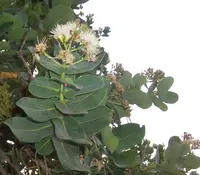
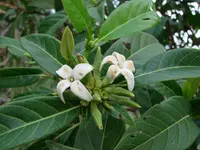
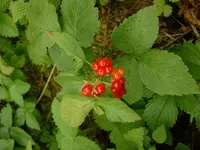
Water berry, Syzygium cordatum, is an evergreen tree or large shrub native to moist regions of southern Africa, often found along rivers and wetlands. It has glossy green leaves, pale flowers, and showy reddish to purple berries that attract birds. In suitable climates it can be used as a landscape tree, hedge, or large container specimen, forming a dense, rounded crown. Growth is usually moderate and steady, which simplifies basic pruning and shaping. To care for Water Berry, provide consistently moist but not waterlogged soil, good drainage, and a position with ample light and mild protection from harsh, drying conditions.

Care Difficulty
Moderate Care

Light Preference
Full Sun

Water Requirements
Keep Soil Moist

Temperature Preference
Tropical / Frost Sensitive

Hardiness Zone
10–11

Soil Texture
Sandy, Loamy, Organic-rich

Soil pH
Acidic (5.5–6.5), Slightly acidic (6.5–7.0)

Soil Drainage
Moist but well-drained

Fertilization
Minimal (feed rarely)
Scan your plant to receive care tips personalized for your specific plant
Available on iOS and Android
Syzygium cordatum prefers bright conditions that mimic its natural riverside habitat.
This species favors consistently moist, not waterlogged, soil similar to its native streamside conditions.
This tree grows best in warm, frost-free climates with mild seasonal variation.
This species prefers moderate to high humidity but adapts to many household conditions.
Syzygium cordatum thrives in evenly moist, well-aerated, loamy soil that drains freely but does not dry out quickly.
This tree can be grown in containers if provided with a stable, deep pot and managed moisture.
Syzygium cordatum benefits from light, steady feeding but often grows acceptably in fertile ground without extra inputs.
Syzygium cordatum responds well to thoughtful pruning that maintains structure and health.
This species is usually grown in the ground, so focus on careful transplanting rather than frequent repotting.
Syzygium cordatum is commonly propagated from semi-hardwood cuttings or seed under warm, stable conditions.
This warm-climate tree has low frost tolerance and needs winter protection in regions with freezing temperatures.

Plant Health Check
Not sure what's wrong with your plant? Check your plant's health inside the app.
This species naturally grows along rivers, streams, and wetlands in eastern and southern Africa, where its dense root system helps stabilize banks and reduce erosion.
The reddish to purple, water-rich fruits are eaten by many bird species, which disperse the seeds over long distances and help the tree colonize new moist habitats.
The crushed leaves and young twigs release a spicy, clove- or cinnamon-like aroma due to essential oils typical of the myrtle family, which helps in basic field identification and informs Syzygium cordatum plant care in warm regions.

In its native range, this tree can form almost pure stands along watercourses, creating distinctive gallery forests that provide shade, nesting sites, and foraging habitat for a wide range of riverine wildlife.
This species becomes a small tree with a strong root system and dense canopy, so it is not ideal as a long-term houseplant. Short-term indoor display is possible in bright spaces, but Water Berry indoor care is demanding.
Keep your plants happy and healthy with plant identification, disease detection, and easy care guidance.