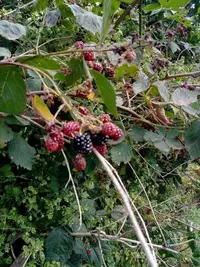
Stone Bramble Care (Rubus saxatilis)

Stone Bramble

About Stone Bramble

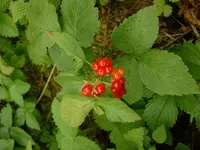
Stone bramble, Rubus saxatilis, is a low, spreading bramble in the rose family that forms loose clumps rather than dense thickets. It has slender, arching stems, three-part leaves, and small white flowers that develop into shiny, bright red berries.

This species is native to cool, temperate regions of Europe and parts of Asia, where it grows in light woodland, rocky slopes, and open, moist habitats. It is generally hardy and resilient, but dislikes hot, dry conditions and compacted, nutrient-poor soil.

Gardeners who learn how to care for Stone Bramble find it easiest in partial shade with consistently moist, well-drained, humus-rich soil.

Main Plant Requirements

Care Difficulty

Moderate Care

Light Preference

Partial Shade

Water Requirements

Regular Water

Temperature Preference

Cold Hardy

Hardiness Zone

3–7

Soil Texture

Loamy, Sandy, Rocky

Soil pH

Acidic (5.5–6.5), Slightly acidic (6.5–7.0)

Soil Drainage

Moist but well-drained

Fertilization

Minimal (feed rarely)

Get Personalized Care Plan

Scan your plant to receive care tips personalized for your specific plant

Available on iOS and Android

How to Care for the Stone Bramble

This low shrub prefers cool, woodland light rather than strong, open exposure.

  • Provide 3–5 hours of gentle morning sun with bright dappled or filtered light for the rest of the day, similar to an open forest edge.
  • Tolerates partial to full shade, but fruiting and vigor decline in very deep shade; aim for at least 2–3 hours of indirect brightness.
  • Avoid harsh afternoon sun, especially in summer, which can scorch leaves and dry shallow roots; increase shade in hot, exposed sites.

This species prefers consistently moist, cool soil without becoming waterlogged.

  • Water when the top 2–4 cm of soil feels slightly dry, then soak the root zone thoroughly so moisture penetrates 10–15 cm deep.
  • Use humus-rich, well-draining soil; avoid standing water, which can cause root rot and yellowing leaves in Rubus saxatilis.
  • Increase watering during hot, dry spells and reduce in cool, rainy periods; wilting and dull, curling leaves usually indicate underwatering.

This woodland bramble is naturally adapted to cool, temperate climates with cold winters.

  • Active growth is strongest around 55–70°F (13–21°C); plants tolerate typical outdoor spring and fall conditions well.
  • Dormant crowns survive down to about -20°F (-29°C) under mulch or snow, making them suitable for most temperate regions with frost and snow.
  • Summer heat above 80–85°F (27–29°C) can stress plants; provide shade and mulching to keep roots cool and reduce moisture loss.

This species handles a fairly wide humidity range and usually does not need special humidity control outdoors or in unheated spaces.

This plant prefers loose, humus-rich soil that stays evenly moist but never waterlogged.

  • Use a loamy mix with high organic matter, such as garden loam blended with leaf mold or compost, to mimic woodland conditions.
  • Ensure drainage is free by avoiding compacted clay and by incorporating coarse sand or fine gravel to open the structure.
  • Aim for slightly acidic to neutral pH around 5.5–7.0, which supports nutrient uptake and healthy root activity in Rubus saxatilis.
  • Avoid poorly drained, heavy soils or very dry, stony substrates, as these lead to weak growth and increased drought stress.

This species can be grown in containers if the pot is large, stable, and allows for spreading roots and shoots.

  • Choose a wide, low container that gives room for its creeping habit while reducing the risk of tipping in wind or rain.
  • Fill the pot with a moisture-retentive but free-draining mix, such as 2 parts compost to 1 part coarse sand or fine bark chips.
  • Place the container where trailing stems can spill over an edge or be lightly supported, preventing canes from kinking at the rim.

Rubus saxatilis grows well in modest soils and needs only light feeding to support healthy foliage and fruiting.

  • Apply a thin layer of garden compost or well-rotted manure around the root zone in early spring.
  • Use a balanced slow-release fertilizer (around 10-10-10) at half strength once in spring for Stone Bramble in poorer soils.
  • Avoid high-nitrogen products that push soft, leafy growth at the expense of flowers and fruit set.
  • Do not feed in late fall or winter, when the plant is dormant and nutrient demand is low.

Pruning Rubus saxatilis is simple and mainly keeps the plant healthy and compact.

  • Cut out dead, diseased, or storm-damaged canes at ground level in late winter or very early spring.
  • Thin crowded stems to improve air movement and light penetration, maintaining an open, low clump.
  • Shorten excessively long or wayward shoots after fruiting to control spread and shape.
  • Use clean, sharp bypass pruners and disinfect blades when moving between plants to limit disease.

This species is usually grown in the ground, so focus on careful transplanting rather than frequent repotting.

  • Transplant Rubus saxatilis in early spring or early fall, when temperatures are mild and soil is moist.
  • Move plants when clumps become congested, growth slows, or stems begin to die out in the center.
  • Lift with a wide root ball, keep roots shaded and moist, and replant at the same depth in well-drained soil.
  • Water thoroughly after transplanting, then maintain even moisture for several weeks to limit transplant shock.

Rubus saxatilis is commonly propagated to expand groundcover patches or share plants.

  • Divide established clumps in early spring or fall, replanting divisions promptly into moist, well-drained soil.
  • Use simple layering by pinning a low, flexible stem to the soil until roots form, then sever and transplant.
  • Sow fresh seed outdoors in fall so natural winter chilling supports germination the following spring.
  • Provide consistent moisture, partial shade, and loose soil to encourage strong root development in new plants.

Rubus saxatilis is cold hardy in most temperate gardens and usually needs minimal winter care.

  • In colder regions, apply a 5–7 cm layer of organic mulch around the root zone after the ground cools.
  • Allow top growth to die back naturally; leave stems over winter to help insulate crowns.
  • Container-grown plants benefit from moving to a sheltered, unheated but frost-free spot if winters are severe.

Care Tips

Low-profile support

Use short, discreet pegs or low twigs to pin down sprawling stems so they root at the nodes and slowly form a dense, stable groundcover that better resists erosion and foot traffic.

Targeted runner control

In late spring, cut or lift and replant overly vigorous runners at the patch edges to stop unwanted spread while still using healthy pieces to extend the planting where you want it.

Leaf litter mulching

Mimic woodland conditions by keeping a thin layer of shredded leaves around plants, which cools the root zone, preserves moisture, and gradually feeds the shallow roots without smothering new shoots.

Flower and fruit management

On young or stressed plants, remove some flower clusters so the plant diverts energy into root and shoot growth, then allow full fruiting only once clumps are well established.

Patch rejuvenation

Every 3–4 years, thin out the oldest, weakest canes at ground level and top-dress with compost to keep the planting vigorous and productive when growing Stone Bramble.

Common Pests and Diseases

Raspberry cane aphid

This pest feeds on young canes and leaves, causing curling, distortion, and sticky honeydew that can attract sooty mold. Infestations are often heaviest on tender new growth and sheltered parts of the plant.

Solution

Prune out heavily infested shoot tips and dispose of them, then spray the remaining foliage thoroughly with a strong stream of water to dislodge aphids. If populations remain high, use an insecticidal soap or a ready-to-use horticultural oil labeled for cane fruits, applying in the evening and repeating as directed while protecting beneficial insects when possible.

Raspberry leaf spot

This disease causes small, round, pale to gray spots with darker borders on leaves, which can merge and lead to premature defoliation. Symptoms include thinning foliage and reduced plant vigor, especially in dense, damp stands.

Solution

Remove and destroy infected leaves and old canes after fruiting to reduce overwintering spores, and avoid overhead watering so foliage dries quickly. Maintain good spacing and airflow, and in severe, recurring cases use a labeled fungicide for caneberries early in the season according to label directions.

Raspberry spur blight

This disease produces purple-brown lesions around buds and leaf bases on canes, which can crack and girdle tissue, leading to dead spurs and reduced fruiting. Symptoms include weak cane growth and fewer flowering laterals on affected canes.

Solution

Cut out and destroy infected canes at ground level during dormancy, and avoid excessive nitrogen fertilization that promotes lush, susceptible growth. Improve air movement by thinning crowded stems, and in wet climates consider a preventive fungicide labeled for spur blight at early leaf emergence if the problem is persistent.

Spider mites

These insects are tiny sap feeders that cause fine stippling, bronzing, and dulling of leaves, often with fine webbing on the undersides. Symptoms include stressed, off-color foliage during hot, dry weather.

Solution

Rinse foliage, especially leaf undersides, with a firm stream of water every few days to knock mites off and raise humidity around the plants. If populations stay high, apply insecticidal soap or a light horticultural oil thoroughly to both sides of leaves, repeating as needed and avoiding treatment during high heat to prevent leaf damage.

Cane blight

This disease infects wounded canes, causing dark, sunken lesions that may ooze and eventually kill sections above the infection point. Symptoms include sudden wilting or dieback of cane tips and poor fruiting on affected stems.

Solution

Prune out blighted cane sections well below visible symptoms and discard them, sanitizing tools between cuts with alcohol or a 10% bleach solution. Time major pruning for dry weather, avoid injuring canes during cultivation, and limit overhead irrigation; in areas with a history of cane blight, consider a labeled fungicide at bud break as part of broader Rubus saxatilis care instructions.

Interesting Facts

Naturally sparse fruiting

This species typically produces only 1–3 bright red drupelets per fruit cluster, unlike many other brambles that form large, multi-drupelet berries. The small, bead-like fruits are visually distinctive and are an adaptation to its shaded, nutrient-poor woodland habitats.

Preference for rocky soils

In its native range across Europe and parts of Asia, this plant often grows in rocky, stony, or skeletal soils on forest slopes. The species epithet saxatilis literally means ‘rock-dwelling’, reflecting its frequent occurrence among stones and boulders.

Clonal carpet former

The plant spreads mainly by creeping rhizomes, forming low, patchy colonies in forest understories. These clonal patches can persist for many years, helping the species maintain a foothold in competitive woodland communities.

Botan icon

Did you know?

In several boreal and montane forest ecosystems, dense colonies of this species can significantly influence ground-layer composition by competing with tree seedlings and herbs for light and nutrients, which makes it an important indicator species for changes in forest understory conditions.

FAQs about Stone Bramble

This species spreads moderately by creeping roots and self-seeded berries, forming patches over time. It is usually manageable in gardens if runners are thinned, excess seedlings removed, and planting space planned in advance.

Grow Healthy Plants with Botan Care

Keep your plants happy and healthy with plant identification, disease detection, and easy care guidance.

Botan plant care app — identify plants on mobile

Explore More Plants