Early sexing check
Inspect pre-flowers at stem nodes with a small magnifier once plants show maturity so you can remove unwanted male or hermaphroditic plants before they shed pollen and seed your crop.

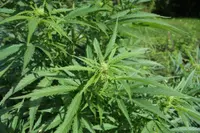
Cannabis sativa is an annual, herbaceous plant grown for its distinctive leaves, flowers, and fibers. It has an upright habit with palmate, serrated leaves and can become quite tall in ideal conditions.
In the wild, it likely originated in Central Asia and is now cultivated in many regions with suitable climates. It adapts relatively well but needs stable warmth, good light, and low to moderate humidity to stay healthy.
This species grows best in well-drained, fertile soil and dislikes waterlogged conditions. A basic understanding of how to care for cannabis helps growers manage its light needs, sex expression, and sensitivity to overwatering or nutrient imbalance.

Care Difficulty
Moderate Care

Light Preference
Full Sun

Water Requirements
Moderate Water

Temperature Preference
Tropical / Frost Sensitive

Hardiness Zone
9–11

Soil Texture
Sandy, Loamy, Organic-rich

Soil pH
Acidic (5.5–6.5), Slightly acidic (6.5–7.0)

Soil Drainage
Well-drained

Fertilization
Moderate (every 2–4 weeks)
Scan your plant to receive care tips personalized for your specific plant
Available on iOS and Android
This species needs strong, consistent light to support dense growth and flowering.
Watering should balance steady moisture with fast drainage to protect roots from oxygen loss.
Stable, moderate warmth supports healthy growth and predictable flowering.
This species responds strongly to humidity changes throughout its growth stages.
Soil for this species must balance high aeration with steady moisture and nutrient availability.
This species is well suited to container cultivation when root space and stability are managed carefully.
Nutrient-demanding Cannabis sativa responds strongly to consistent, moderate feeding during active growth.
Thoughtful pruning of Cannabis sativa directs energy to stronger branches and better flower development.
Container-grown Cannabis sativa benefits from timely pot size increases or careful transplanting outdoors.
Most home growers propagate Cannabis sativa by seed, with cuttings used to maintain specific genetics.
In most climates Cannabis sativa completes its life cycle before hard winter and does not overwinter outdoors.

Plant Health Check
Not sure what's wrong with your plant? Check your plant's health inside the app.
Cannabis sativa typically produces higher proportions of tetrahydrocannabinol (THC) relative to some other Cannabis types, and its cannabinoid profile has been characterized in detail using modern chromatography and mass spectrometry methods.
This species often develops a tall, slender architecture with long internodes and narrow leaflets, an adaptation suited to higher light environments and dense stands in its original habitats.
Cannabis sativa is usually dioecious, meaning individual plants are either male or female, a trait confirmed by genetic studies that have identified distinct sex chromosomes (X and Y).

Archaeobotanical and historical evidence shows that Cannabis sativa fiber was used for making ropes and textiles in several ancient cultures across Eurasia thousands of years ago, long before its chemical constituents were scientifically described.
Brown leaves usually come from nutrient burn, excess light or heat, wind scorch, or salt buildup in the medium. Check fertilizer strength, light distance, and root-zone moisture, then flush and adjust feeding before trimming dead tissue.
Keep your plants happy and healthy with plant identification, disease detection, and easy care guidance.