Edge spread control
Install a shallow root barrier or metal edging 10–15 cm deep around beds to keep Lady's-mantle from creeping into lawns and paths through self-seeding and short runners.

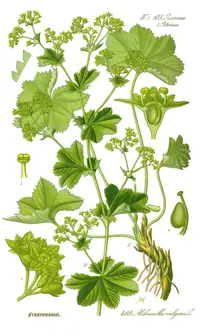
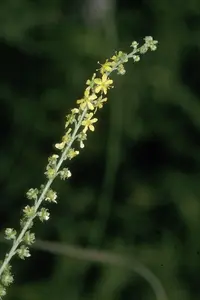
Lady's-mantle, Alchemilla vulgaris, is a low-growing perennial herb valued for its soft, scalloped leaves that catch and hold water droplets. It forms neat mounds and produces airy clusters of small yellow-green flowers in late spring to summer.
This plant is native to cool, temperate regions of Europe and is often found in meadows, woodland edges, and moist slopes. Its resilient foliage and adaptable nature make it suitable for borders, groundcovers, and cottage-style plantings.
Alchemilla vulgaris is generally easy to grow, tolerating a range of soils and partial shade. Those learning how to care for Lady's-mantle usually find it forgiving, provided soil does not stay dry for long periods.

Care Difficulty
Easy Care

Light Preference
Partial Shade

Water Requirements
Moderate Water

Temperature Preference
Cold Hardy

Hardiness Zone
3–8

Soil Texture
Loamy, Clay, Organic-rich

Soil pH
Acidic (5.5–6.5), Slightly acidic (6.5–7.0)

Soil Drainage
Moist but well-drained

Fertilization
Minimal (feed rarely)
Scan your plant to receive care tips personalized for your specific plant
Available on iOS and Android
This perennial prefers cool conditions with soft light rather than intense midday sun.
This plant prefers evenly moist but not saturated soil during active growth.
This hardy perennial tolerates a wide temperature range but grows best in cool to mild conditions.
This species is adaptable and humidity is rarely a concern in typical outdoor conditions.
This plant prefers moist, fertile, well-drained loam that does not dry out completely.
This species can grow well in containers if moisture and space for its spreading habit are managed carefully.
Alchemilla vulgaris is not a heavy feeder but responds well to modest nutrition in poor soils.
Pruning helps maintain dense foliage and tidy form in Alchemilla vulgaris.
Lady's-mantle is usually grown in the ground, but young plants in containers may need occasional transplanting.
Alchemilla vulgaris is most often propagated by division, but seeds are also useful for new plantings.
This perennial is generally cold hardy and needs minimal winter care in most temperate gardens.

Plant Health Check
Not sure what's wrong with your plant? Check your plant's health inside the app.
This species frequently forms crystal-clear water droplets along the leaf edges through guttation, where root pressure forces excess water out of special leaf-tip pores called hydathodes, creating the familiar beaded ring on cool, humid mornings.
Its small dry fruits are dispersed mainly by raindrops; the cupped leaf blades collect water, and when drops hit, the seeds are splashed and flicked away from the parent plant, aiding local colonization of moist habitats.
Alchemilla vulgaris often reproduces by apomixis, meaning it can form viable seeds without fertilization, so offspring are genetically very similar to the parent, which helps stabilize its traits across generations and makes Alchemilla vulgaris plant care quite predictable in gardens.

In European alchemical traditions of the Middle Ages and Renaissance, the morning leaf droplets of this plant were regarded as a particularly pure form of water and were collected in small amounts for use in experiments and symbolic rituals, which is the origin of the genus name Alchemilla, meaning little alchemist.
This species forms slowly expanding clumps, spreading by short rhizomes and self-seeding. It is not usually aggressive but can naturalize. Removing spent flower heads limits seedlings and helps keep planting areas tidy and controlled.
Keep your plants happy and healthy with plant identification, disease detection, and easy care guidance.