Rock crevice planting
Tuck plants into wide rock crevices or between paving stones where roots are shaded and soil drains sharply, which helps crowns stay cool and long-lived in hot summers.

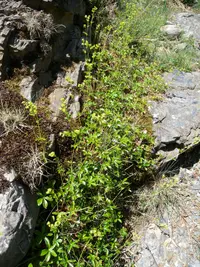
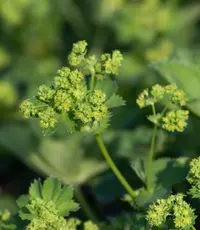
Alchemilla saxatilis is a compact, clump-forming perennial from rocky, mountainous areas of Europe. It belongs to the lady’s mantle group, known for fan-shaped, softly hairy leaves. This species typically forms low cushions that fit well into rock gardens, edging, and crevices. Its small yellow-green flowers appear in loose sprays above the foliage, adding a subtle, textured look rather than bold color. It is adapted to well-drained, often stony soils and generally tolerates cool conditions and moderate moisture. These traits make it relatively straightforward for gardeners who want to learn how to care for Alchemilla saxatilis without high maintenance demands.

Care Difficulty
Easy Care

Light Preference
Partial Sun

Water Requirements
Moderate Water

Temperature Preference
Cold Hardy

Hardiness Zone
4–8

Soil Texture
Sandy, Loamy, Rocky

Soil pH
Acidic (5.5–6.5), Slightly acidic (6.5–7.0)

Soil Drainage
Well-drained

Fertilization
Minimal (feed rarely)
Scan your plant to receive care tips personalized for your specific plant
Available on iOS and Android
This alpine perennial prefers bright, cool exposure with some protection from intense midday sun.
This species prefers consistently moist, but not waterlogged, soil, especially during active growth.
This hardy alpine plant tolerates a wide temperature range but grows best in cool to mild conditions.
This alpine species tolerates a broad humidity range and rarely needs special humidity management.
Alchemilla saxatilis prefers free-draining, moderately fertile soil that stays slightly moist but never waterlogged.
This compact perennial suits container growing on patios, balconies, or rock gardens.
This alpine perennial grows well in modest soils and needs only light, targeted feeding.
Pruning keeps this small clumping species tidy and encourages fresh foliage.
This species is usually grown in rock gardens or borders, so focus on occasional division and transplanting rather than frequent repotting.
This plant is most commonly propagated by division, with seed as a secondary method for larger numbers.
This hardy perennial usually needs minimal winter attention in typical temperate climates.

Plant Health Check
Not sure what's wrong with your plant? Check your plant's health inside the app.
This species is naturally restricted to rocky, high-altitude habitats in the Caucasus region, where it anchors itself in shallow crevices and stony slopes rather than typical garden soils.
Its leaves are more silvery-gray and leathery than many other lady’s mantles, an adaptation that helps reflect intense mountain sunlight and reduce water loss in exposed alpine conditions.
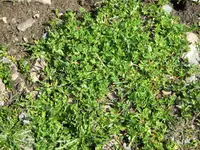
The plant forms low, dense cushions that hug the ground, a growth form that protects buds and roots from temperature extremes and strong alpine winds.
This species forms low, slowly spreading clumps through short rhizomes and self-seeding. It is not considered aggressive, but in favorable rock garden conditions seedlings may appear nearby and can be thinned or relocated easily.
Keep your plants happy and healthy with plant identification, disease detection, and easy care guidance.