


Edge containment
Install a shallow edging strip 5–8 cm deep around beds to prevent clumps from creeping into paths or lawns, as this plant self-seeds and slowly expands outward over time.

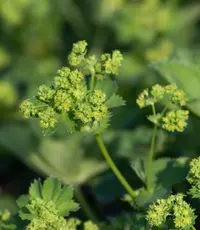
Hairy lady's mantle (Alchemilla monticola) is a hardy, clump-forming perennial grown mainly for its soft, scalloped leaves and airy, yellow-green flower sprays. The foliage often catches dewdrops, creating a distinctive beaded effect along the leaf edges.
This species is native to upland and montane regions of Europe and western Asia, where it grows in meadows, open woods, and rocky slopes. It tends to form low, spreading mounds that slowly enlarge but do not usually become invasive.
Alchemilla monticola is generally easy to grow, tolerating cool conditions, light shade, and a range of soils if drainage is reasonable. These traits make it straightforward to care for hairy lady's mantle in most temperate gardens.

Care Difficulty
Easy Care

Light Preference
Partial Shade

Water Requirements
Moderate Water

Temperature Preference
Cold Hardy

Hardiness Zone
3–8

Soil Texture
Loamy, Silty, Organic-rich

Soil pH
Acidic (5.5–6.5), Slightly acidic (6.5–7.0)

Soil Drainage
Moist but well-drained

Fertilization
Minimal (feed rarely)
Scan your plant to receive care tips personalized for your specific plant
Available on iOS and Android
This perennial prefers cool, bright conditions with protection from harsh midday sun.
This plant prefers consistently moist but not waterlogged soil, especially during active growth.
This hardy perennial thrives in cool to mild climates and tolerates significant cold once established.
This species handles a wide humidity range and rarely needs special humidity management outdoors.
This plant prefers cool, moisture-retentive but well-drained soil that does not stay waterlogged.
This species adapts well to container growing when moisture and drainage are carefully balanced.
Alchemilla monticola is not a heavy feeder but responds well to light, balanced nutrition in poor soils.
Pruning Alchemilla monticola is straightforward and mainly keeps the plant tidy and flowering well.
This perennial is usually grown in garden beds, with transplanting more relevant than container repotting.
Alchemilla monticola is commonly propagated by division and also grown from seed in suitable conditions.
This species is cold hardy in much of the US and usually needs minimal winter care outdoors.

Plant Health Check
Not sure what's wrong with your plant? Check your plant's health inside the app.
This species has noticeably hairy leaf surfaces and margins, which distinguish it from the smoother-leaved common lady’s mantle and help the leaves trap fine water droplets and reduce water loss.
In the wild, this plant is native to montane and subalpine grasslands and open woodland edges across parts of Europe and western Asia, where it grows in cool summers and often relatively moist but well-drained soils.
Genetic and morphological studies indicate that this species is likely of hybrid origin within the Alchemilla complex, yet forms a stable, distinct taxon that breeds true and is treated as a separate species in modern floras.

Botanists often use this species as a reference taxon when sorting out the very complex Alchemilla genus, because its relatively clear diagnostic traits, such as its hairiness pattern and leaf shape, help anchor identification keys in regions where many similar lady’s mantles overlap.
This species forms low, slowly expanding clumps and spreads moderately by short rhizomes and self-seeding. It usually stays manageable in typical beds, but removing spent flower stems before seed set limits unwanted seedlings and keeps edges tidy.
Keep your plants happy and healthy with plant identification, disease detection, and easy care guidance.

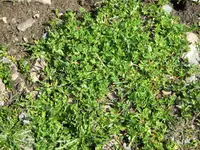
Five-leaved Alchemilla
Alchemilla pentaphyllea
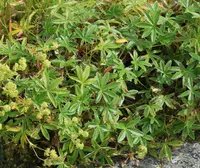
Alpine Lady's-mantle
Alchemilla alpina
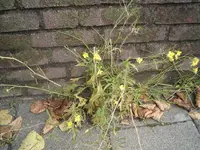
perennial wallrocket
Diplotaxis tenuifolia
pink knotweed
Persicaria capitata
Achillea
Achillea setacea
Aciphylla subflabellata
Aciphylla subflabellata
 POPULAR
Butterfly weed
Asclepias tuberosa
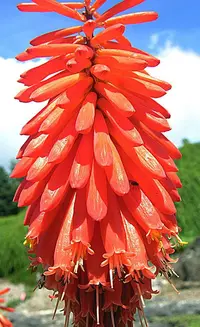
Mandarin Poker
Kniphofia triangularis