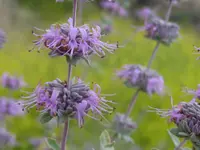
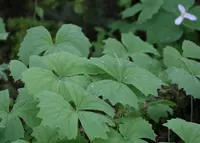
Five-leaved Alchemilla Care (Alchemilla pentaphyllea)

Five-leaved Alchemilla

About Five-leaved Alchemilla

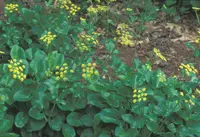
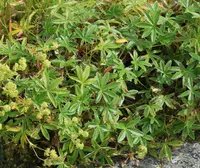
Five-leaved alchemilla (Alchemilla pentaphyllea) is a compact perennial herb from the rose family, valued mainly for its neat foliage rather than showy flowers. It forms low, mounded clumps of palmate, five-lobed leaves that create a tidy groundcover edge or filler in mixed plantings.

This species is native to parts of Europe, where it grows in open, moderately moist sites with reasonably cool conditions. It is generally undemanding and suits temperate gardens, which makes it relatively straightforward to care for Five-leaved Alchemilla.

It prefers light, well-drained but evenly moist soil and does best in light shade or gentle morning sun, especially in warmer regions.

Main Plant Requirements

Care Difficulty

Easy Care

Light Preference

Partial Shade

Water Requirements

Moderate Water

Temperature Preference

Cold Hardy

Hardiness Zone

4–8

Soil Texture

Loamy, Silty, Organic-rich

Soil pH

Acidic (5.5–6.5), Slightly acidic (6.5–7.0)

Soil Drainage

Moist but well-drained

Fertilization

Minimal (feed rarely)

Get Personalized Care Plan

Scan your plant to receive care tips personalized for your specific plant

Available on iOS and Android

How to Care for the Five-leaved Alchemilla

Alchemilla pentaphyllea prefers cool conditions with gentle sun and consistent moisture.

  • Provide 3–5 hours of morning sun with light or dappled shade the rest of the day; eastern exposure suits Five-leaved Alchemilla well in most gardens.
  • In hotter climates, protect from strong midday and afternoon sun, which can scorch leaves and cause leaf edges to brown or curl.
  • In cooler or northern regions, it can handle nearly full sun if soil stays evenly moist; monitor foliage for pale, sparse growth as a sign of insufficient light.

This species prefers evenly moist, not soggy, soil throughout the growing season.

  • Water when the top 2–4 cm of soil feel dry, applying enough to moisten the root zone without leaving standing water on the surface.
  • In spring and early summer, check soil more often during active growth; in cooler or rainy periods, extend intervals and rely on natural rainfall when possible.
  • Watch for yellowing, limp foliage or a sour soil smell as signs of overwatering, and for wilting, crispy leaf edges, and shrinking clumps as signs of underwatering; always use free‑draining soil.

This hardy perennial tolerates a wide temperature range, especially in temperate outdoor gardens.

  • Optimal growth occurs around 55–70°F (13–21°C), especially in spring and early summer when soil stays cool and moist.
  • Established plants usually tolerate down to about 0°F (−18°C) in the ground with mulch, dying back above ground but regrowing from the crown in spring.
  • In summer, it copes with short spells up to about 85°F (29°C) if soil moisture is consistent; prolonged heat and drying winds increase stress and may cause leaf scorch or reduced flowering.

Alchemilla pentaphyllea handles a wide humidity range and rarely needs special humidity management outdoors.

Alchemilla pentaphyllea prefers moist, well-drained, moderately fertile soil that does not stay waterlogged.

  • Use a loamy or sandy-loam soil with plenty of organic matter to hold moisture while still draining freely.
  • Aim for neutral to slightly acidic pH around 6.0–7.0, avoiding very alkaline or chalky substrates that restrict nutrient uptake.
  • For containers or improved beds, mix roughly 2 parts garden soil with 1 part compost and 1 part coarse sand or fine grit for structure and aeration.
  • Avoid compacted clay or spots where water pools after rain, as poor aeration and standing moisture promote root rot and weak growth.

This species grows reliably in containers when given stable moisture and room for its spreading root system.

  • Choose a wide, relatively shallow pot to accommodate the plant’s spreading habit and allow quick surface drying after rain or watering.
  • Select a heavier material such as terracotta or ceramic to prevent light pots from tipping as foliage spreads outward.
  • Elevate the pot slightly on feet or blocks so drainage holes stay clear and runoff moves away, reducing the risk of soggy lower roots.

This perennial needs only modest feeding, as Five-leaved Alchemilla adapts well to average garden soil.

  • Apply a light layer of garden compost or well-rotted manure in early spring to enrich soil.
  • Use a balanced slow-release fertilizer (around 10-10-10) at half strength once in spring if growth appears weak.
  • Avoid high-nitrogen products that encourage lush, floppy foliage and reduce flowering.
  • Do not feed in late fall or winter, when the plant is dormant and nutrient uptake is minimal.

Alchemilla pentaphyllea responds well to light, timely pruning that keeps the clump neat and healthy.

  • In late spring to mid-summer, remove spent flower stems at the base to prevent unwanted self-seeding.
  • Cut back damaged, yellowing, or crowded foliage with clean hand pruners to improve air flow and reduce disease risk.
  • After flowering, lightly shear the plant to encourage fresh, compact growth and a tidier mound.
  • Disinfect blades before and after use to limit the spread of fungal and bacterial problems.

This species is usually grown in beds or borders, so care focuses on dividing and transplanting mature clumps rather than frequent repotting.

  • Plan division and transplanting in early spring or early fall, when temperatures are mild and soil is moist.
  • Lift congested clumps every 3–5 years, or when growth declines and flowering decreases.
  • Gently tease or cut clumps into smaller sections, keeping healthy roots and several shoots on each division.
  • Replant at the original depth, water thoroughly, and shade for a few days to reduce transplant shock.

Alchemilla pentaphyllea is commonly propagated by division and can also be raised from seed with suitable conditions.

  • Divide established clumps in early spring or early fall, when plants are not in peak active growth.
  • Use a sharp knife or spade to separate sections with healthy roots and multiple buds, then replant promptly.
  • For seed, sow fresh seed on the surface of moist, free-draining mix and keep at 60–68°F with bright, indirect light.
  • Maintain lightly moist, not waterlogged, conditions until new growth shows stable establishment.

This hardy perennial usually needs minimal winter care in temperate climates.

  • Once foliage dies back after frost, cut it to ground level to reduce overwintering pests and disease.
  • Apply a 3–5 cm layer of organic mulch around, but not touching, crowns to buffer soil temperature fluctuations.
  • In very cold or exposed sites, add extra mulch or use a breathable garden fleece over young clumps.

Care Tips

Spring crown division

Every 3–4 years in early spring, lift and divide congested clumps into hand-sized sections with healthy buds to maintain vigor and create free new plants for growing Five-leaved Alchemilla.

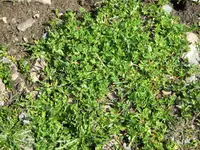
Edge control management

Install a shallow, 5–8 cm deep edging strip or use a half-moon edger once a year to stop the plant’s creeping stems from infiltrating neighboring beds or lawns.

Flower removal strategy

If self-seeding is a problem, shear off spent flower stems before seed set, leaving the foliage intact to keep the plant tidy and reduce unwanted seedlings.

Mulch gap around crowns

When mulching, keep a 3–5 cm gap around the plant crowns to reduce crown rot risk while still suppressing weeds and conserving soil moisture.

Powdery mildew reduction

In humid areas, space plants to allow airflow and water at soil level in the morning so leaves dry quickly, reducing the likelihood of powdery mildew on foliage.

Common Pests and Diseases

Powdery mildew

This disease appears as a white to gray powdery coating on upper leaf surfaces, often in warm, dry conditions with poor air movement. Symptoms include distorted growth and premature leaf yellowing or browning.

Solution

Remove and discard heavily infected leaves to lower spore levels, then thin or divide crowded clumps to improve air circulation. Avoid overhead watering, water at soil level in the morning, and if needed apply a sulfur or potassium bicarbonate fungicide labeled for ornamentals according to label directions as part of broader Alchemilla pentaphyllea care instructions.

Leaf spot

This disease causes small round to irregular brown or purplish spots on leaves, sometimes with yellow halos, which can merge into larger dead patches. Symptoms include early leaf drop and a general decline in foliage quality, especially in prolonged wet weather.

Solution

Prune and dispose of affected leaves and any dense or collapsing foliage to reduce inoculum, and avoid wetting the leaves when watering. Improve drainage and spacing, then use a copper-based or chlorothalonil fungicide if spotting continues over several weeks and conditions remain wet.

Aphids

These insects cluster on soft stems and leaf undersides, sucking sap and causing curling, distortion, and sticky honeydew deposits that can attract sooty mold. This pest is more common on young growth or plants stressed by drought or overcrowding.

Solution

Dislodge colonies with a firm stream of water, then check plants weekly and repeat as needed. For persistent infestations, use insecticidal soap or a light horticultural oil, applying thoroughly to leaf undersides and tender shoots while avoiding treatments in full, hot sun.

Slugs and snails

These pests chew irregular holes in leaves, often leaving ragged edges and silvery slime trails on or around the plant, especially in cool, damp conditions. Symptoms include overnight damage on lower, shaded foliage and along leaf margins.

Solution

Hand-pick slugs and snails in the evening or early morning, and reduce hiding places such as dense debris or boards near the clump. Use iron phosphate slug pellets or beer traps placed around, not directly on, the crown to reduce populations while keeping pets and wildlife in mind.

Crown scorch

This physiological disorder develops when plants sit in hot, reflected sun or dry out, leading to browning and crisping of leaf margins and the center of the clump. Symptoms include a scorched, collapsed crown and leaves that yellow then turn tan from the edges inward.

Solution

Relocate or shade plants from intense afternoon sun, maintain evenly moist but well-drained soil, and mulch lightly to keep roots cool without covering the crown. Remove badly scorched foliage to stimulate fresh growth and monitor soil moisture more closely during heat or drought periods.

Interesting Facts

Distinct five-part leaves

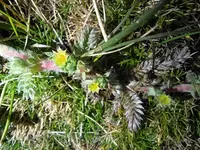
This species is characterized by its palmately divided leaves with 5 narrow leaflets, which clearly distinguishes it from more common lady’s mantles that usually have rounded, fan-shaped blades.

Balkan and Carpathian native

Alchemilla pentaphyllea occurs naturally in parts of Central and Southeastern Europe, including the Balkans and Carpathians, where it typically grows in montane meadows, forest edges, and grassy slopes.

Specialized hair coverage

The foliage is covered with fine hairs, especially along the margins and veins, which helps trap moisture on the leaf surface and gives the plant a slightly silky or soft texture when observed closely.

FAQs about Five-leaved Alchemilla

This species forms low, slowly widening clumps rather than running aggressively. It can self-seed in suitable conditions, but seedlings are usually easy to recognize and remove, so it is rarely a nuisance in managed beds.

Grow Healthy Plants with Botan Care

Keep your plants happy and healthy with plant identification, disease detection, and easy care guidance.

Botan plant care app — identify plants on mobile

Explore More Plants