Alpine Lady's-mantle Care (Alchemilla alpina)

Alpine Lady's-mantle

About Alpine Lady's-mantle

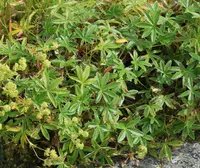
Alpine lady's-mantle (Alchemilla alpina) is a low, clump-forming perennial often used as edging in rock gardens and cool borders. It forms neat mounds of finely cut, silvery-green leaves that can catch and hold water droplets. Small, soft yellow-green flower clusters rise just above the foliage in summer and attract pollinators. This plant naturally occurs in cool, mountainous regions of Europe, often on rocky, well-drained slopes. It stays compact and is generally long-lived when given cool conditions and consistent moisture. Gardeners who learn how to care for Alpine Lady's-mantle usually find it reliable and not demanding, provided it has light, free-draining soil and protection from extreme heat.

Main Plant Requirements

Care Difficulty

Easy Care

Light Preference

Partial Sun

Water Requirements

Moderate Water

Temperature Preference

Cold Hardy

Hardiness Zone

3–7

Soil Texture

Sandy, Loamy, Rocky

Soil pH

Acidic (5.5–6.5), Slightly acidic (6.5–7.0)

Soil Drainage

Well-drained

Fertilization

Minimal (feed rarely)

Get Personalized Care Plan

Scan your plant to receive care tips personalized for your specific plant

Available on iOS and Android

How to Care for the Alpine Lady's-mantle

This alpine perennial prefers cool conditions with bright but gentle light.

  • Provide 3–6 hours of morning sun with light shade or dappled light in the afternoon, especially in warmer climates, to mimic natural mountain conditions for Alpine Lady's-mantle.
  • Place in partial shade where it receives filtered light under shrubs or open trees; full, harsh midday sun can scorch leaves and cause leaf edges to brown.
  • In cooler northern areas it tolerates more direct sun, but in summer monitor foliage; pale, elongated leaves indicate insufficient light, while crisping and yellow patches suggest too much sun.

This plant prefers consistently moist, cool soil rather than extremes of wet or dry.

  • Water when the top 2–3 cm of soil feels dry, aiming for evenly moist but not saturated soil during active growth in spring and early summer.
  • Use a free-draining, humus-rich soil; puddling on the surface or a sour smell indicates poor drainage and a risk of root rot in Alchemilla alpina.
  • In cooler or rainy seasons reduce watering and rely more on natural rainfall; wilting and dry leaf tips suggest underwatering, while yellowing lower leaves and soft stems point to overwatering.

This cold-hardy alpine thrives in cool summers and tolerates significant winter chill outdoors.

  • Optimal growing temperatures are around 50–70°F (10–21°C), which support compact growth and healthy foliage through spring and early summer.
  • Established clumps handle winter down to about -20°F (-29°C) with good drainage; snow cover often protects crowns from freeze–thaw damage.
  • Heat above 80°F (27°C) can stress plants, especially in full sun; provide extra shade and mulch to keep roots cool, and avoid planting in heat-reflective spots near walls or pavement.

Humidity is not a critical factor for Alpine Lady's-mantle, which adapts well to typical outdoor air levels.

Alchemilla alpina prefers cool, moist, sharply draining soil that does not stay waterlogged.

  • Use a gritty loam with added coarse sand or fine gravel to keep the root zone aerated and free-draining.
  • Incorporate moderate organic matter such as compost or leaf mold to retain moisture without creating a heavy, compacted texture.
  • Aim for slightly acidic to neutral pH around 6.0–7.0, avoiding strongly alkaline or chalky conditions unless drainage is excellent.
  • Avoid dense clay or peat-heavy mixes that hold standing water, especially in winter, as this encourages root and crown rot.

This species can be grown successfully in containers when drainage and moisture balance are carefully managed.

  • Choose a wide, shallow pot that matches its spreading, shallow-rooted habit so the crown is not buried too deep.
  • Use a heavy or terracotta container to reduce tipping and prevent the lightweight, gritty mix from drying out too quickly in wind.
  • Elevate the pot slightly on feet or spacers so drainage holes never sit in collected water, especially after rain.

This alpine perennial needs only modest feeding, especially in richer garden soils.

  • Apply a light top-dressing of garden compost or well-rotted manure in early spring to support new growth in Alpine Lady's-mantle.
  • In poor soils, use a balanced, slow-release fertilizer (around 10-10-10) once in spring at label rates.
  • Avoid high-strength feeds and liquid fertilizers stronger than 1/2 dilution, which can promote weak, lush growth.
  • Do not feed in late fall or winter, as the plant is dormant and excess nutrients are unnecessary.

Pruning Alchemilla alpina is straightforward and mainly keeps the clump neat and healthy.

  • In late spring or after flowering, remove spent flower stalks at the base to prevent self-seeding and maintain a tidy mound.
  • Trim back tattered or yellowing leaves with clean hand pruners to encourage fresh foliage.
  • Thin out crowded or damaged stems to improve air movement and reduce fungal issues.
  • In late fall, cut back dead top growth if desired, or leave it for winter interest and wildlife shelter.

This plant is more often grown in rock gardens or borders than in containers, so transplanting is the main task.

  • Transplant in early spring or early fall when temperatures are mild and soil moisture is steady.
  • Look for signs such as crowded clumps, bare centers, or very slow growth indicating the plant needs lifting and resetting.
  • Dig up the clump with a wide, deep slice of soil, handling roots gently to limit disturbance and desiccation.
  • Replant into free-draining, gritty soil at the same depth, then water thoroughly and shade lightly for a few days to reduce stress.

Alchemilla alpina is commonly propagated by division or seed under cool, moist conditions.

  • Divide mature clumps in early spring or early fall, slicing sections with several healthy buds and fibrous roots.
  • Replant divisions into moist, well-drained soil, firm gently, and keep evenly watered until established.
  • Sow fresh seeds in trays outdoors in fall; natural winter chilling improves germination.
  • Provide bright, cool light and avoid waterlogging for both seedlings and new divisions to reduce rot risk.

This species is cold hardy in most temperate climates and usually needs minimal winter attention.

  • Alpine Lady's-mantle tolerates freezing temperatures and snow cover once established in well-drained soil.
  • In colder or exposed sites, apply a thin mulch of grit or leaf mold around the crown to buffer freeze–thaw cycles.
  • For container plants, move pots to a sheltered, unheated spot and ensure drainage holes stay open to prevent waterlogging.

Care Tips

Rock-crevice planting

Tuck plants into narrow rock crevices or between stones so roots stay cool and moist while foliage drains and dries quickly, which closely mimics their natural alpine habitat.

Gritty mulch ring

Apply a 2–3 cm ring of fine gravel or horticultural grit around the crown to keep leaves clean, prevent soil splash on the silvery leaf hairs, and reduce crown rot in wet spells.

Snow and frost handling

In cold climates, allow natural snow cover to insulate plants but brush off heavy, compacted snow or ice from foliage to prevent breakage and crown damage.

Flowering management

Deadhead spent flower stems promptly to keep the clumps compact and to direct energy into foliage quality rather than seed production when growing Alpine Lady's-mantle.

Clump renewal

Every 3–4 years, lift and divide congested clumps in early spring, replanting only the youngest outer sections to maintain tight, silver-edged rosettes and prevent center die-out.

Common Pests and Diseases

Powdery mildew

This disease appears as white or gray powdery patches on leaves, often during warm days with cool, damp nights. Symptoms include distorted new growth and a dull, faded look to the foliage.

Solution

Remove and discard heavily affected leaves, then improve air circulation by thinning crowded clumps and avoiding overhead watering in the evening. If needed, apply a sulfur or potassium bicarbonate fungicide labeled for ornamental perennials, making sure leaves dry quickly after treatment.

Leaf spot

This disease causes small brown, purple, or black spots on leaves that may merge into larger dead patches. Symptoms include premature yellowing and early leaf drop, especially in prolonged wet weather.

Solution

Cut off and discard affected leaves and any fallen debris around the plant to reduce spores. Water at soil level in the morning, space plants so foliage dries quickly, and if spotting persists, use a copper- or chlorothalonil-based fungicide according to label directions.

Aphids

These insects are small, soft-bodied pests that cluster on young stems and leaf undersides, sucking sap and weakening growth. This pest often leaves sticky honeydew on leaves, sometimes followed by sooty mold.

Solution

Spray stems and leaves with a strong stream of water to dislodge colonies, then treat remaining aphids with insecticidal soap or a ready-to-use neem oil product, covering leaf undersides. Encourage natural predators such as lady beetles by avoiding broad-spectrum insecticides nearby.

Slugs and snails

These pests chew irregular holes in leaves, often leaving only leaf veins, and are most active in cool, damp conditions. Symptoms include shredded foliage and shiny slime trails on or around the plant.

Solution

Hand-pick slugs and snails in the evening or early morning, and reduce hiding places such as dense mulch in direct contact with crowns. Use iron phosphate slug pellets or beer traps around planting areas, keeping baits away from children and pets.

Interesting Facts

Distinctive silver leaf edges

The leaves have narrow, shiny silver margins that sharply contrast with the dark green centers, a feature that helps distinguish this mountain species from the more common garden lady’s-mantle relatives.

Alpine moisture collector

Its softly hairy, star-shaped leaves can trap and hold dew and rain in the center of the leaf, creating tiny water pools that have long attracted attention from mountain botanists and hikers.

High-altitude specialist

This species is naturally found on rocky, well-drained slopes in subalpine and alpine zones across parts of Europe, showing strong adaptation to cool summers, intense light, and thin, mineral-rich soils.

Botan icon

Did you know?

Historically, the clear droplets that collect in the leaf cups of this plant were sometimes described in European herbal traditions as unusually pure water and were associated with alchemical symbolism, which contributed to the naming of the genus Alchemilla.

FAQs about Alpine Lady's-mantle

This species forms small, slowly expanding clumps. It spreads by short rhizomes and self-seeding but is usually easy to control. Deadhead spent flowers and lift unwanted seedlings if a very tight planting area is required.

Grow Healthy Plants with Botan Care

Keep your plants happy and healthy with plant identification, disease detection, and easy care guidance.

Botan plant care app — identify plants on mobile

Explore More Plants