candycane woodsorrel Care (Oxalis versicolor)

Also known as: peppermint rock sorrel, Candycane Sorrel
candycane woodsorrel

About candycane woodsorrel

Candycane woodsorrel, Oxalis versicolor, is a small bulb-forming perennial often grown as a decorative pot or edging plant. It is valued for its clover-like leaves and distinctive white flowers with red-striped buds that resemble peppermint candy.

This species naturally occurs in South Africa’s winter rainfall regions, where it experiences cool, bright conditions and dry summers. It stays compact and forms low, colorful clumps rather than tall stems.

Oxalis versicolor is moderately easy to grow if its need for bright light, well-drained soil, and a dry rest period is respected. Understanding these seasonal cycles is key to how to care for candycane woodsorrel.

Main Plant Requirements

Care Difficulty

Moderate Care

Light Preference

Full Sun

Water Requirements

Moderate Water

Temperature Preference

Warm Climate

Hardiness Zone

7–9

Soil Texture

Sandy, Loamy, Organic-rich

Soil pH

Acidic (5.5–6.5), Slightly acidic (6.5–7.0)

Soil Drainage

Well-drained

Fertilization

Light (every 4–6 weeks)

Get Personalized Care Plan

Scan your plant to receive care tips personalized for your specific plant

Available on iOS and Android

How to Care for the candycane woodsorrel

Oxalis versicolor needs bright light to flower well and keep compact growth.

  • Provide 4–6 hours of direct morning sun plus bright, filtered light for the rest of the day; east or southeast exposure suits candycane woodsorrel outdoors.
  • In hot climates, protect from harsh sun from 12–4 pm to prevent leaf scorch and faded flower color.
  • If stems stretch or leaves pale, increase light exposure; in winter, shift pots to the brightest spot available to compensate for shorter days.

This bulbous plant prefers lightly moist soil with short dry periods between waterings.

  • Water when the top 2–3 cm of soil feels dry, then soak thoroughly and let excess drain away to protect the small bulbs from rot.
  • Reduce watering in fall and winter when growth slows or foliage dies back, keeping the soil just barely dry rather than completely parched.
  • Yellowing, soft leaves suggest overwatering and poor drainage, while limp, folding leaves and very dry soil indicate the need for a deep drink for Oxalis versicolor.

This species performs best in mild, non-extreme temperatures.

  • Aim for 60–75°F (16–24°C) during active growth; this range supports steady leaf production and reliable flowering.
  • Protect plants from frost; foliage is damaged around 30–32°F (-1–0°C), and bulbs are safest if soil does not stay below 25°F (-4°C).
  • In hot regions, brief peaks to 85–90°F (29–32°C) are tolerated if soil moisture is stable and the plant receives shade during the hottest afternoon hours.

This species handles typical indoor humidity but grows best with slightly moist air.

  • Aim for 40–60% humidity to keep foliage plump and leaf edges from drying.
  • Candycane woodsorrel tolerates short dry spells indoors, but very arid air may cause limp, folding leaves and crispy tips.
  • Increase humidity by grouping pots, placing the container on a pebble tray with water below the pot base, or running a small nearby humidifier.

This bulb-forming species prefers light, sharply drained soil that never stays waterlogged.

  • Use a loose mix of 2 parts peat- or coco-based potting mix, 1 part coarse sand, and 1 part perlite for Oxalis versicolor.
  • Aim for slightly acidic to neutral pH, roughly 6.0–7.0, to support healthy root and bulb development.
  • Ensure the mix is crumbly rather than compact; extra perlite or pumice improves aeration and limits rot.
  • Avoid heavy clay, dense compost-only mixes, or any substrate that stays soggy after watering.

This species is highly suitable for container growing, especially for seasonal displays.

  • Choose a shallow but wide pot so the small bulbs can spread horizontally while avoiding deep, unused wet zones in the mix.
  • Select terra-cotta or other porous materials if you tend to overwater, as they allow faster evaporation and reduce rot risk.
  • Raise the pot slightly on feet or pot risers so drainage holes stay clear and excess water escapes quickly after irrigation.

Oxalis versicolor benefits from light, controlled feeding during its active growing season.

  • Apply a balanced liquid fertilizer (for example 10-10-10) at 1/4–1/2 strength every 3–4 weeks in spring and summer.
  • Use a slow-release granular fertilizer sparingly in container plantings, following the low end of label rates.
  • Avoid fertilizing during dormancy or winter; resume only once new leaves appear.
  • In rich garden soil, caring for candycane woodsorrel may need no more than a thin layer of compost each spring.

Oxalis versicolor needs only light pruning to stay tidy and flowering well.

  • In late winter or early spring, remove dead or damaged leaves and spent flower stalks with clean scissors or small snips.
  • Trim back crowded or weak stems to improve airflow and light penetration into the clump.
  • Deadhead faded blooms through the growing season to encourage continued flowering.
  • Cut back untidy growth after the main flowering flush to maintain a compact, mounded shape.

This bulbous species prefers infrequent disturbance, so repot or transplant Oxalis versicolor only when necessary.

  • Repot when roots circle the pot, growth slows, or bulbs crowd the container surface.
  • Plan repotting or outdoor transplanting for late summer to early fall, as the plant enters or is in dormancy.
  • Typical frequency is every 2–3 years, using a shallow, well-drained pot or raised bed with gritty mix.
  • Handle bulbs gently, replant at the same depth, water lightly at first, and keep in bright, indirect light while roots re-establish.

Propagation of Oxalis versicolor is most reliable by dividing its small bulbs or offsets.

  • Lift and divide clumps in late summer or fall, when foliage has died back and bulbs are dormant.
  • Gently separate offsets from the main bulbs, discarding any soft or diseased material.
  • Replant bulbs in well-drained, sandy soil, spacing them 5–8 cm apart and setting them just below the surface.
  • Seeds can also be sown in spring in a warm, bright spot, keeping the mix lightly moist until germination.

This plant has limited frost tolerance and benefits from basic winter protection in colder regions.

  • In mild climates, allow top growth to die back naturally, then mulch the root zone with 5–7 cm of dry leaves or bark.
  • In areas with hard freezes below about 25°F, lift bulbs after dormancy and store dry in a cool, frost-free place.
  • For containers, move pots indoors to a bright, cool room before freezing nights, keeping the soil barely moist during dormancy.

Care Tips

Encourage Compact Growth

Rotate containers a quarter turn every 3–4 days during active growth to keep stems upright and prevent the plant from leaning toward one direction of light.

Manage Dormancy Bulbs

When foliage dies back, lift congested bulbs every 2–3 years, gently separate offsets, and replant them at the same depth to maintain vigor and avoid overcrowding.

Use Shallow Containers

Choose wide, shallow pots (10–15 cm deep) so the small bulbs can spread laterally, which improves flowering and makes it easier to monitor rot or overcrowding.

Controlled Forcing Indoors

For seasonal displays, pot bulbs close together, keep them cool and just moist for 3–4 weeks, then move them to bright conditions to grow Oxalis versicolor in a timed bloom period.

Day–Night Light Cues

Place the plant where it receives clear day–night light changes so the leaves can open and close normally, which helps monitor plant health when caring for candycane woodsorrel.

Common Pests and Diseases

Oxalis rust

This disease causes small orange, yellow, or brown pustules on leaves and stems, often leading to early leaf drop in dense clumps. Symptoms include a powdery or dusty appearance on the underside of leaves.

Solution

Remove and discard heavily infected leaves to reduce spore spread, then thin crowded clumps to improve air movement and reduce leaf wetness. Avoid overhead watering, keep foliage dry where possible, and if rust persists, use a sulfur or copper-based fungicide labeled for ornamental plants, following the label carefully.

Powdery mildew

This disease shows up as white or gray powdery patches on leaves, especially in humid, shaded, or poorly ventilated conditions. Symptoms include distorted new growth and a dull, faded look to the foliage.

Solution

Increase air circulation around the plant, avoid overhead watering, and reduce humidity around the foliage. Remove the most affected leaves and, if needed, apply a potassium bicarbonate, sulfur, or neem-based product labeled for powdery mildew as part of general Oxalis versicolor care instructions.

Aphids

These insects cluster on soft new growth, flower stalks, and the underside of leaves, sucking sap and causing curling or distorted foliage. This pest also leaves sticky honeydew that can attract sooty mold.

Solution

Spray infested areas with a firm stream of water to knock aphids off, then follow with insecticidal soap or a ready-to-use horticultural oil, making sure to coat leaf undersides and stems. Repeat every 5–7 days until populations drop, and remove heavily infested shoots if practical.

Spider mites

These pests are tiny sap-sucking arachnids that cause fine speckling, dulling, and bronzing of the leaves, often with very fine webbing between leaf stems in dry indoor or greenhouse conditions. Symptoms include slow decline and leaves that feel dry or rough to the touch.

Solution

Increase humidity around the plant and rinse foliage thoroughly with lukewarm water, including the undersides of leaves. For persistent infestations, use insecticidal soap or a light horticultural oil, applied every 5–7 days, and isolate the plant from others during treatment.

Bulb and corm rot

This disease affects the underground storage organs, leading to soft, discolored, or mushy bulbs and sudden collapse of foliage, especially in poorly drained or overwatered soil. Symptoms include stunted shoots or failure of bulbs to sprout at all.

Solution

Discard any soft or diseased bulbs and replant only firm, healthy ones in well-drained, gritty soil. Water sparingly during dormancy, avoid waterlogged conditions, and if rot has been a recurring problem, rotate planting locations and consider a clean, fresh potting mix for container specimens.

Interesting Facts

Temperature-triggered curling

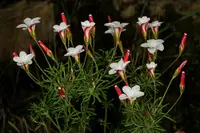
The red-and-white petals curl into tight candy cane-like tubes in cool, low light and unfurl into flat, star-shaped flowers in bright sun, a reversible movement driven by changes in cell turgor pressure in the petals.

Winter rainfall specialist

This species is native to the winter-rainfall regions of South Africa’s Western Cape, where it grows during the cool, moist season and survives the hot dry summer as a dormant underground bulb-like tuber.

Distinctive floral patterning

Its bicolored petals have longitudinal red stripes only on the outer surface, so the flower looks like a red-and-white spiral tube when closed but appears mostly white with a yellow center when fully open.

Botan icon

Did you know?

In its native habitat, this species often forms tight, low mats that can produce a striking synchronous display, with many flowers remaining rolled up on overcast cool mornings and then collectively opening into white starry blooms once full sun returns.

FAQs about candycane woodsorrel

Flowering usually starts in late winter to early spring and can continue into early summer in mild climates. Individual flowers last several days, but new buds open continuously, creating a longer overall display period.

Grow Healthy Plants with Botan Care

Keep your plants happy and healthy with plant identification, disease detection, and easy care guidance.

Botan plant care app — identify plants on mobile

Explore More Plants