Forking Larkspur Care (Delphinium consolida)

Forking Larkspur

About Forking Larkspur

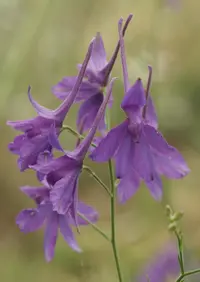
Forking larkspur (Delphinium consolida) is an annual flowering plant in the buttercup family, grown mainly for its airy, colorful spikes of blooms. It typically reaches medium height with slender, branching stems and finely divided foliage that gives a soft, delicate look.

In nature it is found in parts of Europe and western Asia, and it has become naturalized in many temperate regions, including fields and disturbed ground. It is not a demanding plant but can be somewhat short-lived and sensitive to excess heat or poorly drained soil, so site choice matters.

To care for Forking Larkspur, provide full sun, moderate moisture, and a light, well-drained soil to support healthy growth and flowering.

Main Plant Requirements

Care Difficulty

Moderate Care

Light Preference

Full Sun

Water Requirements

Moderate Water

Temperature Preference

Cool Climate

Hardiness Zone

6–9

Soil Texture

Sandy, Loamy, Organic-rich

Soil pH

Acidic (5.5–6.5), Slightly acidic (6.5–7.0)

Soil Drainage

Well-drained

Fertilization

Light (every 4–6 weeks)

Get Personalized Care Plan

Scan your plant to receive care tips personalized for your specific plant

Available on iOS and Android

How to Care for the Forking Larkspur

Delphinium consolida performs best in bright, open conditions with protection from extreme afternoon heat.

  • Provide 6–8 hours of direct sun daily, ideally with full morning sun and light afternoon shade in hotter regions.
  • Tolerates light partial shade (3–4 hours sun), but stems become weaker and flowering reduced if shade is too dense.
  • In very hot, dry summers, protect Forking Larkspur from intense sun between 1–4 p.m. to reduce leaf scorch and premature wilting.

Delphinium consolida prefers consistently moist but not waterlogged soil.

  • Water when the top 3–5 cm of soil feels dry, aiming for deep soaking rather than frequent shallow watering.
  • Ensure soil drains freely; standing water or heavy clay encourages root rot, yellowing leaves, and limp, collapsing stems.
  • In hot, windy weather, monitor moisture more often; dry, curling foliage and drooping flower spikes signal underwatering, while soft, blackened stems suggest overwatering.

This annual larkspur prefers cool to mild conditions and struggles in prolonged extreme heat or hard frost.

  • Optimal growth occurs around 55–70°F (13–21°C), especially in spring and early summer when nights stay cool.
  • Plants tolerate light frost down to about 28°F (-2°C), but repeated freezes below this can damage young growth and buds.
  • In hot climates, flowering declines above 85°F (29°C); use mulch and afternoon shade to keep roots cooler and extend blooming.

Humidity is not a major concern for Delphinium consolida, which copes well with typical outdoor air in temperate climates.

Delphinium consolida prefers moist, well-structured ground that drains freely yet holds some organic matter.

  • Use a loamy soil with a mix of mineral particles and organic matter so roots can anchor and access water evenly.
  • Aim for slightly alkaline to neutral pH around 6.8–7.5, adding garden lime if soil tests show strong acidity.
  • Incorporate 20–30% compost plus coarse sand or fine grit to improve fertility, aeration, and drainage in heavy soil.
  • Avoid compacted clay, waterlogged patches, or very shallow, stony areas that dry out too fast or suffocate roots.

This species can be grown in containers, but pots must be managed carefully to keep tall stems stable and evenly moist.

  • Choose a deep, weighty container so the tall, top-heavy growth does not tip in wind or when the substrate is wet.
  • Fill the pot with a free-draining mix and elevate it slightly on pot feet so drainage holes never sit in pooled water.
  • Position the container where it receives strong light but stays somewhat sheltered from intense wind that can stress top growth.

Delphinium consolida responds well to moderate feeding during its active growing season.

  • Apply a balanced soluble fertilizer (e.g., 10-10-10) at 1/2 strength every 2–3 weeks in spring and early summer for stronger stems and blooms.
  • Work a light layer of compost into the soil in early spring to improve structure and slow nutrient release when caring for Forking Larkspur.
  • Avoid high-nitrogen lawn fertilizers, which push weak, lush foliage at the expense of flowers.
  • Stop feeding in late summer and do not fertilize during winter dormancy to prevent soft, frost-sensitive growth.

Pruning helps Delphinium consolida maintain tidy growth and extend the flowering period.

  • In late spring and throughout flowering, use clean hand pruners to remove spent flower spikes down to a strong leaf joint to encourage reblooming.
  • Cut out dead, diseased, or badly damaged stems whenever seen to reduce disease pressure.
  • Thin crowded stems near the base in early growth to improve air circulation and reduce flopping.
  • At season’s end, once frost blackens foliage, cut stems back close to ground level and remove debris.

This species is usually treated as an annual or short-lived bedding plant, so focus on careful transplanting rather than frequent repotting.

  • Transplant in early to mid-spring after frost risk passes, when seedlings have several true leaves and roots lightly fill starter cells but are not circling.
  • Space plants in fertile, well-drained soil, handling root balls gently and keeping the original soil level at the same depth.
  • Water thoroughly after planting, then keep soil evenly moist for 1–2 weeks to limit transplant shock.
  • Containers, if used, rarely need larger pots; only upsize when roots are dense and growth slows despite adequate water and nutrients.

Delphinium consolida is most commonly propagated from seed rather than by division or cuttings.

  • Sow fresh seeds in late winter to early spring, either indoors under lights or in a sheltered cold frame.
  • Chill seeds for 2–3 weeks in the refrigerator before sowing to improve germination of this cool-season annual.
  • Use a fine, well-drained seed-starting mix, keeping it just moist at 60–65°F until seedlings emerge.
  • Transplant seedlings once they have 2–3 true leaves, disturbing roots as little as possible and hardening them off before outdoor planting.

As a cool-season annual or short-lived plant, Delphinium consolida usually does not need elaborate winter care.

  • In cold climates, treat plants as annuals and remove them after hard frosts blacken foliage, tidying debris to limit self-seeding.
  • In mild winter regions, a light mulch layer around the root zone helps buffer soil temperature and moisture.
  • Container plants in borderline climates may be moved to a sheltered, unheated area to avoid repeated freeze–thaw stress.

Care Tips

Timed succession sowing

Sow small batches every 2–3 weeks in early spring to maintain a continuous display and reduce the impact of any single weather event or pest outbreak on the whole planting.

Targeted staking method

Insert slender stakes on the windward side of taller plants when buds first form and tie stems loosely with soft ties in a figure-eight, which supports height while allowing natural movement and reduces stem breakage.

Powdery mildew management

Space plants to allow airflow, avoid wetting foliage, and if powdery mildew often appears in your area, start sulfur or potassium bicarbonate sprays preventively when nights turn cool and damp.

Self-seeding control

Allow only the strongest, healthiest plants to set seed and deadhead the rest, which limits unwanted self-sowing and gradually improves the vigor of the volunteer population over several seasons.

Cut flower harvesting

For cut flowers, harvest stems when one-third to one-half of the florets on the spike are open, use clean sharp pruners, strip lower leaves, and place stems immediately into deep, lukewarm water to extend vase life when growing Forking Larkspur.

Common Pests and Diseases

Powdery mildew

This disease causes white, powdery patches on leaves, stems, and flower stalks, often starting on lower foliage in dense plantings. Symptoms include yellowing, distortion, and premature leaf drop, especially in warm, dry days with cool, humid nights.

Solution

Improve air circulation by thinning and spacing plants, and avoid overhead watering to keep foliage dry. Remove and dispose of affected leaves, then apply a sulfur or potassium bicarbonate fungicide labeled for ornamentals at the first signs of infection, repeating as directed during humid periods.

Leaf miners

These insects create pale, winding tunnels inside the leaves as the larvae feed on internal tissues. Symptoms include serpentine trails and blotchy, weakened foliage that may yellow and dry out prematurely.

Solution

Remove and discard affected leaves as soon as tunnels appear to reduce larval numbers. For heavier infestations, use sticky traps to monitor adult flies and apply a neem oil or spinosad-based product, ensuring thorough coverage of both leaf surfaces while following label directions.

Aphids

These insects cluster on young stems, buds, and undersides of leaves, sucking sap and causing curling, distortion, and sticky honeydew. This pest can also promote sooty mold growth on leaves and weaken flowering stalks.

Solution

Dislodge colonies with a strong stream of water, then treat remaining insects with insecticidal soap or horticultural oil, repeating every 5–7 days as needed. Encourage natural predators such as lady beetles and avoid high-nitrogen fertilization that promotes soft, aphid-prone growth when growing Forking Larkspur outdoors.

Botrytis blight

This disease produces soft, brown, water-soaked spots on leaves, stems, and flower spikes that develop gray, fuzzy mold in humid, cool weather. Symptoms include collapsing stems, rotting buds, and flowers that fail to open properly.

Solution

Promptly remove and discard affected plant parts and any fallen debris around the base to reduce spore levels. Improve drainage and air movement, avoid wetting flowers and foliage, and use a labeled ornamental fungicide at the first sign of blight when cool, damp weather is forecast.

Slugs and snails

These pests chew irregular holes in leaves and young shoots, often leaving only midribs on tender seedlings. Symptoms include slime trails on soil and foliage, and most damage occurs at night or in very damp conditions.

Solution

Hand-pick at dusk or early morning and reduce hiding places by clearing plant debris and dense groundcover. Use iron phosphate slug baits placed around, not on, the plants, and consider barriers like copper tape or rough mulch to make access more difficult.

Interesting Facts

Annual life strategy

Delphinium consolida is a true annual larkspur that germinates, flowers, sets seed, and dies within a single growing season, unlike many other Delphinium species that are perennial. This strategy allows it to take quick advantage of disturbed soils and seasonal moisture in its native range around the Mediterranean and western Asia.

Distinctive seed morphology

Its dry fruits split open to release small, angular seeds with a rough surface that helps them lodge in soil cracks and crevices. This seed shape and texture supports its success in arable fields, fallow land, and other open habitats.

Highly toxic alkaloids

All parts of the plant contain diterpenoid alkaloids that are toxic to humans and livestock if ingested. Poisonings are less frequent than with some perennial larkspurs because this annual typically grows at lower densities in cropped or disturbed fields.

Botan icon

Did you know?

Historically, dried flowers of Delphinium consolida were used as a traditional fabric and ink dye source, taking advantage of their strong blue to purple anthocyanin pigments to tint textiles and writing materials before synthetic dyes became widely available.

FAQs about Forking Larkspur

Poor flowering usually comes from excessive nitrogen fertilizer, too much shade, or heat stress. Allow cool conditions, use a balanced or low-nitrogen fertilizer, avoid overcrowding, and deadhead spent spikes to direct energy into new buds.

Grow Healthy Plants with Botan Care

Keep your plants happy and healthy with plant identification, disease detection, and easy care guidance.

Botan plant care app — identify plants on mobile

Explore More Plants