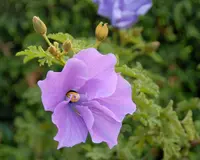
Thunberg's gardenia Care (Gardenia thunbergia)

Also known as: Forest Gardenia, Cape Jessamine, Starry Gardenia, White Gardenia, Wild Gardenia
Thunberg's gardenia

About Thunberg's gardenia

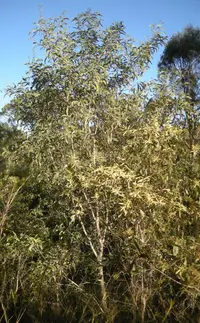
Thunberg's gardenia (Gardenia thunbergia) is an evergreen shrub or small tree from southern Africa, valued for its dense foliage and fragrant white flowers. It often develops a rounded crown and thick, somewhat spiny branches, making it suitable as a specimen plant or informal hedge in mild climates.

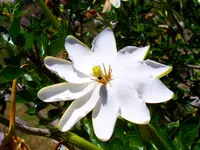
The plant naturally occurs in woodland and forest margins, where it experiences bright light with some protection from harsh midday sun. Flowers are large, star-shaped, and strongly scented, followed by hard, long-lasting fruits that stay on the plant.

Gardenia thunbergia can be moderately demanding, as it prefers consistently moist, acidic, well-drained soil and does not tolerate severe cold or drought. Understanding how to care for Thunberg's gardenia is important for reliable flowering and long-term health.

Main Plant Requirements

Care Difficulty

Moderate Care

Light Preference

Full Sun

Water Requirements

Regular Water

Temperature Preference

Warm Climate

Hardiness Zone

9–11

Soil Texture

Sandy, Loamy, Organic-rich

Soil pH

Strongly acidic (4.5–5.5), Acidic (5.5–6.5)

Soil Drainage

Moist but well-drained

Fertilization

Light (every 4–6 weeks)

Get Personalized Care Plan

Scan your plant to receive care tips personalized for your specific plant

Available on iOS and Android

How to Care for the Thunberg's gardenia

This shrub performs best in bright, soft light rather than harsh, all-day sun.

  • Provide 4–6 hours of direct morning sun with light afternoon shade; in hotter climates, use dappled or filtered light after midday to protect leaves and blooms.
  • Thunberg's gardenia tolerates partial shade, but flowering decreases if it receives less than about 3–4 hours of direct or strong filtered light per day.
  • Monitor for pale foliage, leggy stems, and few buds as signs of insufficient light, and for leaf scorch or crispy edges as signs of excessive, intense sun exposure.

This species prefers evenly moist, well-drained soil that never stays saturated for long periods.

  • Allow the top 2–4 cm of soil to dry slightly before watering again, using slow, deep soaking so moisture reaches the root zone without pooling around the base.
  • During warm growing seasons, check soil every 2–3 days; in cooler months or rainy periods, extend intervals, watering only when the surface layer feels dry to the touch.
  • Yellowing leaves that drop while soil feels wet suggest overwatering or poor drainage, while dull, curling leaves and dry soil pulling from the surface indicate underwatering in Gardenia thunbergia.

This plant favors mild, frost-free conditions with stable temperatures through the growing season.

  • Aim for daytime temperatures around 65–80°F (18–27°C) and slightly cooler nights, which support steady growth and reliable flower production.
  • Protect from cold below about 40°F (4°C); brief dips may be tolerated, but repeated exposure near freezing or any hard frost can damage buds, leaves, and young stems.
  • In hot spells above 90°F (32°C), provide afternoon shade and consistent soil moisture, as excess heat combined with dry roots increases stress and can reduce flowering.

This species prefers consistently high humidity and reacts quickly to dry indoor air.

  • Aim for 50–70% humidity, as Thunberg's gardenia often develops bud drop and crispy leaf edges in drier air.
  • Watch for yellowing between veins, dull foliage, and failure of buds to open as signs of humidity stress rather than watering issues.
  • Increase humidity with a pebble tray under the pot, grouping plants, or a room humidifier instead of misting leaves directly.

This shrub requires aerated, acidic, and free-draining soil to maintain healthy roots and flowering.

  • Use a loose, fine-textured mix such as 50% peat- or coir-based potting mix with 30% pine bark and 20% perlite for structure and drainage.
  • Keep pH slightly acidic at 5.0–6.0; blend in acidic compost or azalea/camellia mix if the native soil is neutral to alkaline.
  • Ensure fast drainage by planting on a slight mound or raised bed so water does not pool around the crown of Gardenia thunbergia.
  • Avoid heavy clay, compacted ground, and mixes dominated by sand alone, which either hold too much water or dry out too rapidly at the roots.

This species can be grown in containers if the pot supports its woody root system and moisture-sensitive nature.

  • Choose a deep, heavy container that resists tipping as the shrub becomes woody and top-heavy over time.
  • Select thick-walled terracotta or similar porous material to allow slight side evaporation and reduce the risk of waterlogged roots.
  • Lift the pot on feet or blocks so drainage holes stay clear and excess water escapes quickly after heavy rain or irrigation.

This shrub benefits from moderate, consistent feeding to support foliage density and flowering without forcing weak growth.

  • Use a balanced, acid-forming fertilizer (for example 10-10-10 or 12-10-10) or well-rotted compost suited to Thunberg's gardenia.
  • Apply fertilizer every 4–6 weeks during spring–summer, when active growth and bud formation occur.
  • Dilute liquid feeds to 1/2–3/4 strength to avoid salt buildup and root burn.
  • Reduce or stop feeding in fall–winter, especially in cooler regions or when growth slows markedly.

Pruning helps maintain structure, airflow, and flowering performance in Gardenia thunbergia.

  • Schedule main pruning for late winter or just after peak flowering, avoiding heavy cuts during bud formation.
  • Remove dead, diseased, or storm-damaged wood first, then thin crowded interior branches to improve light penetration.
  • Shorten overly long shoots to shape the shrub and encourage branching from lower nodes.
  • Use clean, sharp bypass pruners; disinfect blades between plants to limit disease spread.

Gardenia thunbergia is usually grown in the ground, so transplanting timing and technique matter more than frequent repotting.

  • Transplant in late winter to early spring when soil is workable and before strong new growth begins.
  • Look for signs such as poor vigor, roots circling a container, or plants outgrowing their space before moving them.
  • Prepare a slightly acidic, well-drained site; water thoroughly before and after transplanting to reduce root stress.
  • Keep the original soil level at the same depth, backfill gently, mulch 5–8 cm deep, and provide consistent moisture while new roots establish.

Propagation of Gardenia thunbergia is typically done vegetatively to maintain cultivar traits and flowering quality.

  • Take semi-hardwood stem cuttings in late summer, 8–12 cm long, with 2–3 leaf nodes.
  • Remove lower leaves, dip the base in rooting hormone, and insert into a sterile, well-drained medium such as sand and peat or perlite.
  • Maintain high humidity, bright but indirect light, and bottom warmth around 70–75°F to encourage rooting.
  • Seeds can be sown in warm conditions but often show slower, less predictable germination than cuttings.

This species prefers mild, frost-free climates and benefits from targeted winter protection in colder areas.

  • In regions with frost below about 25°F, grow Gardenia thunbergia in a sheltered spot or as a container plant.
  • Mulch the root zone 5–8 cm deep with bark or leaf mold to buffer temperature swings and conserve moisture.
  • Move containers indoors or into a cool greenhouse before hard frosts, providing bright light and reduced watering.
  • In marginal climates, use breathable frost cloth over young plants during predicted freezes to limit stem damage.

Care Tips

Encourage Shrub Form

Pinch back soft new shoots once they reach 10–15 cm to promote dense branching and a sturdy framework that better supports heavy flowers.

Manage Root Competition

Keep a grass-free and weed-free zone at least 45–60 cm around the base so the shallow roots are not competing for water and nutrients, then mulch this area with 5–8 cm of pine bark or similar material.

Protect From Alkaline Runoff

Site the plant away from concrete slabs or regularly flush the root zone with rainwater if nearby paving or walls leach lime that can raise soil pH and cause yellowing leaves.

Plan For Mature Size

Allow at least 2–3 m of horizontal space from paths, driveways, or structures, since older plants develop thick, woody stems and do not tolerate heavy size-reduction pruning well.

Monitor Bud Drop

If swelling buds turn yellow and fall before opening, check soil moisture and recent temperature changes, then adjust watering and provide light wind protection, as this is a common stress response when growing Thunberg's gardenia.

Common Pests and Diseases

Aphids

This pest feeds on new shoots and flower buds, causing distortion, sticky honeydew, and sooty mold on leaves and stems.

Solution

Prune off heavily infested shoot tips, then wash remaining foliage with a strong but gentle stream of water and repeat every few days; for persistent colonies, use an insecticidal soap or neem oil spray, ensuring thorough coverage of shoot tips and leaf undersides in the early morning or evening.

Scale insects

These insects attach tightly to stems and leaf midribs, sucking sap and causing yellowing, stunting, and honeydew that encourages sooty mold.

Solution

Gently scrape or wipe visible scales from stems with a cotton pad dipped in isopropyl alcohol, then follow with 2–3 applications of horticultural oil at 7–10 day intervals to target crawlers, avoiding spraying in full sun or during very high temperatures.

Whiteflies

This pest forms small white adults that fly up when the plant is disturbed, while sap-sucking nymphs on leaf undersides weaken growth and promote sooty mold.

Solution

Remove heavily infested leaves, use yellow sticky traps to monitor and reduce adult numbers, and spray undersides of leaves with insecticidal soap or neem oil every 5–7 days until new growth stays clean, focusing on the inner canopy where air movement is low.

Sooty mold

This disease appears as a black, powdery or crusty coating on leaves and stems that grows on honeydew left by sap-feeding insects, reducing light reaching the leaf surface.

Solution

Control the underlying insects such as aphids, scale, or whiteflies, then gently wash affected leaves with lukewarm water and a mild, dilute soap solution to remove the mold, ensuring the plant receives good light and airflow so new foliage remains clean.

Phytophthora dieback

This disease causes wilting, branch dieback, and sudden collapse of sections of the shrub, often starting after periods of saturated soil or poor drainage.

Solution

Remove and destroy affected branches cutting back into healthy wood, improve drainage by avoiding waterlogged conditions and raised planting if needed, and treat the root zone with a phosphonate (phosphorous acid) fungicide according to label directions as part of broader Gardenia thunbergia care instructions to prevent recurrence.

Interesting Facts

Specialist moth pollination

In its native southern African range, this species is mainly pollinated by long-tongued hawkmoths that visit the large, white, night-scented flowers, an example of tight coevolution between flower shape and pollinator anatomy.

Potent defensive fruits

The hard, woody fruits contain iridoid compounds that make them unpalatable to many animals, so the fruits often remain on the shrub for years until they gradually decompose and release the seeds.

Historic cultural hedging

In parts of South Africa, this shrub has long been planted as a dense, thorny hedge and boundary marker, valued for both its physical barrier of stiff branches and its heavily scented, showy flowers.

Botan icon

Did you know?

The species was formally described in 1773 from material collected in South Africa and named in honor of the Swedish naturalist Carl Peter Thunberg, who documented many southern African plants that later became important in horticulture and botanical science.

FAQs about Thunberg's gardenia

This species usually blooms in late spring to mid-summer, depending on climate. The main flush can last several weeks, with individual flowers lasting a few days, often followed by scattered blooms later in the warm season.

Grow Healthy Plants with Botan Care

Keep your plants happy and healthy with plant identification, disease detection, and easy care guidance.

Botan plant care app — identify plants on mobile

Explore More Plants