


Wind-smart planting
Place the shrub where it gets some wind protection, such as near a fence or wall, to reduce stem breakage and flower drop in exposed, windy sites.

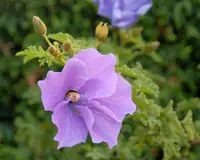
Blue hibiscus (Alyogyne huegelii) is an evergreen shrub from dry regions of southern Australia, grown for its large, silky, blue to violet flowers. It typically forms a loose, upright bush with deeply lobed, slightly grey-green leaves that give it a soft, textured look in the landscape.
This plant suits mild, low-frost climates and is often used in sunny borders or as a feature shrub. It prefers full sun, well-drained soil, and moderate watering, which makes it relatively easy to care for blue hibiscus in suitable climates.

Care Difficulty
Moderate Care

Light Preference
Full Sun

Water Requirements
Moderate Water

Temperature Preference
Warm Climate

Hardiness Zone
9–11

Soil Texture
Sandy, Loamy, Organic-rich

Soil pH
Slightly acidic (6.5–7.0), Neutral (7.0)

Soil Drainage
Well-drained

Fertilization
Minimal (feed rarely)
Scan your plant to receive care tips personalized for your specific plant
Available on iOS and Android
This shrub prefers bright, direct sun for strong flowering and compact growth.
This drought-tolerant shrub prefers deep, infrequent watering once established.
This plant thrives in mild, Mediterranean-type climates with warm, dry summers.
This species handles low to moderate indoor humidity without special measures.
This shrub prefers sharply drained, sandy to loamy soil that does not stay wet.
This species suits container growing when the pot supports its fast, shrubby growth.
Alyogyne huegelii responds well to modest feeding during its active growing season.
Pruning helps Alyogyne huegelii maintain a compact, flowering shrub form.
This shrub is usually grown in the ground, but container-grown plants and young shrubs benefit from careful transplanting.
Alyogyne huegelii is commonly propagated from semi-hardwood cuttings or seeds.
This shrub is only lightly frost tolerant and benefits from simple winter precautions in cooler regions.

Plant Health Check
Not sure what's wrong with your plant? Check your plant's health inside the app.
This species belongs to the mallow family (Malvaceae) but is placed in a separate genus from true hibiscus because of distinct floral and fruit structures, even though its flowers closely resemble hibiscus in shape and color.
Native to semi-arid regions of Western Australia, it continues producing large blooms through hot, dry periods when many other shrubs reduce flowering, an adaptation to its Mediterranean-type climate.
In cultivation it is often relatively short-lived for a woody shrub, as older plants tend to become sparse and woody, so many gardeners renew it regularly from cuttings rather than relying on a single long-lived specimen.

This species has become a notable example of convergent evolution in ornamental horticulture, since it evolved hibiscus-like flowers independently of true Hibiscus species, leading to its common name blue hibiscus even though it is not a true hibiscus at all.
Lack of flowers often comes from insufficient light, too much nitrogen fertilizer, or heavy pruning at the wrong time. Old, depleted potting mix or a rootbound plant can also reduce bud formation and overall flowering performance.
Keep your plants happy and healthy with plant identification, disease detection, and easy care guidance.

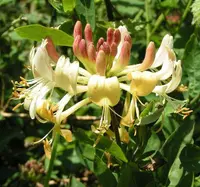
European honeysuckle
Lonicera periclymenum
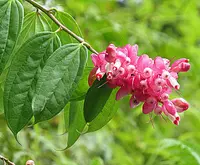
Mountain Grape
Cavendishia bracteata
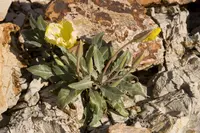
shortfruit evening primrose
Oenothera brachycarpa
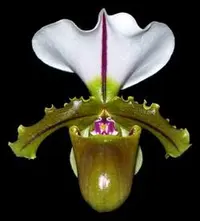
Spicer’s Paphiopedilum
Paphiopedilum spicerianum
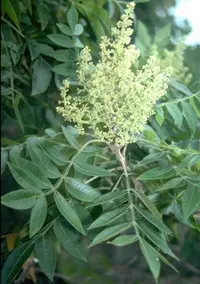
winged sumac
Rhus copallinum

Aerides odorata
Aerides odorata
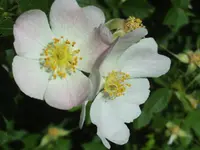
Short-styled Field-rose
Rosa stylosa
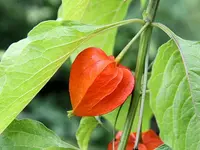
Japanese-lantern
Alkekengi officinarum