Rose Mountain Speedwell Care (Veronica fruticulosa)

Rose Mountain Speedwell

About Rose Mountain Speedwell

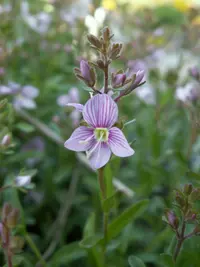
Rose mountain speedwell, Veronica fruticulosa, is a compact, mat-forming perennial grown mainly as a rock garden and edging plant. It typically forms low cushions of small, gray-green leaves topped with dense spikes of blue to violet flowers.

This species is native to rocky slopes and alpine areas of southern Europe, where it thrives in well-drained, often stony soils. Its low, woody habit and slow, steady growth make it relatively easy to manage, provided the soil does not stay wet for long periods.

Gardeners who want to care for Rose Mountain Speedwell should provide plenty of light, moderate moisture, and a gritty or sandy substrate that mimics its natural habitat.

Main Plant Requirements

Care Difficulty

Easy Care

Light Preference

Full Sun

Water Requirements

Moderate Water

Temperature Preference

Cold Hardy

Hardiness Zone

4–8

Soil Texture

Sandy, Loamy, Rocky

Soil pH

Slightly acidic (6.5–7.0), Neutral (7.0)

Soil Drainage

Well-drained

Fertilization

Minimal (feed rarely)

Get Personalized Care Plan

Scan your plant to receive care tips personalized for your specific plant

Available on iOS and Android

How to Care for the Rose Mountain Speedwell

This alpine shrub prefers bright outdoor conditions with consistent sun exposure.

  • Provide 6–8 hours of direct sun daily, ideally strong morning sun with some light afternoon shade to protect foliage from scorching in hot summers.
  • Rose Mountain Speedwell tolerates light partial shade, but flowering and compact growth decline if it receives fewer than 4–5 hours of direct sun.
  • In cooler climates, full sun all day is suitable; in hotter regions, give filtered light or shade after 2–3 p.m. during peak summer to reduce heat stress.

This plant prefers moderately moist, well-drained soil and does not like prolonged wetness.

  • Allow the top 3–5 cm of soil to dry before watering, then water thoroughly so moisture reaches the root zone without leaving puddles on the surface.
  • During active spring–summer growth, expect to water more often in sandy or sloped sites, using leaf droop or slight soil pull-away as cues for dryness.
  • In autumn–winter, reduce watering once rainfall increases; watch for yellowing, mushy stems (overwatering) or crisp, browning leaf edges (underwatering) as correction signs.

This hardy perennial shrub performs best in cool to moderate outdoor temperatures.

  • Ideal growing temperatures are 55–75°F (13–24°C), which support steady growth and flowering without heat stress.
  • Veronica fruticulosa typically survives down to about 0°F (−18°C) in well-drained soil, but new growth and flower buds may be damaged by late spring frosts.
  • It copes with short heat spells up to 85–90°F (29–32°C) if soil moisture is stable; provide afternoon shade and mulch to keep roots cooler in hot climates.

This species tolerates a wide humidity range and usually thrives in typical outdoor conditions.

  • Aim for 30–60% humidity; drier air is acceptable if soil moisture is consistent.
  • Crisp leaf edges or slowed growth in extreme dry heat can indicate humidity stress combined with drought.
  • In very hot, arid regions, group plants together or use nearby mulch to slightly buffer rapid moisture loss.

This plant prefers mineral-rich, sharply drained soil that does not stay wet after rain or watering.

  • Use a sandy or gravelly loam with 30–50% coarse material such as grit or small gravel to keep the root zone aerated.
  • Maintain slightly alkaline to neutral pH around 7.0–7.8; avoid strongly acidic mixes that can limit nutrient availability.
  • Mix equal parts garden loam, coarse sand or grit, and a small portion of compost to support structured yet free-draining soil.
  • For Veronica fruticulosa in wetter climates, raise the planting area or use rock-garden style mounds to prevent waterlogging and root rot.

This species is well suited to container growing, especially in rock-garden style pots or troughs.

  • Choose a wide, shallow container to accommodate its spreading mat-like growth and prevent the crown from staying damp.
  • Use heavy clay or stone pots outdoors to improve stability against wind and to slow rapid drying in full sun.
  • Elevate the container slightly on pot feet so drainage holes stay clear and excess water leaves the root zone quickly.

Veronica fruticulosa is light‑feeding and only needs modest nutrition in average garden soil.

  • Apply a thin layer of compost or a balanced slow‑release fertilizer (such as 10‑10‑10) once in early spring to support growing Rose Mountain Speedwell.
  • Use about half the label rate for ornamentals to avoid lush, floppy growth and reduced flowering.
  • In containers, supplement with a diluted balanced liquid feed (1/4–1/2 strength) every 4–6 weeks during active growth.
  • Stop feeding in late summer to fall so growth hardens before winter dormancy.

Veronica fruticulosa benefits from light, timely pruning to maintain a compact, floriferous mound.

  • In late spring to early summer, shear back spent flower spikes by 1/3 to encourage fresh blooms and dense growth.
  • Remove dead, diseased, or winter‑damaged stems at the base using clean, sharp hand pruners.
  • Thin out weak or crowded shoots after flowering to improve air flow and maintain shape.
  • Every few years, lightly reduce the oldest woody stems to stimulate new basal growth without cutting into old wood too hard.

This low, shrubby speedwell is usually grown in the ground, with transplanting done only when needed.

  • Transplant in early spring or early fall so Veronica fruticulosa can establish roots in cool, moist conditions.
  • Choose a sunny, well‑drained site and amend heavy soil with grit or compost to reduce waterlogging stress.
  • Lift with a generous root ball, keep roots shaded and moist, and replant at the same depth, firming soil gently around the crown.
  • For container plants, shift to a slightly larger pot only when roots circle the edges or growth slows, using free‑draining, gritty mix.

Veronica fruticulosa is commonly propagated by division and softwood cuttings to maintain desired traits.

  • In early spring or early fall, lift mature clumps and divide into smaller sections, each with healthy shoots and roots.
  • Replant divisions immediately into well‑drained soil or pots and water thoroughly to settle soil around roots.
  • Take 5–8 cm softwood cuttings in late spring to early summer, removing lower leaves and dipping bases in rooting hormone.
  • Insert cuttings into moist, gritty propagation mix, keep in bright, indirect light, and maintain even moisture until rooted.

This species is generally cold hardy in temperate climates and needs only minimal winter care in the ground.

  • In late fall, apply a light 3–5 cm mulch around the root zone, keeping it just clear of the crown to prevent rot.
  • Avoid heavy winter watering; ensure soil drains freely so roots do not sit in cold, saturated conditions.
  • In very cold or exposed sites, place a breathable fleece or brushwood screen on the windward side to reduce stem damage.
  • Move container plants to a sheltered, unheated but frost‑free or slightly protected spot to prevent rootball freezing solid.

Care Tips

Alpine-style mulching

Apply a very thin, 0.5–1 cm layer of fine grit or small gravel around the crown to keep stems dry at the base, reduce soil splash, and mimic the free-draining alpine conditions this species prefers.

Rock crevice planting

Tuck plants into narrow gaps between stones or along the upper edge of a rock wall so roots stay cool and well-drained while foliage and flowers receive maximum light and air movement.

Controlled colony spreading

Allow plants to form small mats, but every 2–3 years dig and replant outer sections while discarding any woody or bare-centered parts to maintain a dense, floriferous cushion instead of a thinning clump.

Spent flower grooming

Shear back the spent flowering stems lightly with clean scissors once the main bloom finishes to keep the mound compact and encourage a tidier second flush of flowers rather than letting stems sprawl and lodge.

Winter wet protection

In regions with cold, wet winters, place plants on slightly raised mounds or behind a stone that sheds rain so crowns do not sit in saturated soil, which is often more damaging than low temperatures when growing Rose Mountain Speedwell.

Common Pests and Diseases

Powdery mildew

This disease produces white, floury patches on leaves and stems, often during warm days with cool, humid nights. Symptoms include distorted new growth and reduced flowering if infection persists.

Solution

Remove and discard heavily infected leaves, then thin nearby vegetation or surrounding plants to increase air circulation around the mat. Avoid overhead watering, water early in the day so foliage dries quickly, and if needed apply a sulfur or potassium bicarbonate fungicide labeled for ornamentals at the first sign of infection as part of broader Veronica fruticulosa care instructions.

Leaf spot

This disease causes small brown to purplish spots on leaves that can merge into larger blotches, especially in damp, crowded plantings. Symptoms include premature leaf yellowing and some defoliation from the lower parts of the plant upward.

Solution

Clip off and discard affected leaves and any dense, matted stems that trap moisture, then water at soil level rather than over the foliage. Improve airflow, avoid wetting leaves late in the day, and, if spotting continues, use a labeled ornamental fungicide containing chlorothalonil or copper, following label directions carefully.

Aphids

These insects cluster on tender stems and new shoots, sucking sap and causing curling or distortion of young leaves and flower spikes. This pest also excretes sticky honeydew that can attract sooty mold on nearby surfaces.

Solution

Rinse colonies off stems and flower shoots with a strong but controlled stream of water, repeating every few days until numbers drop. For persistent infestations, treat young growth with insecticidal soap or a light horticultural oil, ensuring thorough coverage of stem tips and the undersides of leaves.

Spider mites

These pests are tiny, sap-sucking arachnids that leave fine webbing and create a stippled, silvery look on narrow leaves, especially in hot, dry conditions. Symptoms include dull, off-color foliage and gradual thinning of the mat.

Solution

Increase humidity around the plant and hose down foliage, focusing on the undersides of leaves to dislodge mites. If populations remain, apply insecticidal soap or a low-rate horticultural oil, repeating at 5–7 day intervals as needed while keeping the plant well watered but not waterlogged.

Interesting Facts

Alpine scree specialist

This species is naturally restricted to rocky alpine slopes and scree in the European Alps, where it anchors itself among stones and gravel rather than in deep soil.

Woody, dwarf habit

Unlike many herbaceous veronica species, it forms a low, woody subshrub with dense, twiggy stems that create a compact cushion close to the ground.

Early-season nectar source

In its native range, its blue flowers open relatively early in the growing season, providing nectar and pollen for small alpine pollinators such as solitary bees and flies.

FAQs about Rose Mountain Speedwell

This species performs best outdoors in rock gardens, sunny borders, or troughs. It tolerates cold, wind, and poor, well-drained soils. Indoors, light and airflow are usually insufficient, so long-term health and flowering decline.

Grow Healthy Plants with Botan Care

Keep your plants happy and healthy with plant identification, disease detection, and easy care guidance.

Botan plant care app — identify plants on mobile

Explore More Plants