Rotate fruiting canes
Mark and gently bend young first-year canes toward the direction where support wires or posts are installed, so by the second year they are already well placed for tying and easier harvesting when caring for Rubus gratus.

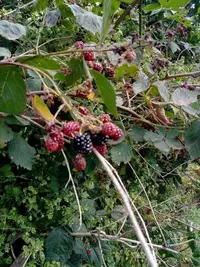
Rubus gratus is a vigorous deciduous bramble, closely related to common blackberry, known for its arching, thorny canes and abundant summer fruit. It is typically found in hedgerows, woodland edges, and scrubby habitats across much of Europe, where it forms dense thickets.
The plant produces white to pale pink flowers followed by dark, edible berries that attract wildlife and foragers. Its robust, fast growth makes it adaptable but also potentially invasive in unmanaged spaces.
Rubus gratus prefers sunny to lightly shaded positions, moisture-retentive but well-drained soil, and benefits from regular pruning to control spread. Understanding how to care for Rubus gratus mainly involves managing its vigor and supporting healthy, fruiting canes.

Care Difficulty
Easy Care

Light Preference
Full Sun

Water Requirements
Regular Water

Temperature Preference
Cold Hardy

Hardiness Zone
4–8

Soil Texture
Loamy, Sandy, Organic-rich

Soil pH
Acidic (5.5–6.5), Slightly acidic (6.5–7.0)

Soil Drainage
Moist but well-drained

Fertilization
Minimal (feed rarely)
Scan your plant to receive care tips personalized for your specific plant
Available on iOS and Android
This bramble thrives in open sites with consistent sun while tolerating some shade.
This species prefers evenly moist, well-drained soil rather than constant saturation.
This hardy bramble tolerates a wide outdoor temperature range in temperate climates.
This species is adapted to outdoor conditions and does not have strict humidity requirements in most temperate gardens.
Rubus gratus prefers moist, fertile, well-structured ground that drains freely but does not dry out quickly.
This bramble can be grown in large outdoor containers if the pot is sized and stabilized for its vigorous, arching growth.
This vigorous bramble usually grows well in ordinary garden soil and needs only modest feeding.
Thoughtful pruning keeps Rubus gratus productive, manageable, and healthy.
This bramble is usually grown in the ground, so focus on thoughtful transplanting rather than frequent repotting.
Rubus gratus is commonly propagated to expand productive thickets or renew aging plantings.
This hardy bramble tolerates typical temperate winters and usually needs only minimal intervention.

Plant Health Check
Not sure what's wrong with your plant? Check your plant's health inside the app.
This species is one of the characteristic wild brambles of traditional hedgerows and woodland edges in western and central Europe, often forming dense thickets that define field boundaries and provide shelter for wildlife.
Its large, late-summer fruits are an important food for birds, small mammals, and invertebrates, supporting complex food webs in semi-natural landscapes.
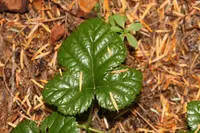
Botanists distinguish this species from similar brambles by its robust, angled stems with strong prickles and its relatively large, flat-topped leaflets, features often used in field identification guides when studying Rubus gratus care instructions in context of wild populations.
This bramble spreads strongly by arching canes and suckering roots, especially in fertile, undisturbed soil. Regular pruning, root barrier edging, and removing unwanted shoots each season help prevent it from overtaking nearby beds and pathways.
Keep your plants happy and healthy with plant identification, disease detection, and easy care guidance.