Black Juniper Care (Juniperus indica)

Also known as: Wallich's Juniper
Black Juniper

About Black Juniper

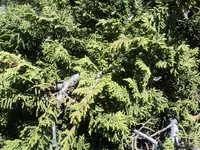
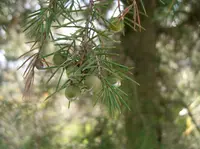
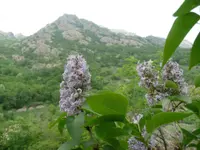
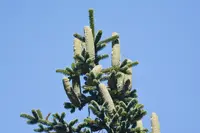
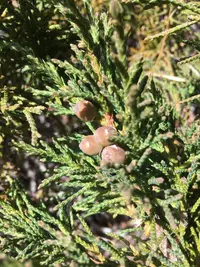
Black juniper, Juniperus indica, is a slow-growing coniferous shrub or small tree, valued for its dense, dark foliage and strong architectural form. It typically forms a compact, bushy shape in cultivation, with scale-like needles and small berry-like cones that give it a rugged, alpine character.

This species is native to high mountain regions of the Himalayas, where it endures cold, wind, and thin, rocky soils. Its natural hardiness and drought tolerance can make it reliable in exposed gardens, rock gardens, and containers.

To care for Black Juniper, provide strong light, well-drained soil, and avoid consistently wet conditions, as prolonged waterlogging can lead to root problems and decline.

Main Plant Requirements

Care Difficulty

Moderate Care

Light Preference

Full Sun

Water Requirements

Low Water

Temperature Preference

Cold Hardy

Hardiness Zone

7–9

Soil Texture

Sandy, Loamy, Rocky

Soil pH

Acidic (5.5–6.5), Slightly acidic (6.5–7.0)

Soil Drainage

Well-drained

Fertilization

Minimal (feed rarely)

Get Personalized Care Plan

Scan your plant to receive care tips personalized for your specific plant

Available on iOS and Android

How to Care for the Black Juniper

This high-mountain conifer thrives in strong light and benefits from long daily sun exposure.

  • Provide 6–8 hours of direct sun daily; full sun is ideal for dense foliage and compact growth in Black Juniper.
  • Allow light afternoon shade in very hot, low-humidity climates to reduce needle scorch and excessive moisture loss.
  • In winter, ensure the site stays bright and open; avoid heavy shade from buildings or taller trees that leads to thin, leggy growth.

This species prefers infrequent, deep watering and dry, fast-draining soil.

  • Let the top 3–5 cm of soil dry before watering; use deep soaking rather than light, frequent splashes to encourage deep roots.
  • Reduce watering in cool or rainy seasons; increase only during extended hot, dry periods if the foliage dulls and branch tips start to droop.
  • Ensure sharply drained, gritty soil; symptoms of overwatering include yellowing inner foliage and dieback, while underwatering shows as browning tips.

This cold-hardy conifer is adapted to wide temperature swings but grows best within a moderate range.

  • Active growth is strongest around 55–75°F (13–24°C), especially in spring and early summer with good light and airflow.
  • Mature plants tolerate lows near 0°F (-18°C) or slightly below when established, but young plants need protection from sudden hard freezes.
  • In hot regions, Juniperus indica handles summer highs up to about 95°F (35°C) if soil drains well and the site has some afternoon air movement.

This species prefers relatively dry air and usually tolerates typical indoor humidity without special measures.

  • Aim for 30–50% humidity, which suits natural high-altitude conditions and most homes where caring for Black Juniper is attempted.
  • Brown leaf tips and increased spider mites can indicate air that is too dry or hot and stagnant.
  • If air is extremely dry, increase humidity indirectly by grouping plants and improving airflow rather than misting foliage.

Juniperus indica needs lean, fast-draining soil that prevents water from sitting around the roots.

  • Use a sandy or gritty loam with coarse structure to keep pores open and allow rapid water movement.
  • Aim for slightly acidic to neutral pH around 6.0–7.0; avoid strongly acidic or alkaline substrates that can limit nutrient uptake.
  • Mix roughly 50–60% coarse sand or grit with 20–30% loam and 10–20% fine bark or compost to balance drainage and modest fertility.
  • Avoid compacted, clay-heavy, or water-retentive mixes; improve aeration with extra grit or perlite wherever drainage is slow.

This species can be grown in containers if the pot supports its woody roots and spreading crown.

  • Choose a deep, heavy container to anchor the plant and reduce tipping from wind or uneven growth.
  • Select a pot material like unglazed clay if extra evaporation is needed to keep the root zone on the dry side.
  • Raise the container slightly on feet or blocks so drainage holes clear surfaces and excess water exits quickly after rain or watering.

Juniperus indica grows well in lean soil and needs only modest feeding in cultivation.

  • Use a balanced slow-release fertilizer (around 8-8-8 to 10-10-10) or light compost top-dressing in early spring.
  • Feed once in spring and, in shorter-season climates, a second light application in early summer only.
  • Apply at half the label rate to avoid forcing lush, weak growth on Black Juniper.
  • Stop fertilizing by late summer and do not feed in winter dormancy.

Juniperus indica benefits from light, selective pruning to maintain structure and remove problem growth.

  • Carry out main pruning in late winter to early spring before new growth starts.
  • Use clean, sharp bypass pruners to remove dead, diseased, or crossing branches back to a side shoot or the main stem.
  • Limit cuts to younger, green shoots, as old bare wood often fails to reshoot.
  • Shape lightly by thinning individual branches rather than shearing, which preserves the natural form.

This species is most often grown in the ground, so transplanting is more common than container repotting.

  • Look for circling roots, water running straight through, or declining vigor as signs a container-grown plant needs a larger pot.
  • Plan transplanting or repotting for early spring or early fall, allowing roots to establish in mild conditions.
  • Expect container Juniperus indica to need repotting every 3–5 years, stepping up only 1 pot size each time.
  • Minimize root stress by watering deeply before moving, handling the rootball gently, and watering thoroughly after replanting.

Juniperus indica is usually propagated by semi-hardwood cuttings, with seed used mainly in specialist settings.

  • Take semi-hardwood cuttings in late summer to early fall, 7–10 cm long from healthy, non-flowering shoots.
  • Remove lower foliage, dip the base in rooting hormone, and insert into a free-draining mix such as 50% perlite and 50% peat or coco coir.
  • Maintain high humidity and bright, indirect light at 60–70°F, keeping the medium just slightly moist.
  • Seed germination is slow and requires cold stratification, so it suits experienced growers or nursery production.

Juniperus indica is cold hardy once established and usually needs minimal winter care in the ground.

  • Apply a 5–8 cm mulch layer around the root zone in late fall, keeping it away from direct stem contact.
  • In very exposed or windy sites, use a breathable windbreak to reduce foliage desiccation.
  • Move container plants to a sheltered, unheated but frost-free spot, ensuring soil drains well between waterings.

Care Tips

Wind exposure management

Site plants where they receive good air movement but are shielded from the strongest prevailing winter winds to reduce desiccation and dieback of exposed shoots.

Snow load protection

In regions with heavy snowfall, loosely tie branches together with soft horticultural twine in late fall so that snow does not spread and snap the layered, horizontal branches.

Targeted branch training

During the first 3–5 years, use stakes and soft ties to guide a single strong leader upward and gently angle side branches to create a stable, tiered structure that will better resist storm damage.

Soil surface hygiene

Keep the soil surface free of fallen needles and dead twigs and top up with a thin layer of clean mineral mulch (such as gravel) to discourage fungal spores and reduce habitat for pests that can affect growing Black Juniper.

Low‑input weed control

Maintain a 30–60 cm weed-free zone around the base using breathable landscape fabric covered with gravel or coarse bark so that competing roots do not weaken the plant in its establishment phase.

Common Pests and Diseases

Juniper blight

This disease causes browning and death of branch tips, often starting on lower branches and moving upward, with needles turning reddish brown then ash gray. Symptoms include distinct dieback on young shoots and a sharp line between healthy green tissue and dead brown tissue.

Solution

Prune out infected shoot tips 7–10 cm below the last visible damage, disinfecting tools between cuts, and discard all clippings. Improve airflow, avoid overhead watering, and if the plant has a history of blight, apply a copper- or chlorothalonil-based fungicide in early spring according to label directions as part of broader Juniperus indica care.

Phomopsis tip blight

This disease affects young, actively growing tips, which turn dull green, then reddish brown, often bending into a shepherd’s-crook shape. Symptoms include tiny black fruiting bodies on dead tissue in humid conditions.

Solution

Remove and destroy blighted tips and any severely affected twigs, and keep foliage as dry as possible by watering at the base. In landscapes with repeated issues, apply a registered fungicide at bud break and repeat during periods of wet weather, and avoid shearing or stressing the plant during rapid spring growth.

Juniper scale

This pest appears as tiny, white to gray, oyster-shaped bumps tightly attached to needles and twigs, leading to yellowing and thinning foliage. This pest weakens plants over time and can cause branch dieback under heavy infestation.

Solution

Prune out and discard heavily infested branches and gently scrub light infestations with a soft brush or cloth to dislodge scales. For active crawlers in late spring, use a labeled horticultural oil or insecticidal soap, applied thoroughly to stems and needles, and repeat as directed to break the life cycle.

Spider mites

These insects are tiny, sap-sucking arachnids that cause a dull, dusty appearance, fine stippling on needles, and in severe cases fine webbing and bronzing of foliage. Symptoms include foliage that looks faded or dirty, especially during hot, dry weather.

Solution

Spray foliage thoroughly with a strong stream of water every few days to knock mites off and reduce dust, focusing on inner branches. For persistent problems, apply a horticultural oil or insecticidal soap labeled for mites, cover all plant surfaces, and improve plant vigor by reducing drought stress.

Cedar-apple rust

This disease produces brown galls on juniper branches that in wet spring weather develop bright orange, gelatinous spore horns. Symptoms include localized swelling on twigs and nearby needle discoloration, and it can also affect nearby apple and crabapple trees.

Solution

Prune and remove galls as soon as noticed, cutting several centimeters below the gall and disposing of them away from host plants. Where this disease is common, avoid planting highly susceptible apple or crabapple cultivars nearby, and in high-pressure areas use a protectant fungicide in early spring on susceptible trees, not on the juniper, to interrupt the disease cycle.

Interesting Facts

High Himalayan specialist

This species occurs naturally at very high elevations in the eastern Himalayas, often growing between the upper tree line and the zone dominated by alpine shrubs, where few woody plants can tolerate the cold and wind exposure.

Variable growth forms

Juniperus indica can appear as a low, prostrate shrub on exposed ridges or as a small, more upright tree in slightly more sheltered sites, showing strong morphological plasticity in response to local conditions.

Important bird food source

The fleshy, berry-like cones are eaten by mountain birds, which disperse the seeds across steep slopes and help maintain its scattered populations in harsh alpine terrain.

Botan icon

Did you know?

Juniperus indica has long held religious and cultural significance for local communities in the Himalayas, where its fragrant twigs are traditionally burned as incense in Buddhist and other mountain rituals, making it one of the characteristic aromatic woods of high-altitude sacred sites.

FAQs about Black Juniper

This species is evergreen and keeps foliage year-round. Older inner needles naturally brown and drop as part of normal renewal, but healthy outer growth stays green, providing constant structure and color even in winter.

Grow Healthy Plants with Botan Care

Keep your plants happy and healthy with plant identification, disease detection, and easy care guidance.

Botan plant care app — identify plants on mobile

Explore More Plants