linden arrowwood Care (Viburnum dilatatum)

Also known as: linden viburnum
linden arrowwood

About linden arrowwood

Linden arrowwood (Viburnum dilatatum) is a deciduous shrub valued for its dense branching, textured foliage, and bright red berry clusters that often persist into winter. It typically forms a rounded, multi-stemmed shape and works well in mixed borders or as a wildlife-friendly hedge.

This species is native to East Asia, especially Japan, China, and Korea, and adapts well to many temperate garden climates. It prefers moderate moisture, well-drained soil, and sun to light shade, which makes it relatively straightforward to care for linden arrowwood in typical garden settings.

Its flowers support pollinators, while the fruits provide food for birds, so it suits gardeners interested in ornamental value and backyard ecology.

Main Plant Requirements

Care Difficulty

Easy Care

Light Preference

Partial Sun

Water Requirements

Moderate Water

Temperature Preference

Cold Hardy

Hardiness Zone

5–7

Soil Texture

Loamy, Clay, Organic-rich

Soil pH

Acidic (5.5–6.5), Slightly acidic (6.5–7.0)

Soil Drainage

Moist but well-drained

Fertilization

Minimal (feed rarely)

Get Personalized Care Plan

Scan your plant to receive care tips personalized for your specific plant

Available on iOS and Android

How to Care for the linden arrowwood

This deciduous shrub performs best with abundant outdoor light and some protection from harsh conditions.

  • Provide 4–6 hours of direct sun daily, ideally morning sun with light afternoon shade, to balance flowering, berry production, and leaf health when growing linden arrowwood.
  • Tolerates partial shade (around 3–4 hours of sun), but flowering and fruiting may decline and stems may stretch if shaded for most of the day.
  • In hot summers, avoid intense sun from 1–4 p.m.; leaves may scorch or curl at the edges, while too little sun leads to sparse blooms and weak growth.

This shrub prefers evenly moist, well‑drained soil rather than frequent shallow watering.

  • Water when the top 3–5 cm of soil feels dry, soaking the root zone deeply, then let excess drain to avoid standing water around the base.
  • Newly planted shrubs need closer monitoring during the first 1–2 growing seasons, especially in hot, dry weather, while established Viburnum dilatatum tolerate short dry spells.
  • Watch for drooping leaves and dry, crumbly soil as signs of underwatering, and yellowing leaves with soft stems as signs of overwatering or poor drainage.

This hardy landscape shrub tolerates a wide range of outdoor temperatures with good performance in temperate climates.

  • Optimal growth occurs around 60–75°F (16–24°C) during the growing season, supporting steady shoot growth, flowering, and fruit set.
  • Mature plants tolerate winter lows near -10°F to -20°F (-23 to -29°C), depending on cultivar and site shelter, once fully established in the ground.
  • In summer, shrubs handle brief heat up to about 90°F (32°C) if soil moisture is maintained; prolonged extreme heat with dry soil can cause leaf scorch and stress.

This shrub handles a wide humidity range and usually needs no special humidity management outdoors.

This species prefers evenly moist, well-structured soil that holds water yet drains freely.

  • Use a loamy soil with 30–50% organic matter such as compost or leaf mold to support fibrous roots.
  • Ensure drainage is moderate to fast; avoid spots where water pools for more than a few hours after rain.
  • Aim for slightly acidic to neutral pH (6.0–7.0); amend very alkaline soils with compost and pine fines.
  • On heavy clay, improve aeration and drainage by incorporating coarse sand or fine bark, not just more compost.

This species can be grown in large outdoor containers if the pot size and stability are managed carefully.

  • Choose a deep, heavy container to counter the shrub’s eventual height and reduce tipping in strong winds.
  • Fill the pot with a loam-based mix plus 20–30% compost and 10–20% coarse material for root oxygenation.
  • Raise the container slightly on feet or bricks so drainage holes stay clear and excess water escapes quickly when growing linden arrowwood.

Viburnum dilatatum is not a heavy feeder but responds well to modest, balanced nutrition in poor or depleted soils.

  • Apply a balanced slow-release granular fertilizer (around 10-10-10) once in early spring as new growth begins.
  • Supplement with a light layer of compost around the root zone in spring to improve soil structure and microbial activity.
  • Use fertilizers at 1/2–3/4 label strength to avoid excessive, weak growth that may reduce flowering.
  • In winter dormancy, avoid additional feeding; for linden arrowwood, active uptake largely stops in cold soil.

Pruning Viburnum dilatatum helps maintain a stable framework, encourages flowering, and keeps the shrub within its space.

  • Time structural pruning for late winter to very early spring, before buds break, to see the branch framework clearly.
  • Remove dead, diseased, or damaged wood first, then thin out weak, crossing, or crowded branches back to a main stem.
  • Use clean, sharp bypass pruners or loppers; make angled cuts just above a bud or branch collar to support proper healing.
  • Limit size reduction to about 1/3 of the canopy per year to avoid shock and preserve good flowering performance.

This shrub is usually grown in the ground, so management focuses on careful transplanting of young plants rather than frequent repotting.

  • Transplant in early spring or early fall when temperatures are mild and soil is workable, avoiding hot or frozen conditions.
  • Look for circling roots in nursery containers or slow, stunted growth as signs that a plant is pot-bound and needs more space.
  • Move to a hole 2–3× the width of the root ball, loosening outer roots gently and planting at the same soil depth as before.
  • Water thoroughly after planting, then keep soil evenly moist for several weeks and apply mulch to reduce root stress and drying.

Viburnum dilatatum is commonly propagated from semi-ripe cuttings or seeds, with cuttings giving more predictable results for home gardeners.

  • Take 8–12 cm semi-ripe stem cuttings in mid to late summer, removing lower leaves and keeping 2–3 leaf pairs at the top.
  • Dip cut ends in a rooting hormone, then insert into a free-draining mix such as 1:1 peat or coir and perlite.
  • Maintain high humidity and gentle bottom warmth around 70–75°F, with bright indirect light, until roots develop.
  • Sow cleaned seeds in autumn and allow natural cold stratification outdoors, as germination may be slow and uneven.

This species is generally cold hardy in temperate climates and needs only modest winter care once established in the landscape.

  • Tolerates typical winter frost in USDA zones around 5–7, though very young plants benefit from extra attention.
  • Apply a 5–8 cm layer of mulch around the root zone in late fall, keeping it slightly away from the stems.
  • For container plants, move pots into a sheltered, unheated but frost-free or minimally freezing area to protect roots from deep cold.

Care Tips

Wildlife-friendly spacing

Plant shrubs 1.5–2 m apart in informal groups to improve cross-pollination, which increases berry set and supports wildlife through winter.

Layering for propagation

In early spring, peg a low, flexible branch to the soil, lightly wound the underside where it touches the ground, and cover with soil so it can root and form a new plant by the following year.

Berry and seed management

If volunteer seedlings are a problem, remove most of the fruit clusters in late fall or early winter and dispose of them in yard waste rather than compost to limit self-seeding.

Branch structure monitoring

Each late winter, step back and check for rubbing or crossing branches near the center of the shrub, then remove 1–3 of the worst offenders at the base to maintain an open, disease-resistant framework.

Mulch ring maintenance

Maintain a 5–8 cm deep mulch ring extending to the drip line, keeping mulch 5–8 cm away from the stems to conserve soil moisture, reduce mower damage, and make caring for linden arrowwood more efficient.

Common Pests and Diseases

Viburnum leaf beetle

This pest skeletonizes leaves, starting as small pinholes that expand until only leaf veins remain, often defoliating shrubs by mid-summer. Repeated heavy damage can severely weaken plants and reduce flowering and fruiting.

Solution

Prune and destroy egg-laden twig tips in late winter or very early spring, cutting 8–10 in from the damaged end and disposing of prunings in the trash. During active feeding, hand-pick larvae and adults where practical, and if populations are high, use targeted applications of insecticidal soap or a spinosad-based product, thoroughly covering the undersides of leaves.

Aphids

These insects cluster on young shoots and leaf undersides, sucking sap and causing curling, distortion, and sticky honeydew that can lead to sooty mold on leaves. Ants may be seen tending the aphids for honeydew.

Solution

Dislodge colonies with a strong stream of water from a hose, then monitor new growth weekly. If needed, treat with insecticidal soap or a light horticultural oil, applied in the early morning or evening, ensuring good coverage of tender shoots and the undersides of leaves while avoiding application in high heat above 85°F.

Powdery mildew

This disease causes a white to gray powdery coating on upper leaf surfaces, often starting on shaded or crowded branches. Symptoms include distorted new growth and reduced vigor when infections are repeated year after year.

Solution

Improve air circulation by thinning crowded branches and avoid overhead watering in the evening. If disease is persistent, apply a labeled fungicide such as sulfur or a potassium bicarbonate product at the first sign of the white coating, repeating as directed and focusing especially on the most shaded, dense sections of the shrub as part of general Viburnum dilatatum plant care.

Botryosphaeria canker

This disease causes sunken, dark cankers on stems and branches, wilting of attached foliage, and dieback of shoots, especially on plants stressed by drought or poor site conditions. Leaves on affected branches often brown and remain attached for some time.

Solution

Prune out affected branches 4–6 in below visible symptoms, cutting back to healthy wood, and sterilize pruning tools between cuts with alcohol or a 10% bleach solution. Support recovery by reducing drought stress with deep, infrequent watering, mulching the root zone to maintain even soil moisture, and avoiding heavy nitrogen fertilization that promotes weak, susceptible growth.

Interesting Facts

Bird-dispersed winter berries

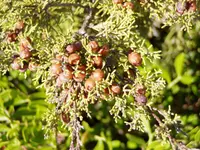
This species holds its glossy red berries into early winter, providing a late-season food source for birds that then spread its seeds across the landscape.

Distinct three-veined leaves

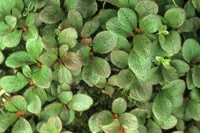
Its leaves show a characteristic trio of strong veins from the base and a noticeably wrinkled surface, features that help distinguish it from many other viburnum species in the field.

Multi-season ornamental shrub

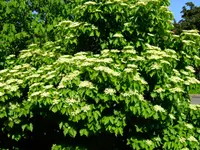
The plant combines cream-white spring flower clusters, bright red late-summer to fall fruit, and often red to burgundy autumn foliage, which is why it is widely used in ornamental plantings and guides on Viburnum dilatatum plant care.

FAQs about linden arrowwood

This shrub is highly attractive to a wide range of pollinators. Flat clusters of white spring flowers provide abundant nectar and pollen, drawing native bees, honeybees, hoverflies, and various butterfly species into the garden.

Grow Healthy Plants with Botan Care

Keep your plants happy and healthy with plant identification, disease detection, and easy care guidance.

Botan plant care app — identify plants on mobile

Explore More Plants