Carpet Begonia Care (Begonia imperialis)

Carpet Begonia

About Carpet Begonia

Carpet begonia (Begonia imperialis) is a compact rhizomatous begonia grown mainly for its decorative foliage rather than its flowers. It forms a low, spreading mat, which makes it suitable for tabletops, shelves, and terrariums.

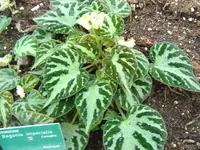
Leaves are broad, velvety, and patterned with metallic silver or pale green veins against darker backgrounds, giving a textured, almost quilted look. Stems creep along the surface, rooting as they go.

This species comes from humid forest understories in Mexico and Central America, where it grows in shaded, sheltered spots. It prefers soft, filtered light, steady moisture, and airy, organic-rich soil.

Under stable indoor conditions, it is moderately demanding; sudden changes in humidity, drafts, or overwatering can damage it, so learning how to care for Carpet Begonia helps maintain healthy growth.

Main Plant Requirements

Care Difficulty

Hard Care

Light Preference

Bright Indirect Light

Water Requirements

Keep Soil Moist

Temperature Preference

Tropical / Frost Sensitive

Hardiness Zone

11–12

Soil Texture

Loamy, Peaty, Organic-rich

Soil pH

Acidic (5.5–6.5), Slightly acidic (6.5–7.0)

Soil Drainage

Moist but well-drained

Fertilization

Light (every 4–6 weeks)

Get Personalized Care Plan

Scan your plant to receive care tips personalized for your specific plant

Available on iOS and Android

How to Care for the Carpet Begonia

Begonia imperialis prefers bright, indirect light that mimics a shaded tropical understory.

  • Provide 4–6 hours of bright, filtered light daily, such as dappled shade under taller plants or sheer-curtained windows for Carpet Begonia indoor care.
  • Allow soft morning sun but protect from strong midday and afternoon sun, which can scorch leaves and fade silver markings.
  • In winter, move plants to a brighter spot to compensate for shorter days, but avoid placing them in direct, low-angled sun behind glass.

Begonia imperialis needs evenly moist but never waterlogged soil to maintain healthy roots and foliage.

  • Water when the top 2–3 cm of soil feels dry, using enough water so it drains freely from the pot or bed without pooling.
  • Reduce watering in winter when growth slows, but do not let the root zone dry completely for more than a day or two.
  • Watch for yellowing, mushy stems as a sign of overwatering and crisp, curling edges as a sign the plant is staying too dry.

This species prefers consistently warm conditions with no exposure to frost or sudden temperature swings.

  • Aim for 65–80°F (18–27°C) for steady growth, avoiding areas that fluctuate sharply between day and night.
  • Protect from temperatures below 55°F (13°C), as chilling injury and leaf drop can occur near this point.
  • In hot spells above 85°F (29°C), increase shade and airflow to prevent heat stress and leaf scorch, especially in enclosed locations.

This species needs consistently high humidity to maintain healthy foliage and steady growth.

  • Aim for 60–80% humidity; lower than 50% often causes leaf edge browning in Carpet Begonia.
  • Watch for curled, crispy margins and dull, stalling leaves as signs of humidity stress rather than watering issues.
  • Increase humidity with a nearby humidifier, closed-group plant placement, or a wide pebble tray, avoiding misting that wets foliage heavily.

Begonia imperialis grows best in a loose, airy, organic-rich mix that drains rapidly yet holds some moisture.

  • Use a base of peat or coco coir with fine bark to create a fibrous, humus-rich structure that mimics forest-floor litter.
  • Add 30–40% perlite or pumice to the mix to improve aeration and prevent water from stagnating around sensitive roots.
  • Keep pH slightly acidic to neutral, around 5.8–6.8, avoiding lime-heavy amendments that push the mix too alkaline.
  • Avoid heavy, compacted, or pure garden soil, which promotes root rot; refresh structure with bark chips or perlite if the mix compresses over time.

This species is well suited to container growing when the pot choice supports its shallow, fibrous root system.

  • Choose a wide, shallow pot instead of a deep one so roots can spread laterally and the mix dries evenly across the surface.
  • Select a slightly heavier material such as ceramic if the foliage becomes top-heavy to reduce tipping risk when the mix is moist.
  • Elevate the pot on feet or a stand so drainage holes stay clear and excess water escapes quickly from the lower root zone.

This species appreciates light, consistent feeding during active growth for steady foliage development.

  • Use a balanced liquid fertilizer (such as 10-10-10) at 1/4–1/2 strength every 3–4 weeks in spring and summer when growing Carpet Begonia indoors.
  • Choose products formulated for foliage houseplants or a mild organic option like compost tea.
  • Apply only to moist soil, never to dry roots, to reduce burn risk.
  • Stop or reduce feeding to once every 6–8 weeks at very weak strength in fall and winter.

Pruning Begonia imperialis is mainly about keeping the plant compact and removing weak tissue.

  • Best time is late winter to early spring, just before strong new growth starts.
  • Use clean, sharp scissors or pruners to cut away dead, yellowing, or damaged leaves and stems at the base.
  • Thin crowded stems to improve airflow and light penetration, which supports healthier foliage.
  • Light tip-trimming of leggy growth encourages a fuller, bushier shape.

This begonia prefers slightly snug pots and only needs repotting when clearly rootbound.

  • Check for roots circling the pot, pushing through drainage holes, or slow growth despite good care.
  • Plan to repot every 2–3 years in late winter or early spring before vigorous growth resumes.
  • Move to a pot only 2–5 cm wider, using airy, well-draining mix, and keep the root ball as intact as possible.
  • Water lightly after repotting, keep in bright but indirect light, and avoid heavy feeding for 2–3 weeks to limit stress.

This species is commonly propagated from stem or leaf cuttings rather than seed.

  • Best season is spring to early summer when growth is active and light levels are strong.
  • Take 5–8 cm stem cuttings with at least 1–2 nodes, or healthy leaf cuttings with a short petiole.
  • Insert cuttings into a very light, moist mix, keep humidity high, and maintain temperatures around 70–75°F.
  • Provide bright, indirect light and avoid waterlogging until firm new roots and growth appear.

Begonia imperialis is frost-sensitive and needs protection in regions with cold winters.

  • Keep indoor temperatures around 60–75°F and avoid cold drafts near windows or doors.
  • If grown outside in containers, move plants indoors before temperatures drop near 50°F.
  • Reduce watering slightly in winter, letting the top layer of soil dry more between waterings.
  • Use a thin layer of mulch on outdoor tubers in mild climates, but lift and store them frost-free in colder regions.

Care Tips

Use wide pots

Choose a shallow, wide pot rather than a deep one, as the plant has a fibrous, surface-oriented root system that fills horizontal space more efficiently and stays more stable.

Protect brittle leaves

Position the plant where it will not be brushed by people, pets, or curtains, since the thick, textured leaves bruise and tear easily and damage can attract fungal problems.

Gentle cleaning method

Clean the foliage by blowing loose dust off and then lightly brushing with a soft, dry paintbrush instead of wiping, which can scratch or remove the delicate leaf hairs and surface bloom.

Boost airflow safely

Place a small fan several feet away on a low setting to keep air moving around the foliage, which reduces the risk of powdery mildew without dropping humidity too much when growing Carpet Begonia.

Quarantine new plants

Keep any new houseplants in a separate area for 2–3 weeks and inspect underside of leaves regularly, since early isolation helps prevent spider mites and mealybugs from spreading to this sensitive species.

Common Pests and Diseases

Powdery mildew

This disease often develops on Begonia imperialis foliage in warm, stagnant air with moderate humidity. Symptoms include white, powdery patches on leaves that can cause yellowing and distortion.

Solution

Improve air circulation around the plant, avoid overhead watering, and keep leaves as dry as possible. Remove and discard heavily affected leaves and apply a labeled sulfur or potassium bicarbonate fungicide, following the product directions for Carpet Begonia care instructions in indoor conditions.

Botrytis blight

This disease is favored by cool, damp, low-light conditions and poor air movement. Symptoms include gray, fuzzy mold on leaves, stems, and flowers, often starting on damaged or old tissues.

Solution

Promptly remove faded flowers, dead leaves, and any mushy tissue, and dispose of them away from the plant. Increase airflow, reduce leaf wetness, and, if needed, use a registered fungicide for ornamental plants, ensuring the plant is not kept in persistently cool, humid corners.

Bacterial leaf spot

This disease appears in overly wet conditions and when water sits on foliage for long periods. Symptoms include water-soaked, translucent spots that turn brown and may be surrounded by yellow halos, often starting on lower leaves.

Solution

Isolate the plant, remove affected leaves with sterile tools, and keep foliage dry by watering at the soil level only. Improve spacing and ventilation, avoid splashing water between plants, and discard severely affected specimens to prevent spread to other begonias.

Mealybugs

These insects are attracted to the sheltered leaf bases and hairy undersides of Begonia imperialis leaves. This pest appears as white, cottony clusters that suck sap, weaken growth, and excrete sticky honeydew that can lead to sooty mold.

Solution

Physically remove visible colonies with a cotton swab dipped in 70% isopropyl alcohol and rinse the plant with a gentle shower of lukewarm water. For persistent infestations, apply an insecticidal soap or neem oil spray to leaf undersides and petiole joints, repeating at 7–10 day intervals until no new insects appear.

Spider mites

These pests thrive on Begonia imperialis in warm, dry indoor air, especially on the textured, hairy leaf undersides. This pest causes fine stippling, dull or bronzed foliage, and may produce delicate webbing between leaves and stems.

Solution

Rinse the plant thoroughly under a lukewarm shower, focusing on leaf undersides, and increase ambient humidity to discourage mites. Follow with repeated applications of insecticidal soap or horticultural oil, ensuring full coverage of both sides of the leaves and monitoring closely for several weeks.

Interesting Facts

Velvet leaf surface

The foliage has a dense covering of fine hairs (trichomes) that create a velvety texture and help diffuse intense light in its native cloud forest habitat.

Silver vein patterning

Its striking metallic silver veins follow the underlying leaf vascular system, making the venation visibly pronounced and giving the plant a reflective, almost iridescent appearance under low forest light.

Rocky forest specialist

In the wild, this species often grows on shaded, rocky slopes and limestone outcrops in humid Mexican forests, anchoring its roots into crevices rather than deep soil.

FAQs about Carpet Begonia

Brown leaf edges usually result from low humidity, underwatering, or salt buildup from fertilizer. Check soil moisture, flush the pot occasionally, and increase ambient humidity. Direct hot sun or cold drafts can also scorch and discolor foliage.

Grow Healthy Plants with Botan Care

Keep your plants happy and healthy with plant identification, disease detection, and easy care guidance.

Botan plant care app — identify plants on mobile

Explore More Plants