Box Fruit Tree Care (Barringtonia asiatica)

Also known as: sea putat, Fish Poison Tree, sea poison tree
Box Fruit Tree

About Box Fruit Tree

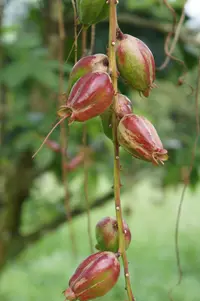
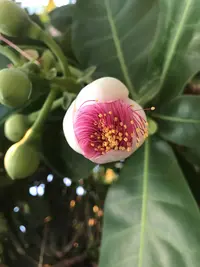
Box fruit tree, Barringtonia asiatica, is a tropical evergreen tree known for its large glossy leaves, box-shaped fruits, and spectacular, brush-like white to pink flowers. It naturally grows along sandy coasts and mangroves in the Indo-Pacific region, where it can tolerate salt spray and occasional flooding.

In cultivation it tends to form a dense, rounded crown and is usually grown outdoors in warm, frost-free climates. It prefers bright light, consistent moisture, and well-drained, slightly sandy soil. These coastal adaptations make it hardy in the right climate but challenging in cooler or dry indoor conditions, so learning how to care for Box Fruit Tree is important before planting.

Main Plant Requirements

Care Difficulty

Hard Care

Light Preference

Full Sun

Water Requirements

Keep Soil Moist

Temperature Preference

Tropical / Frost Sensitive

Hardiness Zone

11–12

Soil Texture

Sandy, Loamy, Organic-rich

Soil pH

Slightly acidic (6.5–7.0), Neutral (7.0)

Soil Drainage

Waterlogged tolerant

Fertilization

Minimal (feed rarely)

Get Personalized Care Plan

Scan your plant to receive care tips personalized for your specific plant

Available on iOS and Android

How to Care for the Box Fruit Tree

This coastal tropical tree needs strong light and benefits from consistent sun exposure in warm climates.

  • Provide 6–8 hours of direct sun daily, ideally with gentle morning sun and some light afternoon shade in very hot regions.
  • Young or newly planted Box Fruit Tree benefits from partial shade (filtered light or 3–4 hours direct sun) to reduce leaf scorch while roots establish.
  • In summer, monitor for bleached, crisping leaves as a sign of excessive sun; in cooler seasons watch for weak, leggy growth indicating insufficient light.

This species prefers consistently moist conditions but suffers if soil stays stagnant and airless.

  • In the ground, allow the top 2–4 cm of soil to just start to lose surface gloss, then water deeply so moisture reaches 20–30 cm depth.
  • During hot, dry periods, increase watering frequency and check soil by hand; in cooler or rainy seasons, wait longer between waterings to avoid waterlogging.
  • Signs of overwatering include soft, yellowing leaves and a sour soil smell; curling, dull leaves and dry, cracked soil surface suggest underwatering.

This tropical coastal tree thrives in warm, frost-free conditions year-round.

  • Aim for 70–88°F (21–31°C) for active growth; it tolerates short hot spells up to about 95°F (35°C) if soil moisture is maintained.
  • Growth slows below about 65°F (18°C); protect from temperatures under 55°F (13°C), as chilling injury and leaf drop may occur.
  • Barringtonia asiatica is highly frost-sensitive; even light frost can kill young tissue, so use coastal or sheltered sites in regions with mild winters only.

This coastal species prefers fairly humid air but usually adapts to typical household levels if not extremely dry.

  • Aim for 50–70% humidity, especially for young Box Fruit Tree plants grown away from natural sea air.
  • Crisping leaf edges or slow new growth in warm conditions can signal air that is too dry.
  • Increase humidity by grouping plants, using a nearby pebble tray, or running a small humidifier in very dry rooms.

This species thrives in loose, sandy to loamy substrates that stay moist but never stagnant.

  • Use a mix of roughly 50% coarse sand, 30% loam or general potting mix, and 20% compost to mimic Barringtonia asiatica’s coastal habitat.
  • Ensure fast drainage; excess water should pass through within seconds rather than pooling on the surface.
  • Keep pH slightly acidic to neutral (pH 6.0–7.0); avoid highly alkaline mixes that can lock up nutrients.
  • Improve aeration by adding coarse sand or fine bark chips and avoid heavy clay or compacted soils that suffocate roots.

This tree can be grown in containers when young or kept dwarf, though it is naturally suited to open ground.

  • Choose a wide, heavy container to counterbalance the eventually top-heavy canopy and reduce tipping in strong winds.
  • Select thick-walled clay or concrete pots outdoors to moderate root temperature swings in full sun sites.
  • Elevate the container on pot feet so drainage water exits quickly and does not reabsorb into the root zone.

Barringtonia asiatica benefits from light, balanced feeding in warm growing conditions but is not a heavy feeder.

  • Use a balanced slow-release fertilizer (for example 10-10-10) or well-rotted compost applied to the root zone in spring.
  • Feed every 6–8 weeks through the main growing season in warm climates, skipping feeding if growth is weak from poor light or cold.
  • Apply fertilizers at half the label strength for container plants to avoid root burn and salt buildup.
  • Reduce or stop fertilizing in cooler months or any dormant period, resuming only when new growth appears.

Pruning Barringtonia asiatica focuses on safety, structure, and removing weak material rather than heavy shaping.

  • Carry out main pruning in late winter or early spring before vigorous new growth starts.
  • Remove dead, diseased, storm-damaged, or crossing branches to maintain a stable, open crown.
  • Shorten or thin crowded interior branches to improve light penetration and airflow, which supports healthy foliage and flowering.
  • Use clean, sharp bypass pruners or a pruning saw, making smooth cuts just outside the branch collar.

This coastal tree is usually grown in the ground, so care centers on thoughtful transplanting rather than frequent repotting.

  • Transplant young Barringtonia asiatica at the start of the warm, rainy season to support rapid root establishment.
  • Look for signs such as roots circling a nursery container, water running off quickly, or noticeably slowed growth as cues to shift into a larger space.
  • Prepare a wide planting hole with well-drained, sandy or loamy soil, setting the root flare at soil level and backfilling firmly but gently.
  • Water deeply before and after transplanting, keep soil evenly moist for several weeks, and use an organic mulch layer to limit stress and temperature swings.

Propagation of Barringtonia asiatica is most reliable from fresh seeds under warm, moist conditions.

  • Collect mature, brown fruit, remove the fibrous husk, and sow the large seeds promptly for best germination.
  • Sow in a free-draining, sandy mix, keep at 75–85°F, and maintain consistently moist but not waterlogged conditions.
  • Provide bright, indirect light and good air circulation; germination may take several weeks to months.
  • Stem cuttings are less common but can be tried in late spring with semi-hardwood pieces treated with rooting hormone and kept humid.

This tropical coastal tree is highly sensitive to frost and needs protection in climates with cool winters.

  • In USDA zones colder than 11, grow Barringtonia asiatica in containers so it can be moved indoors or into a heated greenhouse before temperatures drop below 50°F.
  • Indoors, provide bright light, warm temperatures, and reduced but consistent watering to avoid root rot in slower winter growth.
  • In mild coastal climates, apply a 5–8 cm mulch layer around the root zone to buffer soil temperature and conserve moisture.

Care Tips

Salt-Spray Tolerance

If planted in coastal areas, gradually acclimate young trees to salt spray by starting them a few meters inland or behind a windbreak and shifting closer to exposure over 1–2 seasons to reduce foliage burn and transplant shock.

Root-Zone Protection

In windy or cyclone-prone regions, maintain a broad mulch ring 10–15 cm deep out to at least the canopy drip line to stabilize soil moisture, reduce surface root damage, and help prevent toppling during storms.

Controlled Canopy Shaping

While the tree is young, selectively remove or shorten steep, upright branches and encourage wide-angled scaffold branches to create a low, spreading canopy less likely to break under its own heavy fruits.

Fruit Drop Management

In high-traffic gardens, routinely thin developing fruits or remove lower branches over paths and play areas to reduce the risk of injury from large, heavy fruits falling from height.

Container Transition Strategy

For long-term Box Fruit Tree indoor care or patio cultivation, pot the tree into incrementally larger containers every 2–3 years and root prune lightly at each shift to control size and maintain a stable, fibrous root system.

Common Pests and Diseases

Leaf web caterpillars

This pest feeds on young foliage and creates silken webs that tie leaves together, leading to skeletonized or shredded leaf surfaces. Symptoms include small feeding holes that expand into large irregular patches and clumps of webbed leaves near shoot tips.

Solution

Prune and destroy heavily webbed or infested shoots, then hose down the canopy to dislodge remaining larvae and webs. For continued issues, use a targeted biological control such as Bacillus thuringiensis (Bt) on young caterpillars and encourage natural predators by avoiding broad-spectrum insecticides.

Scale insects

These insects attach to stems and leaf undersides, sucking sap and causing yellowing, leaf drop, and overall decline, especially in stressed or nutrient-poor coastal sites. Symptoms include small dome-shaped or oval bumps and sticky honeydew that can promote sooty mold growth.

Solution

Wipe or gently scrub accessible stems and leaves with a soft cloth dipped in mild soapy water to remove adults and honeydew. For larger trees, apply a horticultural oil spray during mild weather to smother scale, ensuring thorough coverage of twig and branch surfaces.

Twig borers

These insects bore into young twigs and small branches, causing sudden wilting, dieback of tips, and small exit holes in bark. Symptoms include frass (fine sawdust) around entry points and brittle, easily snapped shoots.

Solution

Prune and destroy affected twigs several inches below visible damage to remove larvae from the plant, disinfecting pruning tools between cuts. Support recovery by maintaining regular watering in dry periods and avoiding excess nitrogen fertilizer, which can encourage soft, borer-prone growth.

Pink disease

This disease is caused by the fungus Erythricium salmonicolor, which attacks branches in humid, warm climates and forms pink to white crust-like fungal growth on bark. Symptoms include cankers, dieback of branches, leaf yellowing, and eventual death of girdled limbs.

Solution

Prune out and destroy infected branches well below the visible fungal growth and remove any loose bark where the fungus can persist. Improve airflow by selective thinning of crowded branches and consider applying a copper-based fungicide to remaining pruning wounds and nearby bark during dry weather as part of broader Barringtonia asiatica care instructions.

Leaf spot

This disease produces small brown to dark purplish spots on leaves that may enlarge, coalesce, and cause premature leaf drop, especially in rainy coastal conditions. Symptoms include scattered lesions, often with yellow halos, and increased leaf litter beneath the canopy.

Solution

Rake and remove fallen leaves to reduce fungal spores and avoid overhead watering that keeps foliage wet for long periods. If leaf spot is recurrent and severe, thin inner branches slightly to improve light and air movement and apply a labeled foliar fungicide during peak wet periods, focusing on new leaves.

Interesting Facts

Sea-dispersed seeds

The large, box-like fruits are buoyant and can float in seawater for long periods, allowing the species to disperse naturally across tropical coasts and islands of the Indian and western Pacific Oceans.

Night-blooming bat flowers

Its large, brush-like white flowers open at night and release a strong scent, attracting nocturnal pollinators such as bats and moths that feed on the nectar and pollen.

Natural fish poison

Crushed seeds and other parts of the plant have traditionally been used in some Pacific and Asian coastal communities as a fish poison, due to saponins and other compounds that interfere with gill function in fish.

Botan icon

Did you know?

The species is highly tolerant of salt spray and occasional seawater inundation and often forms a frontline band of trees just above the high-tide mark, helping stabilize sandy shorelines and protect inland vegetation from coastal erosion.

FAQs about Box Fruit Tree

All parts of this coastal tree, especially seeds and fruits, contain potent toxins that affect the nervous system. Ingestion can cause vomiting, diarrhea, weakness, and more severe symptoms. Keep pets and children away and seek urgent medical help if eaten.

Grow Healthy Plants with Botan Care

Keep your plants happy and healthy with plant identification, disease detection, and easy care guidance.

Botan plant care app — identify plants on mobile

Explore More Plants