Flush Built-Up Salts
Every 2–3 months, take the pot to a sink and slowly run room-temperature water through the soil for 2–3 minutes to flush out accumulated fertilizer salts that can otherwise burn roots and brown leaf tips.

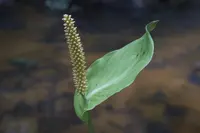
Spathiphyllum blandum is a herbaceous, evergreen plant in the arum family, related to the commonly grown peace lily. It typically forms compact clumps of glossy, lance-shaped green leaves. Plants produce white to creamy leaflike bracts surrounding a central flower spike, giving a clean, architectural look suited to indoor spaces. In nature, it grows on the shaded forest floor in tropical regions, adapted to filtered light and consistent moisture. These traits make it reasonably forgiving indoors if extremes of dryness, direct sun, or cold are avoided. Understanding how to care for Spathiphyllum blandum starts with providing stable conditions, moderate light, and evenly moist but well-drained soil.

Care Difficulty
Moderate Care

Light Preference
Bright Indirect Light

Water Requirements
Keep Soil Moist

Temperature Preference
Tropical / Frost Sensitive

Hardiness Zone
11–12

Soil Texture
Loamy, Peaty, Organic-rich

Soil pH
Acidic (5.5–6.5), Slightly acidic (6.5–7.0)

Soil Drainage
Moist but well-drained

Fertilization
Light (every 4–6 weeks)
Scan your plant to receive care tips personalized for your specific plant
Available on iOS and Android
This species prefers soft, filtered light that mimics a bright forest understory.
Moist but not saturated soil supports healthy root and leaf growth.
Stable, warm conditions support steady growth and flowering.
This species prefers moderately high, stable humidity to keep foliage healthy and flowering consistent.
This species grows best in a loose, moisture-retentive but airy mix that drains freely.
This species is well suited to container culture for indoor and shaded patio placements.
This species benefits from light, consistent feeding during active growth for steady foliage and flowering.
Pruning focuses on hygiene and appearance rather than shaping this plant heavily.
This plant prefers slightly snug containers but benefits from periodic repotting to refresh the root zone.
Division is the standard method for producing new plants from an established clump.
This tropical species is not frost tolerant and needs warm, stable indoor conditions in winter.

Plant Health Check
Not sure what's wrong with your plant? Check your plant's health inside the app.
This species is native to shaded, humid lowland rainforests of northwestern South America, where it typically grows on the forest floor under a dense tree canopy and along stream margins.
Compared with many other peace lilies, it has relatively narrow, more sharply pointed leaves that often arch or droop gracefully, an adaptation that helps shed excess water and intercept dappled light in its natural habitat.
Its inflorescence consists of a pale spathe surrounding a central spadix that carries many tiny flowers, and in this species the spathe is usually more slender and less dramatically flared than in common ornamental peace lily hybrids.
Lack of blooms usually comes from low light, excess nitrogen fertilizer, or a pot that is too large. Old, crowded clumps may also flower poorly and benefit from division and repotting every few years.
Keep your plants happy and healthy with plant identification, disease detection, and easy care guidance.