turtleweed Care (Batis maritima)

Also known as: Saltwort, beachwort, pickleweed
turtleweed

About turtleweed

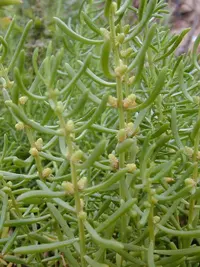
Turtleweed, Batis maritima, is a low, spreading shrub that forms dense, bright green mats in coastal areas. Its fleshy leaves and jointed stems store water and tolerate salt. Native to tropical and subtropical shorelines of the Americas, it thrives in salt marshes, mangroves, and sandy coasts, often where few other plants survive. The plant is well adapted to salty, periodically flooded soils, which makes it very hardy in the right environment but difficult inland without similar conditions. In cultivation, it prefers full sun, salty or brackish moisture, and sandy, well-drained soils; understanding these needs is key to how to care for turtleweed.

Main Plant Requirements

Care Difficulty

Moderate Care

Light Preference

Full Sun

Water Requirements

Aquatic

Temperature Preference

Tropical / Frost Sensitive

Hardiness Zone

9–11

Soil Texture

Sandy, Loamy, Silty

Soil pH

Neutral (7.0), Slightly alkaline (7.0–7.5)

Soil Drainage

Waterlogged tolerant

Fertilization

Minimal (feed rarely)

Get Personalized Care Plan

Scan your plant to receive care tips personalized for your specific plant

Available on iOS and Android

How to Care for the turtleweed

Batis maritima thrives in strong, direct coastal light but adapts to slightly reduced sun away from shorelines.

  • Provide 6–10 hours of direct sun daily; full sun promotes dense, compact growth and better salt tolerance.
  • Accepts light partial shade, especially with morning sun and light afternoon shade, but growth may become looser and flowering may decrease.
  • In very hot inland sites, protect from intense late-afternoon sun to limit leaf scorch, and ensure winter plantings still receive at least 4–5 hours of unshaded light for healthy turtleweed growth.

Batis maritima is a halophytic shrub adapted to salty, wet sites but can grow in drier coastal soils if not allowed to desiccate completely.

  • In natural or landscape settings, aim for consistently moist to wet soil; avoid letting the top 2–5 cm dry out for long, especially in sandy substrates.
  • During hot, dry periods, increase irrigation when foliage dulls, tips wrinkle, or stems feel less turgid, all signs of developing water stress.
  • Standing water is tolerated if oxygen can reach roots; true overwatering shows as yellowing leaves, root rot odor, and stagnating growth even in seemingly wet but poorly aerated soil.

This coastal species prefers warm conditions and copes well with heat but is sensitive to freezing temperatures.

  • Optimal growth occurs around 70–90°F (21–32°C), common in coastal and subtropical zones where soil stays warm for extended periods.
  • Plants tolerate brief drops near 32°F (0°C) but are damaged or killed by hard frost; protect or avoid planting in locations with prolonged freezes.
  • In hot summers above 95°F (35°C), growth generally continues if soil moisture is steady; seasonal cooling below 60°F (16°C) slows growth but usually does not harm established plants in frost-free areas.

This coastal halophyte tolerates a wide humidity range and rarely needs special humidity management indoors.

  • Maintains healthy growth from roughly 30–70% relative humidity, similar to most heated or air-conditioned homes.
  • Handles dry indoor air well; foliage stress is more likely from underwatering or heat than low humidity.
  • Humidity stress appears as dull, slightly curled leaves combined with dry substrate; correct by watering properly rather than misting.

Batis maritima thrives in very porous, salty, sandy substrates that stay moist but never stagnant.

  • Use a mix of roughly 60–70% coarse sand with 30–40% composted organic matter to mimic coastal salt-marsh sediment.
  • Ensure fast drainage through the whole profile; add extra coarse sand or fine grit if water lingers on the surface for more than a few minutes.
  • Target a neutral to slightly alkaline pH (about 7.0–8.0); avoid strongly acidic potting mixes based on peat alone.
  • For stronger aeration, avoid heavy clay and fine silt that compact easily, and break up any dense layers before planting.

This species can be grown in containers, especially for controlled Batis maritima plant care in non-coastal gardens.

  • Select a wide, low container to support its spreading habit and reduce tipping in wind-exposed sites.
  • Choose a heavy material such as ceramic or concrete so the pot remains stable despite salty irrigation and coastal gusts.
  • Drill extra side holes a few cm above the base to let brackish runoff escape while retaining a shallow saline water table.

Batis maritima is a low-nutrient coastal species, so fertilizer needs are modest but can support growth in containers or poor soils.

  • Use a balanced slow-release fertilizer (around 10-10-10) or light compost top-dressing at the start of the warm growing season.
  • Feed container-grown turtleweed every 8–10 weeks in spring and summer, skipping feeding if growth is already strong and foliage deep green.
  • Apply at half the label strength to avoid salt and nutrient buildup, especially in pots with limited leaching.
  • Stop fertilizing in fall and winter, allowing the plant to slow naturally and preventing weak, overly soft growth.

Pruning Batis maritima is mainly for tidiness and to maintain a compact, healthy form.

  • Best time is late winter to early spring before strong new growth begins, or after flowering flushes if shaping hedges.
  • Remove dead, damaged, or salt-burned stems back to healthy tissue to reduce disease entry points.
  • Thin congested interior shoots with clean bypass pruners to improve air flow and light penetration.
  • Light tip-trimming of outer shoots encourages denser branching but avoid cutting into very old, woody stems without need.

Batis maritima is more often transplanted outdoors than grown long term in containers, but root disturbance should still be gentle.

  • Transplant in late spring to early summer when soil is warm and the plant is actively growing, avoiding cold, waterlogged periods.
  • Look for roots circling the pot, slow growth, or frequent wilting as signs a container plant needs a larger space.
  • Plan on shifting container plants only every 2–3 years, stepping up 1 pot size and using a sandy, very free-draining mix.
  • Water deeply before and after moving, handle the root ball firmly but gently, and shade for a few days to reduce transplant shock.

Batis maritima is commonly propagated for restoration and coastal plantings using both cuttings and seeds.

  • Take semi-woody stem cuttings in late spring or early summer, 8–10 cm long, with 2–3 nodes and a few leaves left at the tip.
  • Insert cuttings into a sandy, salty-tolerant, free-draining medium, keep evenly moist, and maintain warm temperatures around 70–80°F.
  • Use rooting hormone on the cut base to improve success and keep humidity moderately high without waterlogging.
  • Sow fresh seeds on the surface of a saline, sandy mix in warm conditions with bright light; germination is often gradual.

Batis maritima is a warm-climate coastal shrub that handles mild, frost-free winters but is not suited to hard freezes.

  • In USDA zones roughly 9–11, plants usually overwinter outdoors with no special protection beyond normal soil drainage.
  • Where light frosts occur, add a 5–8 cm mulch layer around the root zone to moderate temperature swings and conserve moisture.
  • Container plants in cooler areas should be moved to a bright, frost-free space and kept slightly drier until spring.

Care Tips

Salinity Management

If grown away from natural seawater, apply a light saltwater drench (about 5–10 g non-iodized sea salt per 1 L water) once every 2–4 weeks to maintain the halophytic adaptations and reduce stress from overly fresh conditions.

Coastal Wind Hardening

In windy coastal sites, gradually expose young plants to stronger wind over 2–3 weeks and use low, temporary windbreaks so stems can lignify (develop woody tissue) without snapping.

Erosion Control Planting

For shoreline stabilization, plant in staggered rows on slight mounds 40–60 cm apart so the spreading roots and stems interlock and better hold sand or soil in place.

Tidal Zone Positioning

Place plants where the root zone is reached by occasional brackish or salty water but is not permanently submerged, mimicking upper saltmarsh or high mangrove fringe conditions.

Low-Maintenance Hedging

To create a low hedge, tip-pinching new shoots 1–2 times per growing season encourages denser branching while keeping plants at a manageable height for easier long-term growing turtleweed in coastal landscapes.

Common Pests and Diseases

Scale insects

This pest attaches to stems and leaves, feeding on sap and sometimes producing sticky honeydew on foliage. Symptoms include small, rounded bumps on young shoots and reduced vigor in stressed plants growing above the high-tide line.

Solution

Prune out heavily infested twigs, then wash remaining stems with a strong but controlled stream of water to dislodge insects. If needed, apply a lightweight horticultural oil during cooler parts of the day to smother remaining scale, avoiding treatments just before tidal flooding to reduce runoff into surrounding water.

Leaf spot

This disease causes small, dark to tan lesions on older leaves, which may coalesce under prolonged warmth and humidity in sheltered marsh edges. Symptoms include cosmetic spotting and occasional premature yellowing or shedding of affected foliage.

Solution

Remove and discard heavily spotted leaves to reduce inoculum, and avoid overhead irrigation in any managed coastal plantings to keep foliage drier. Improve air movement around plants, and if the problem is persistent in a restoration or landscape setting, use a labeled copper-based fungicide as a targeted treatment, applied according to local regulations for coastal areas.

Stem canker

This disease produces sunken, discolored patches on lower stems, often following mechanical damage or prolonged stress such as atypically low salinity. Symptoms include localized stem dieback and poor regrowth from affected sections.

Solution

Cut back affected stems several cm below visible damage using clean, disinfected tools, and dispose of prunings away from planting areas. Reduce stress by maintaining appropriate saline conditions for the site, avoiding unnecessary wounding, and spacing plants to allow good airflow, which supports healthier, more resilient growth when growing turtleweed in managed coastal plantings.

Spider mites

These insects become an issue mainly in container or nursery-grown plants, especially under hot, dry conditions that differ from natural marsh humidity. Symptoms include fine webbing on stems, stippled or dull leaves, and slowed growth.

Solution

Rinse foliage thoroughly with water, including leaf undersides, on a regular schedule to knock mites off and raise local humidity. For persistent infestations, use insecticidal soap or a horticultural oil labeled for mites, applied in the early morning or late afternoon, and repeat as directed until new growth appears clean.

Interesting Facts

Extreme salt tolerance

This coastal shrub is a true halophyte, able to grow in seawater-level salinity and even concentrate salt in its succulent leaves without suffering typical salt damage to cells.

Nitrogen-cycling partner

Its roots host microorganisms that help transform nitrogen compounds in coastal soils, supporting nutrient cycling and contributing to the productivity of salt marsh ecosystems.

Shoreline stabilizer

Its dense, creeping root system binds loose coastal substrates, helping stabilize shorelines and reduce erosion in tidal flats and sandy margins.

Botan icon

Did you know?

In some coastal areas, this species accumulates heavy metals such as cadmium and lead from contaminated sediments, and has been studied as a potential plant for phytoremediation, the use of plants to clean polluted environments.

FAQs about turtleweed

This coastal shrub is evergreen in frost‑free climates, holding foliage year‑round. In rare colder exposures, tips may scorch but roots usually survive. Its persistent, fleshy leaves help conserve water and tolerate saline conditions.

Grow Healthy Plants with Botan Care

Keep your plants happy and healthy with plant identification, disease detection, and easy care guidance.

Botan plant care app — identify plants on mobile

Explore More Plants