Rhizome Containment
Install a root barrier or plant into a large, bottomless container sunk into the ground to keep the spreading rhizomes from invading nearby beds or lawn areas.

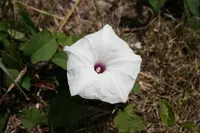
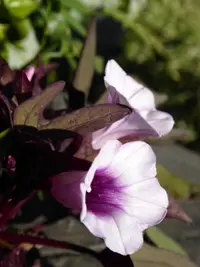
Wild potato-vine, Ipomoea pandurata, is a hardy, twining perennial vine in the morning glory family. It dies back in winter and returns from a thick underground tuber. The plant produces large, heart-shaped leaves and showy white funnel-shaped flowers with a purple throat, giving it a striking but natural look on fences and trellises. It is native to central and eastern North America, where it grows in prairies, open woods, and roadside banks. This species is generally tough and adaptable but can spread strongly when conditions suit it. It prefers sunny, well-drained sites with moderate moisture, and understanding these basics makes it easier to care for Wild Potato-vine.

Care Difficulty
Easy Care

Light Preference
Full Sun

Water Requirements
Moderate Water

Temperature Preference
Cold Hardy

Hardiness Zone
3–9

Soil Texture
Sandy, Loamy, Clay

Soil pH
Acidic (5.5–6.5), Slightly acidic (6.5–7.0)

Soil Drainage
Well-drained

Fertilization
Minimal (feed rarely)
Scan your plant to receive care tips personalized for your specific plant
Available on iOS and Android
Ipomoea pandurata is a sun-loving perennial vine that flowers best with strong light exposure.
Ipomoea pandurata forms a deep tuber and prefers soil that dries slightly between thorough waterings.
This hardy vine tolerates a wide range of outdoor temperatures but has clear limits for growth and survival.
This species grows well in typical outdoor humidity and rarely needs special humidity management.
This vine prefers loose, well-drained mineral soils that do not stay wet after rain or watering.
This species can be grown in containers if the pot is large and deep enough to accommodate its long, tuberous root.
This deep-rooted native vine grows well in average soil and usually needs only light feeding.
Pruning supports manageable size and healthy flowering on Ipomoea pandurata.
Transplanting is more important than repotting, since this vine is usually grown in the ground.
Ipomoea pandurata is most commonly propagated by seed or division of its tuberous root.
This hardy perennial vine dies back to its tuber in cold climates and usually needs only modest winter care.

Plant Health Check
Not sure what's wrong with your plant? Check your plant's health inside the app.
This vine produces a large, starchy, woody tuber that can extend over 1 m long and weigh several kilograms, allowing the plant to resprout after fire, drought, or grazing in its native habitats.
The large, white, funnel-shaped flowers open mainly in the evening and release a stronger scent at night, an adaptation that favors visitation by nocturnal moth pollinators.
In parts of its range, the leaves serve as a food source for certain specialist moth caterpillars that are adapted to handle the plant’s typical morning glory defensive chemicals, such as resin glycosides.

Historical botanical records from North America describe this species as one of the native root crops used by some Indigenous peoples, who harvested its large tubers as a traditional wild food source, although it was never domesticated like the cultivated potato.
This species spreads by both seed and large, tuberous roots, so it can become difficult to remove once established. Plant it where spreading is acceptable, and use deep edging or root barriers if garden space is limited.
Keep your plants happy and healthy with plant identification, disease detection, and easy care guidance.