Early vine training
Install sturdy trellises or wires at planting time and begin loosely tying new vines while they are still flexible, which keeps growth vertical and reduces the risk of tangled stems and shading of nearby plants.

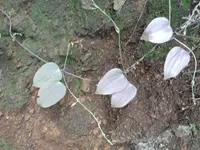
Chinese yam, Dioscorea oppositifolia, is a twining perennial vine grown for its starchy underground tubers and ornamental heart-shaped leaves. It belongs to the yam family, not to sweet potatoes.
The plant produces slender, climbing stems that wrap around supports and can form small aerial tubers in leaf axils. In suitable climates it can grow vigorously and spread.
Chinese yam is native to East Asia but has naturalized in parts of North America, where it may behave invasively outdoors. Its fast growth and tolerance of a range of soils make it relatively easy to manage in cultivation.
Those who want to learn how to care for Chinese yam should note that it prefers sun to light shade, evenly moist but not waterlogged soil, and good structural support for its vines.

Care Difficulty
Moderate Care

Light Preference
Full Sun

Water Requirements
Moderate Water

Temperature Preference
Warm Climate

Hardiness Zone
5–10

Soil Texture
Sandy, Loamy, Organic-rich

Soil pH
Acidic (5.5–6.5), Slightly acidic (6.5–7.0)

Soil Drainage
Well-drained

Fertilization
Minimal (feed rarely)
Scan your plant to receive care tips personalized for your specific plant
Available on iOS and Android
This vigorous vine performs best with ample direct light during the growing season.
This tuberous perennial prefers evenly moist but never waterlogged soil during active growth.
This species grows best in warm, frost-free conditions and retreats to its tubers in cold weather.
Humidity is not a major factor for Dioscorea oppositifolia in typical home or outdoor conditions.
This species prefers loose, deep, well-drained soil that allows its tubers to expand without staying waterlogged.
Dioscorea oppositifolia can be grown in containers if given enough depth and support for its vining growth.
This twining perennial benefits from light, targeted feeding during the active growing season but does not require heavy fertilization.
Pruning for Dioscorea oppositifolia focuses on managing vigor and keeping the vine tidy rather than shaping it heavily.
This species is usually grown in-ground, so attention focuses on correct planting and occasional transplanting of tubers.
Propagation of this vine is straightforward and can be done by tubers, bulbils, or seeds under the right conditions.
This hardy perennial usually needs minimal winter care once established, as the top growth naturally dies back while the tuber rests.

Plant Health Check
Not sure what's wrong with your plant? Check your plant's health inside the app.
Its leaves usually emerge in opposite pairs along the stem, a trait reflected in the name oppositifolia, while the slender stems twine clockwise around supports, helping it climb into light above surrounding vegetation.
In addition to underground tubers, it often forms small aerial tuber-like structures called bulbils in leaf axils, allowing the plant to spread efficiently when these fall to the ground and sprout into new plants.
In parts of the eastern United States it is considered invasive, where dense vine growth can blanket shrubs and young trees, reducing light and competing strongly with native understory species.

Genetic and morphological studies have shown that material long known in North America as Dioscorea oppositifolia largely matches the Asian species Dioscorea polystachya, so some modern taxonomic treatments now place many of these populations under D. polystachya instead of D. oppositifolia.
In many temperate regions, this vine is classified as invasive. It spreads by underground tubers and aerial bulbils that root easily. Always check local regulations before planting and remove unwanted shoots and bulbils promptly.
Keep your plants happy and healthy with plant identification, disease detection, and easy care guidance.