Use sturdy trellis
Install a strong, 1.8–2.4 m trellis or netting before the vine starts rapid growth so the stems can be tied loosely as they elongate, which reduces wind damage and encourages straight, harvestable tubers.

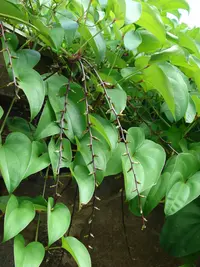
Water yam, Dioscorea alata, is a tropical climbing vine grown mainly for its large underground tubers used as a food crop in many regions. The vine twines around supports and carries heart-shaped leaves, while the tubers stay hidden below ground.
It originates from Southeast Asia but is now widely cultivated in tropical and subtropical areas. In suitable climates, it grows vigorously and can become quite tall with proper support.
This species is generally considered moderately easy to grow if its basic needs are met. Gardeners who learn how to care for water yam usually focus on warm conditions, consistent moisture, and well-drained, fertile soil.

Care Difficulty
Moderate Care

Light Preference
Full Sun

Water Requirements
Regular Water

Temperature Preference
Tropical / Frost Sensitive

Hardiness Zone
9–12

Soil Texture
Sandy, Loamy, Organic-rich

Soil pH
Acidic (5.5–6.5), Slightly acidic (6.5–7.0)

Soil Drainage
Moist but well-drained

Fertilization
Moderate (every 2–4 weeks)
Scan your plant to receive care tips personalized for your specific plant
Available on iOS and Android
This tropical vine needs strong light to produce vigorous vines and good-sized tubers.
This yam prefers steadily moist, well-drained soil rather than frequent shallow watering.
This species grows best in warm, frost-free conditions over a long season.
This species grows well in moderate humidity and adapts to most home conditions.
Dioscorea alata develops healthier tubers in loose, deep, well-drained, organic-rich soil.
This species is suitable for container growing when the pot is large, deep, and well-anchored.
Dioscorea alata responds well to light, balanced feeding during its active growing season.
Pruning Dioscorea alata is mainly about controlling vine length and removing weak growth.
This species is usually grown in the ground, so focus on positioning the tuber well rather than frequent repotting.
Dioscorea alata is commonly propagated from tuber pieces and small aerial tubers rather than from seed.
This tropical yam is frost-sensitive and needs protection in regions with cold winters.

Plant Health Check
Not sure what's wrong with your plant? Check your plant's health inside the app.
Many cultivated purple and white forms arose from centuries of clonal selection, so what farmers call different varieties are often genetically very similar but differ in flesh color, tuber shape, and cooking traits.
This yam forms long, twining vines that can exceed 10 m in the tropics, using left-hand spiraling stems to climb supports while the tuber develops underground as a storage organ rich in starch granules.
Purple-fleshed cultivars contain high levels of anthocyanins, the same pigment group found in blueberries, which gives the tuber its violet color and influences how the color changes during cooking depending on pH and heat.

Dioscorea alata was one of the earliest staple crops domesticated in Southeast Asia and the Pacific, and archaeological plus ethnobotanical evidence suggests it played a central role in early Austronesian migrations, traveling with seafaring peoples as a key food source across many Pacific islands.
Yellowing leaves often indicate natural aging of older foliage, nutrient deficiency (especially nitrogen), waterlogged soil, or root stress from compaction or pests. Check drainage, adjust fertilization, and inspect tubers and roots for rot or damage.
Keep your plants happy and healthy with plant identification, disease detection, and easy care guidance.