Early vine training
When vines reach 30–40 cm, gently guide the strongest 2–3 vines in your chosen direction and remove very weak side shoots so the plant puts more energy into high-yielding main runners.

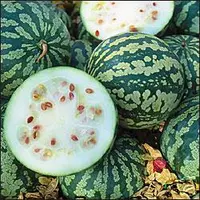
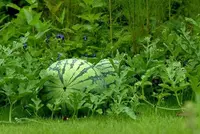
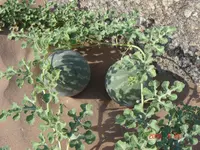
Tsamma melon, Citrullus amarus, is a wild melon species closely related to cultivated watermelon. It is a trailing vine with deeply lobed leaves and round, green-striped fruits. The fruits are usually smaller and less sweet than store watermelon, with pale, firm flesh.
This species is native to arid and semi-arid regions of southern Africa, where it is adapted to heat, drought, and sandy soils. These traits can make it fairly resilient in cultivation, provided it receives full sun, warmth, and well-drained soil.
Gardeners who want to care for Tsamma Melon should understand that it behaves like a vigorous annual vine, needing space to spread and consistent moisture during its main growth and fruiting period.

Care Difficulty
Moderate Care

Light Preference
Full Sun

Water Requirements
Moderate Water

Temperature Preference
Tropical / Frost Sensitive

Hardiness Zone
9–11

Soil Texture
Sandy, Loamy, Organic-rich

Soil pH
Acidic (5.5–6.5), Slightly acidic (6.5–7.0)

Soil Drainage
Well-drained

Fertilization
Light (every 4–6 weeks)
Scan your plant to receive care tips personalized for your specific plant
Available on iOS and Android
Citrullus amarus thrives in strong, direct sunlight for vigorous vine and fruit development.
Watering should support deep root growth while avoiding prolonged soil saturation.
This species prefers warm to hot conditions and is highly sensitive to frost.
Humidity is not a major factor for Citrullus amarus grown outdoors in typical warm climates.
Citrullus amarus prefers light, fast-draining soils that warm quickly in spring.
This species can be grown in large outdoor containers but requires careful management of space and stability for long vines like Tsamma Melon.
Citrullus amarus grown in average, moderately fertile soil needs only light feeding to support healthy vine and fruit development.
Pruning Citrullus amarus is mainly done to manage vine spread and improve air flow around leaves and fruit.
This species is usually direct-sown outdoors; any container-grown seedlings of Citrullus amarus should be transplanted with minimal root disturbance.
Citrullus amarus is most commonly propagated from seed, which gives reliable and vigorous new plants.
Citrullus amarus is a warm-season annual in most climates and normally does not require elaborate winter care.

Plant Health Check
Not sure what's wrong with your plant? Check your plant's health inside the app.
Citrullus amarus is considered one of the key wild ancestors of the modern cultivated watermelon, contributing important traits like disease resistance and drought tolerance to breeding programs.
This species is native to arid and semi-arid regions of southern Africa and survives long dry periods by developing a deep root system and fruits with high water content that help it persist when surface water is scarce.
The fruit pulp is usually very bitter due to cucurbitacin compounds, which are thought to deter many herbivores and reduce microbial attack compared with the sweet flesh of domesticated watermelons.

Genetic studies show that many modern watermelon cultivars carry DNA segments derived from Citrullus amarus, especially in regions of the genome associated with resistance to important diseases such as fusarium wilt and anthracnose.
Fruits are technically edible but very bitter and not usually eaten fresh. In arid regions they are used mainly as a water source for livestock and wildlife, or occasionally cooked, fermented, or used in traditional products.
Keep your plants happy and healthy with plant identification, disease detection, and easy care guidance.