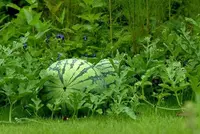
citron-melon Care (Citrullus lanatus var. citroides)

Also known as: fodder-melon, preserving-melon, stock-melon, tsamma-melon, Watermelon
citron-melon

About citron-melon

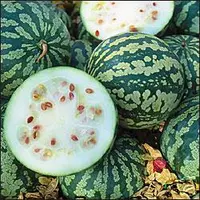
Citron-melon, Citrullus lanatus var. citroides, is a vining melon closely related to the common watermelon but bred mainly for its firm, pale flesh. The fruits are usually round to oval, with thick, hard rinds that can be mottled or striped in green tones. It is thought to originate from arid and semi-arid regions of Africa and is now grown in warm climates, often as a hardy field crop or for preservation uses. The plant tolerates heat and poor soils better than dessert watermelons, which makes it relatively resilient once established. It prefers full sun, well-drained soil, and even moisture during early growth, and these same conditions help anyone who wants to care for citron-melon successfully.

Main Plant Requirements

Care Difficulty

Moderate Care

Light Preference

Full Sun

Water Requirements

Moderate Water

Temperature Preference

Tropical / Frost Sensitive

Hardiness Zone

4–11

Soil Texture

Sandy, Loamy, Organic-rich

Soil pH

Acidic (5.5–6.5), Slightly acidic (6.5–7.0)

Soil Drainage

Well-drained

Fertilization

Moderate (every 2–4 weeks)

Get Personalized Care Plan

Scan your plant to receive care tips personalized for your specific plant

Available on iOS and Android

How to Care for the citron-melon

This melon type needs strong, direct sun to produce healthy vines and fruit.

  • Provide 6–8 hours of full sun daily; 8–10 hours is ideal in cooler climates for citron-melon yields.
  • Allow only light partial shade in very hot regions, favoring morning sun with light afternoon shade to reduce leaf scorch above 95°F (35°C).
  • Avoid dense shade, which causes weak, sprawling growth and few fruits; in short-day seasons, choose the sunniest, south-facing, open spot available.

This plant prefers deep, infrequent watering that keeps soil moist but never saturated.

  • Water when the top 5–7 cm of soil are dry, soaking the root zone deeply, then allow excess to drain away fully.
  • Use well-drained, sandy or loamy soil; standing water, sour smell, yellowing leaves, or stem softening indicate overwatering and poor drainage.
  • During flowering and fruit swelling, maintain more consistent moisture; in cooler weather, reduce frequency if growth slows and soil stays damp longer.

Warm conditions are essential for strong vine growth and reliable fruiting.

  • Aim for 75–90°F (24–32°C) for active growth; germination and early seedlings perform best above 70°F (21°C).
  • Plant outdoors only after nights remain above 55°F (13°C); vines are damaged by light frost and typically die near 32°F (0°C).
  • Mature plants tolerate short spikes to 100–104°F (38–40°C) if soil moisture is stable, but prolonged extreme heat can reduce flowering and fruit set.

Humidity is not a critical factor for Citrullus lanatus var. citroides, which thrives in typical outdoor air conditions.

This species prefers well-aerated, fast-draining soil that warms quickly in spring.

  • Use a sandy or sandy-loam texture with at least 30–50% coarse sand to prevent waterlogging around the roots.
  • Incorporate 20–30% mature compost to improve structure and nutrient supply without making the soil heavy.
  • Aim for slightly acidic to neutral pH around 6.0–7.0, adjusting with elemental sulfur or lime if needed.
  • Avoid compacted, clay-heavy, or consistently wet sites; raised rows or mounds help keep the root zone drier and better aerated.

This species can be grown in containers, but it needs ample root volume and careful moisture management.

  • Choose a sturdy container at least 40–50 cm wide and deep to support long vines and a broad root system.
  • Use a very free-draining mix (for example 60% potting mix and 40% coarse material like perlite or pine bark) to avoid saturated roots after heavy watering or rain.
  • Place the pot where vines can trail over warm ground or supports so the container itself does not overheat and dry out too quickly.

This vigorous annual vine benefits from moderate feeding on reasonably fertile soil.

  • Apply a balanced NPK granular or liquid fertilizer at 50% label strength every 3–4 weeks during active growth, once vines start running.
  • On poor soils, incorporate well-rotted compost into the top 15–20 cm before sowing or transplanting citron-melon.
  • Avoid high-nitrogen products that cause excessive leaf growth with fewer fruits; choose balanced or slightly phosphorus-rich blends.
  • Stop feeding Citrullus lanatus var. citroides 2–3 weeks before expected harvest and do not fertilize during cool, dormant off-season.

Pruning for Citrullus lanatus var. citroides is light and mainly aims to manage vine spread and fruit load.

  • Use clean, sharp scissors or pruners to remove dead, yellowing, or diseased leaves as soon as they appear.
  • In early to mid-season, tip back excessively long runners to encourage branching and improve light penetration around fruiting nodes.
  • Thin crowded fruits by snipping off extras, leaving 1–2 fruits per main vine section for better size and quality.
  • Avoid heavy pruning late in the season, as this can reduce photosynthesis and delay ripening.

This plant is typically direct-sown or transplanted outdoors rather than maintained long term in containers.

  • Start seeds in small pots or cells and transplant when seedlings have 2–3 true leaves and roots just hold the soil together, before circling begins.
  • Move Citrullus lanatus var. citroides to its final site after frost risk passes and soil warms to at least 65°F.
  • Transplant every 1–2 years only if kept in containers, shifting to a slightly larger pot with free-draining, compost-enriched mix.
  • Reduce root stress by watering seedlings well before moving, handling by the root ball or leaves, and shading lightly for 1–2 days after transplanting.

This species is almost always propagated from seed for reliable, vigorous plants.

  • Sow fresh seeds in late spring once soil or potting mix reaches 70–85°F for fast, even germination.
  • Plant seeds 1.5–2.5 cm deep in loose, well-drained medium and keep evenly moist, not waterlogged.
  • Provide strong light and warm air temperatures to prevent leggy seedlings and encourage sturdy stems.
  • For saving seed, allow fruits to fully mature, then clean and dry seeds thoroughly before cool, dry storage.

As a warm-season annual, this plant dies back with hard frost and does not need complex winter care.

  • In regions with frost, allow vines of Citrullus lanatus var. citroides to finish fruiting, then remove and compost or dispose of plant debris after the first killing frost.
  • Container-grown plants in cool climates are usually discarded after harvest and restarted from seed the following year.
  • Mulching is optional and mainly used during the growing season to moderate soil temperature and moisture, not for overwintering.

Care Tips

Early vine training

Once vines reach 30–40 cm, gently direct them along rows or trellis wires so they do not tangle, which improves airflow, access for weeding, and fruit inspection.

Fruit support rotation

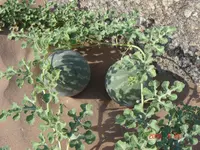
As fruits enlarge, rotate each one slightly every 7–10 days and keep it on a dry board or mulch pad to reduce flat spots, sunscald, and rot where the rind contacts wet soil.

Controlled fruit load

Limit each vigorous vine to 3–5 fruits by removing excess young melons, which helps remaining fruits size up evenly and ripen more uniformly.

Targeted pollinator support

Plant low-growing flowers such as alyssum or calendula near the bed and avoid insecticides during flowering to encourage bees, which can significantly improve fruit set when growing citron-melon.

Preventive vine health checks

Inspect vines weekly for wilted runners, chew marks, or discoloration, and remove and dispose of affected sections promptly to slow the spread of fungal diseases and vine-boring insects.

Common Pests and Diseases

Striped cucumber beetle

This pest chews holes in leaves and petals and often scars young rinds; larvae feed on roots and underground stems, weakening vines. Symptoms include stunted growth, wilted vines, and reduced fruit set, and the beetles can also spread bacterial wilt.

Solution

Use floating row covers to keep beetles off young plants, then remove covers once flowering starts to allow pollination. Hand-pick beetles in the early morning, use yellow sticky traps at canopy height, and apply a targeted neem or pyrethrin-based spray to foliage and soil around the base if numbers stay high, following label directions carefully.

Squash bug

This pest sucks sap from leaves and vines, causing yellow spots that turn brown and crispy, often leading to vine collapse in hot weather. These insects are usually found in clusters on the undersides of leaves or near the crown, along with bronze-colored egg masses.

Solution

Inspect the undersides of leaves regularly and crush egg clusters before they hatch. Hand-remove nymphs and adults into soapy water, clear plant debris where bugs hide, and use lightweight row covers early in the season; for heavy pressure, apply insecticidal soap or neem oil directly to nymphs, repeating as needed.

Downy mildew

This disease causes pale yellow angular spots on the upper leaf surface and a gray to purplish mold on the undersides, which rapidly blights foliage in humid, wet weather. Symptoms include sudden leaf collapse and vine decline while fruits may remain relatively unaffected but can sunburn once foliage is lost.

Solution

Increase spacing and orient rows with prevailing wind to improve airflow, and avoid overhead watering, especially late in the day. Remove and destroy heavily infected leaves, choose resistant watermelon-type cultivars when possible, and apply a copper-based or other labeled cucurbit fungicide at the first sign of spotting, repeating according to label directions during high-risk weather.

Anthracnose

This disease produces small water-soaked spots on leaves and stems that turn dark brown to black with defined margins, and it can also cause sunken, dark lesions on rinds. Symptoms include premature leaf drop, weakened vines, and blemished or cracked fruit that stores poorly.

Solution

Remove and destroy infected leaves and any badly spotted fruit, and avoid working among plants when foliage is wet. Use drip irrigation instead of overhead sprinklers, rotate cucurbit plantings for at least 2–3 years, and apply a labeled protectant fungicide such as chlorothalonil or copper on a 7–10 day schedule during warm, wet periods.

Gummy stem blight

This disease causes tan to dark brown lesions on stems and leaf margins, often with gummy exudate at the crown, and can progress to vine cankers and fruit rot. Symptoms include wilting of runners, rapid vine decline, and circular dark spots on rinds, especially under humid conditions or where foliage stays wet for long periods.

Solution

Use certified clean seed or transplants, rotate out of cucurbits for at least 3 years, and remove old vines and fruit from the field or garden after harvest. Improve drainage and airflow, avoid wetting the crown when watering, and at early symptom appearance apply a fungicide labeled for gummy stem blight on cucurbits, rotating modes of action to slow resistance development while following all label directions for safe Citrullus lanatus var. citroides plant care.

Interesting Facts

Hard-shelled melon ancestor

This wild citron-melon is thought to represent an ancestral form of the cultivated watermelon, with a very hard rind and firm, pale flesh that make it resistant to cracking and desiccation in hot, dry environments.

Valuable drought resource

In parts of southern Africa and arid regions where it has naturalized, the fruit serves as an important emergency water and carbohydrate source for people and livestock during droughts because it stores moisture in its dense, non-sweet flesh.

Genetic reservoir for breeding

Plant breeders use this variety as a genetic resource to introduce traits such as disease resistance, drought tolerance, and firmer rind structure into modern watermelon cultivars through controlled crosses, an important aspect of Citrullus lanatus var. citroides plant care and improvement at an agricultural scale.

Botan icon

Did you know?

Citron-melon fruits have been used historically as a natural pectin source for making preserves and candied rinds, since their firm, low-sugar flesh and thick peel hold shape well during long cooking and soaking processes.

FAQs about citron-melon

The fruits are edible but very firm, pale, and not sweet. They are traditionally used for preserves, candied rind, livestock feed, or pickles rather than fresh eating. Always discard any spoiled or bitter-tasting fruit.

Grow Healthy Plants with Botan Care

Keep your plants happy and healthy with plant identification, disease detection, and easy care guidance.


Botan plant care app — identify plants on mobile

Explore More Plants