Fruit-load management
Remove a portion of green berries in midsummer so the plant does not exhaust itself, which encourages better foliage quality and a more even display of ripening fruits in fall and winter.

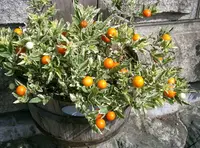
Jerusalem cherry, Solanum pseudocapsicum, is a compact, bushy perennial often grown as a decorative houseplant or seasonal holiday plant. It is part of the nightshade family, the same group that includes tomatoes and peppers.
Plants typically stay small and rounded, with glossy green leaves and small white flowers that develop into bright orange to red berry-like fruits. These fruits are ornamental only and not edible.
In nature, Jerusalem cherry comes from South America but is widely grown in temperate regions as an indoor or patio plant. It prefers bright light, moderate moisture, and well-drained soil, and its need for cool, bright conditions in winter can make how to care for Jerusalem cherry somewhat challenging for beginners.

Care Difficulty
Moderate Care

Light Preference
Partial Sun

Water Requirements
Moderate Water

Temperature Preference
Tropical / Frost Sensitive

Hardiness Zone
8–11

Soil Texture
Loamy, Sandy, Organic-rich

Soil pH
Acidic (5.5–6.5), Slightly acidic (6.5–7.0)

Soil Drainage
Moist but well-drained

Fertilization
Light (every 4–6 weeks)
Scan your plant to receive care tips personalized for your specific plant
Available on iOS and Android
This plant prefers bright light with some protection from harsh midday sun.
Watering should keep the soil evenly moist but never saturated.
Stable, moderate temperatures support compact growth and good berry set.
This species handles typical indoor humidity but benefits from slightly moist air in heated homes.
This species prefers a slightly acidic to neutral, well‑aerated, free‑draining substrate.
This species is well suited to container growing for both decorative berries and controlled spread.
This ornamental Jerusalem cherry responds well to modest, consistent feeding during its active season.
Solanum pseudocapsicum benefits from light, structured pruning to maintain a compact, fruiting shape.
Container-grown plants appreciate thoughtful repotting to maintain health and fruiting.
This plant is commonly renewed by both seeds and softwood cuttings when fresh fruiting display declines.
This species is frost-sensitive and needs thoughtful winter management in most temperate climates.

Plant Health Check
Not sure what's wrong with your plant? Check your plant's health inside the app.
The bright orange to red berries contain solanocapsine and other steroidal alkaloids that can cause serious gastrointestinal and neurological symptoms if eaten, especially in children and pets.
Flowers form in summer, but the berries often color up in late fall and persist through winter, which is why the plant is widely sold as a temporary holiday ornamental rather than a long-term houseplant.
This species is self-fertile, so a single plant can set fruit indoors without a second individual or active pollinators, an important trait for Jerusalem cherry indoor care in homes with closed windows.

Solanum pseudocapsicum was introduced to Europe from South America in the 16th–17th century and became fashionable in Victorian-era glasshouses, where its long-lasting winter berries were used to decorate conservatories and parlor displays despite the plant’s toxicity.
Yellowing leaves usually result from overwatering, poor drainage, or natural aging of older foliage. Check that the pot drains well, let the top layer of soil dry slightly between waterings, and remove only fully yellow, dry leaves.
Keep your plants happy and healthy with plant identification, disease detection, and easy care guidance.