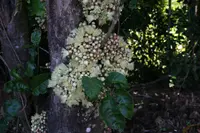
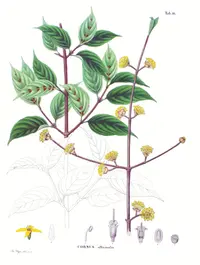
sour cherry Care (Prunus cerasus)

sour cherry

About sour cherry

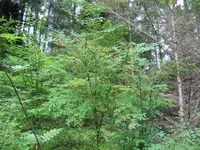
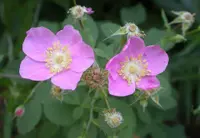
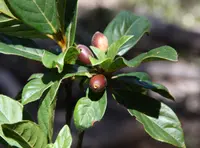
Sour cherry, Prunus cerasus, is a small deciduous fruit tree valued for its tangy, bright red cherries and attractive spring blossom. It usually has a rounded crown and moderate growth, making it suitable for home orchards and larger gardens.

The species originates from Europe and western Asia and is now widely grown in temperate regions for fresh eating, preserves, and baking. It is generally easier to manage than many sweet cherry types, with better cold tolerance and more regular cropping.

Trees prefer full sun, moderate moisture, and well-drained soil. Understanding how to care for sour cherry starts with providing light, air circulation, and soil conditions that reduce disease pressure.

Main Plant Requirements

Care Difficulty

Moderate Care

Light Preference

Full Sun

Water Requirements

Moderate Water

Temperature Preference

Cold Hardy

Hardiness Zone

4–8

Soil Texture

Sandy, Loamy, Clay

Soil pH

Acidic (5.5–6.5), Slightly acidic (6.5–7.0)

Soil Drainage

Well-drained

Fertilization

Minimal (feed rarely)

Get Personalized Care Plan

Scan your plant to receive care tips personalized for your specific plant

Available on iOS and Android

How to Care for the sour cherry

Prunus cerasus needs strong outdoor light to flower and fruit well.

  • Provide full sun for 6–8 hours per day, ideally with direct morning sun and some protection from intense late-afternoon summer sun in hotter regions.
  • Tree tolerates light partial shade (around 4–5 hours of direct sun), but sour cherry yields and sweetness drop and canopy becomes more open and leggy.
  • Avoid dense shade from buildings or large trees; insufficient light causes poor flowering, sparse fruit set, and more susceptibility to fungal diseases, especially in damp seasons.

Watering for Prunus cerasus focuses on moist but not saturated soil, especially in the first years.

  • Let the top 3–5 cm of soil dry before deep watering, soaking the root zone once, then allowing excess to drain; avoid frequent shallow watering that encourages surface roots.
  • Increase watering during dry spells and fruit development, watching for wilted, dull leaves as a sign the tree needs a thorough soak, especially on sandy or sloped sites.
  • Reduce watering in fall to help harden growth, and ensure soil drains freely; yellowing leaves, gum exudation, or sour smell in the root zone often indicate overwatering or poor drainage.

This species is a cold-hardy fruit tree that prefers cool to moderate growing temperatures.

  • Optimal growing temperatures are about 60–75°F (16–24°C) during the growing season, with good air flow to limit fungal disease in dense canopies.
  • Trees tolerate winter lows around -20°F (-29°C) once established, provided soil drains well and late-winter warm spells are followed by protection from sudden hard freezes.
  • In hot summers above 90°F (32°C), heat stress may reduce fruit quality; mulch the root zone, irrigate deeply, and avoid reflective surfaces that increase canopy temperature.

Humidity is not a major factor for Prunus cerasus, which suits most outdoor conditions in temperate climates.

Prunus cerasus prefers deep, well-aerated loam that drains freely yet holds consistent moisture.

  • Aim for a loamy or sandy-loam texture enriched with 20–30% compost to support root growth and water retention.
  • Maintain soil pH around 6.0–7.0; avoid very acidic or strongly alkaline sites that reduce nutrient availability.
  • Improve drainage and aeration in heavy soils by incorporating coarse sand or fine gravel into the top 30–40 cm.
  • Avoid compacted, waterlogged, or shallow soils, which increase risk of root disease and reduce long-term tree vigor.

This species can be grown in containers when managed as a dwarf or patio tree.

  • Choose a large, deep, heavy container to provide root volume and reduce tipping in wind when the canopy is in fruit.
  • Ensure multiple drainage holes and keep the container slightly elevated so excess water exits quickly after rain or irrigation.
  • Use a coarse, barky potting mix that resists compaction, since fine or peat-heavy mixes can become waterlogged in larger tubs.

Prunus cerasus benefits from modest, well-timed feeding rather than heavy fertilization.

  • Apply a balanced granular NPK fertilizer (such as 10-10-10) or well-rotted compost once in early spring, just before active growth.
  • Use about half the label rate for young or stressed sour cherry trees to avoid root burn and overly lush, weak growth.
  • Skip additional fertilizer in late summer and fall so new shoots harden before frost and the tree prepares for dormancy.
  • Avoid feeding during winter dormancy and in very poor, dry soil water before and after applying fertilizer.

Prunus cerasus responds well to thoughtful pruning that maintains light, airflow, and a stable framework.

  • Schedule main pruning in late winter or very early spring before bud break, in dry weather to reduce disease risk.
  • Remove dead, diseased, crossing, or inward-growing branches first, cutting back to healthy wood with sharp bypass pruners or a clean saw.
  • Thin crowded interior shoots to open the canopy, which improves fruit quality and reduces fungal problems.
  • Shorten excessively long branches to maintain height and shape, making cuts just above outward-facing buds.

Sour cherry is usually grown in the ground, so care focuses on correct transplanting and occasional container up-potting of young trees.

  • Transplant or upsize containers in early spring or very early fall, when temperatures are mild and water stress is easier to manage.
  • Look for roots circling the pot, slow growth, or quick drying soil as signs that a container tree needs a larger, well-drained container.
  • Loosen and untangle circling roots gently; trim damaged roots cleanly, then plant at the same soil level as before to avoid trunk rot.
  • Water thoroughly after moving, apply a 5–8 cm mulch layer around but not against the trunk, and shade briefly in hot, windy weather to limit stress.

New Prunus cerasus plants are commonly produced by nurseries using grafting, while home growers may try suckers or cuttings.

  • Lift and separate rooted suckers from the base in early spring, keeping a good root portion, then replant at the same depth in prepared soil.
  • Take semi-hardwood cuttings in midsummer, 10–15 cm long, and root them in moist, well-drained medium under high humidity and bright shade.
  • Seeds can be sown after cold stratification at 34–41°F for 2–3 months, though offspring will not grow true to the parent variety.
  • Keep all propagation material disease-free and use sanitized, sharp tools to reduce the risk of transmitting fungal or bacterial problems.

Prunus cerasus is generally cold hardy in suitable climates and needs limited winter intervention once established.

  • Add a 5–8 cm mulch layer over the root zone in late fall to moderate soil temperature and moisture, keeping mulch off the trunk.
  • For young trunks, use breathable tree guards or wrap to reduce sunscald and rodent damage in freeze–thaw conditions.
  • Move container-grown trees to an unheated garage or sheltered spot, where temperatures stay roughly between 25–40°F, to prevent root freeze.

Care Tips

Blossom frost protection

In regions with late spring frosts, drape breathable frost cloth over the tree on forecast nights below 28°F to protect open blossoms and young fruit from cold damage and yield loss.

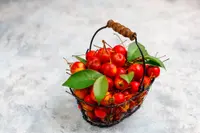
Bird exclusion netting

Install fine, flexible bird netting over a sturdy frame before fruits turn fully red so birds cannot reach the cherries, leaving enough headspace so the net does not rest directly on the clusters.

Trunk and scaffold support

Stake young trees and use soft, adjustable ties on the trunk and main scaffold branches in windy sites to reduce rocking, prevent root damage, and keep the framework growing upright.

Sanitation for disease

Remove and dispose of fallen leaves, mummified fruit, and pruned branches away from the tree at least every few weeks to reduce carryover of fungal spores, which is essential when caring for sour cherry in humid climates.

Mulch to protect roots

Apply 5–8 cm of organic mulch in a wide ring around the drip line, keeping it 5–8 cm away from the trunk, to buffer soil temperature, reduce weed competition, and protect shallow roots from drying out.

Common Pests and Diseases

Cherry leaf spot

This disease causes small purple spots on leaves that turn brown, often leading to yellowing and early leaf drop. Symptoms include thin foliage and reduced vigor, especially after wet spring weather.

Solution

Collect and destroy fallen leaves, prune for better airflow, and avoid overhead watering to reduce leaf wetness duration. In areas with a history of cherry leaf spot, use a labeled fungicide starting at petal fall and repeat as directed during prolonged wet periods as part of broader Prunus cerasus care instructions.

Brown rot

This disease affects blossoms, shoots, and fruit, causing blossom blight, twig dieback, and soft, brown fruit that may develop grayish spore masses and shrivel on the tree as mummies.

Solution

Remove and discard all infected fruit, mummified cherries, and blighted twigs, cutting back into healthy wood. Improve canopy airflow, avoid wetting flowers and fruit, and apply an appropriate fungicide during bloom and pre-harvest if the problem is recurrent and weather is wet.

Black knot

This disease produces hard, black, elongated swellings on twigs and branches that can gradually girdle and kill affected wood.

Solution

Prune out knots during dormancy, cutting at least 15–20 cm below the visible swelling, and destroy all removed material away from the tree. Maintain good pruning hygiene by disinfecting tools between cuts and avoid planting near wild or neglected Prunus hosts that can act as reservoirs.

Aphids

These insects cluster on young shoots and leaf undersides, sucking sap and causing curling, distortion, and sticky honeydew that can attract sooty mold.

Solution

Spray colonies off with a strong stream of water, especially on young growth, and encourage natural predators such as lady beetles. For persistent infestations, use insecticidal soap or horticultural oil, ensuring thorough coverage of leaf undersides and tender shoots.

Cherry fruit fly

This pest lays eggs in developing cherries, and larvae tunnel inside the fruit, causing soft, discolored, wormy cherries that are unmarketable and often drop early.

Solution

Use yellow sticky traps to monitor adult activity and harvest fruit promptly to reduce time on the tree. Where pressure is high, apply a suitable fruit-fly insecticide timed to adult emergence and reapply as labeled, and remove and destroy infested fallen fruit to break the life cycle.

Interesting Facts

Naturally sour fruit

The fruit of Prunus cerasus has higher organic acid content and lower sugar than sweet cherry species, which gives it a distinctly tart flavor that is especially valued for baking and juice production.

Cold-hardy cherry tree

This species is notably more tolerant of cold winters and late spring frosts than sweet cherry, which allows reliable fruiting in cooler temperate regions where other cherry trees may fail.

Self-fertile flowering

Many cultivated sour cherry varieties are self-fertile, meaning a single tree can set fruit without pollen from another cultivar, which simplifies home orchard planning and how to take care of sour cherry in small gardens.

Botan icon

Did you know?

Genetic studies show that Prunus cerasus is a natural hybrid between the sweet cherry (Prunus avium) and the dwarf cherry (Prunus fruticosa), and this mixed ancestry explains its combination of tart fruit, compact size, and enhanced cold tolerance compared with many other cherry species.

FAQs about sour cherry

Yellowing leaves often result from water stress, nutrient deficiencies (especially nitrogen or iron), or poorly drained soil. Check moisture first, then consider a soil test and balanced fertilization rather than guessing with random products.

Grow Healthy Plants with Botan Care

Keep your plants happy and healthy with plant identification, disease detection, and easy care guidance.

Botan plant care app — identify plants on mobile

Explore More Plants