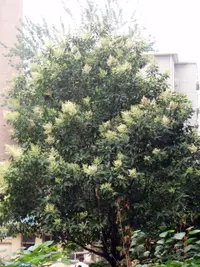
Malaysian persimmon Care (Diospyros maritima)

Malaysian persimmon

About Malaysian persimmon

Malaysian persimmon (Diospyros maritima) is an evergreen tree or large shrub from coastal areas of Southeast Asia and the western Pacific. It often grows near beaches and mangroves, tolerating salty air and sandy soils.

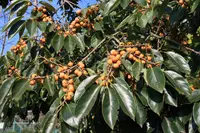
The plant has small, glossy green leaves and produces rounded fruits typical of persimmons, though they are usually not grown for commercial eating. Its naturally compact form and tolerance of wind and salt make it suitable for tough coastal gardens in warm climates.

It prefers sun to light shade, regular moisture, and well-drained soil. These resilient traits mean that learning how to care for Malaysian persimmon is usually straightforward for growers in suitable climates.


Main Plant Requirements

Care Difficulty

Moderate Care

Light Preference

Full Sun

Water Requirements

Moderate Water

Temperature Preference

Tropical / Frost Sensitive

Hardiness Zone

11–12

Soil Texture

Sandy, Loamy, Organic-rich

Soil pH

Acidic (5.5–6.5), Slightly acidic (6.5–7.0)

Soil Drainage

Well-drained

Fertilization

Minimal (feed rarely)

Get Personalized Care Plan

Scan your plant to receive care tips personalized for your specific plant

Available on iOS and Android

How to Care for the Malaysian persimmon

This coastal species prefers bright, warm conditions with protection from harsh midday sun.

  • Give 6–8 hours of sun daily, favoring morning sun and light afternoon shade, especially in hotter inland sites.
  • Tolerates partial shade with 3–4 hours of direct light, but fruiting and dense growth in Malaysian persimmon improve with stronger sun exposure.
  • Watch leaves for stress: pale, scorched, or curled edges indicate too much intense sun, while sparse, leggy shoots suggest insufficient light.

This species prefers evenly moist but never waterlogged soil once established outdoors.

  • Water when the top 3–5 cm of soil feels dry, applying a deep soak that moistens the root zone rather than frequent light sprinkling.
  • Ensure well-drained soil; yellowing, soft leaves or persistent surface wetness indicate overwatering, while crispy leaf edges and premature leaf drop suggest underwatering.
  • In hot, dry summers increase checks and watering, while in cooler or rainy seasons extend intervals and rely more on natural rainfall for Diospyros maritima.

This tropical small tree thrives in warm, frost-free climates similar to coastal lowland conditions.

  • Aim for 70–88°F (21–31°C) for active growth, with stable warmth supporting better flowering and fruit set.
  • Protect from temperatures below 45°F (7°C); damage often occurs near 40°F (4°C), and true frost can kill young shoots or entire small plants.
  • Tolerates brief heat up to about 95°F (35°C) if soil moisture is maintained, but prolonged extreme heat with dry winds can cause leaf scorch and stress.

This coastal species handles a broad humidity range but benefits from slightly moist air in dry indoor climates.

  • Aim for 40–60% humidity to reduce leaf edge browning and minor drop in Malaysian persimmon.
  • It tolerates brief drier air, but prolonged <30% can cause curled, brittle leaves and slower growth.
  • Increase humidity with a nearby water tray, grouped plants, or a short daily use of a fine-mist humidifier.

Diospyros maritima prefers sharply draining, moderately fertile soil that mimics sandy coastal conditions.

  • Use a sandy loam mix such as 40% compost, 30% coarse sand, and 30% pine bark or perlite for structure and drainage.
  • Keep drainage fast so water does not sit around roots; avoid heavy clay or peat-only mixes that stay wet for long periods.
  • Target slightly acidic to neutral pH around 6.0–7.0 to support nutrient uptake without causing micronutrient lockout.
  • Improve aeration by incorporating chunky materials like pine bark, pumice, or coarse perlite, especially in deeper containers.

This species can be grown in containers if the pot provides depth and firm anchoring for its woody root system.

  • Choose a tall, heavy container that resists tipping as the trunk thickens and canopy becomes more wind-sensitive.
  • Select pots with wide, unblocked drainage holes so water exits quickly and salts do not accumulate near the root zone.
  • Use a slightly oversized but deep pot to allow a developing taproot to extend downward rather than circling tightly near the base.

This coastal Diospyros maritima species benefits from light feeding in containers or poor soils but often manages with minimal input in the ground.

  • Use a balanced slow-release fertilizer (around 10-10-10) or well-aged compost at the start of the growing season.
  • Feed container plants every 6–8 weeks in spring–summer; in-ground trees in lean soils once per year is usually enough.
  • Apply at half the label rate for young or stressed plants to avoid root burn and excessive soft growth.
  • Reduce or stop feeding in fall and winter when growth slows, especially in cooler or dimmer conditions; this supports steady, compact growth when caring for Malaysian persimmon.

Pruning supports a stable framework and safe structure for Diospyros maritima, especially in landscape or orchard use.

  • Carry out main pruning in late winter or very early spring, before active growth begins.
  • Remove dead, diseased, crossing, or storm-damaged branches first to maintain health and air flow.
  • Thin congested interior shoots to improve light penetration and promote balanced crown development.
  • Use clean, sharp bypass pruners or a pruning saw, making smooth cuts just outside the branch collar.

This species is usually grown in the ground, so focus on careful transplanting rather than frequent repotting.

  • Transplant young trees in late winter or early spring when dormant and temperatures are mild.
  • Look for signs such as roots circling the container, water running off quickly, or noticeably slowed growth in pots.
  • Shift up only 1–2 pot sizes or plant into a well-drained site, keeping the root flare at soil level.
  • Handle the root ball gently, loosen only lightly matted roots, water deeply after planting, and shade for 1–2 weeks to limit stress.

Diospyros maritima is usually propagated from seeds and semi-hardwood cuttings under controlled conditions.

  • Collect ripe fruits, clean seeds, and sow in a loose, well-drained medium kept warm (75–85°F) and evenly moist.
  • Provide bright, indirect light and consistent humidity, as germination can be slow and uneven.
  • For cuttings, take semi-hardwood pieces in late spring–summer, 8–12 cm long, with 2–3 nodes.
  • Dip cut bases in rooting hormone, insert into a sterile mix, and maintain high humidity and bottom warmth.

This tropical coastal tree is frost-sensitive and needs protection in climates with cool winters.

  • Avoid planting outdoors where temperatures drop near or below 32°F; use containers in marginal zones.
  • Move potted plants indoors or into a warm greenhouse before the first cold nights arrive.
  • In mild frost-free areas, apply a 5–8 cm mulch layer over the root zone, keeping it away from the trunk.

Care Tips

Salt-tolerant siting

Place plants where they receive some natural airflow from the sea but are protected from direct salt spray, for example behind a low hedge or windbreak, since even this coastal-tolerant species can suffer leaf burn from concentrated salt exposure.

Structured canopy training

In the first 3–4 years, select 3–5 strong scaffold branches evenly spaced around the trunk and remove competing shoots to build a balanced, open canopy that supports fruit weight and allows good light penetration.

Fruit load management

Thin young fruits so clusters are spaced 10–15 cm apart along the branch to reduce branch breakage, improve individual fruit size, and limit stress on young trees.

Preventing trunk sunscald

In hot, exposed sites, apply a commercial white tree wrap or interior-grade white latex paint diluted 1:1 with water to the southwest side of the trunk to reduce bark cracking and sunscald on young trees.

Root-zone weed control

Maintain a 60–90 cm grass- and weed-free circle around the base using mulch or careful hand weeding so feeder roots are not forced to compete for moisture and nutrients, especially in the first years of growing Malaysian persimmon.

Common Pests and Diseases

Scale insects

This pest feeds on young shoots, leaves, and stems, sucking sap and weakening growth, especially in warm coastal climates where this species is common. Symptoms include small, dome-shaped or flat brown bumps on stems, sticky honeydew, and sooty mold growth on leaves.

Solution

Prune heavily infested twigs, then wipe remaining scales with a cloth or cotton swab dipped in diluted alcohol or insecticidal soap. For larger trees, use a horticultural oil spray targeting crawler stages, and reduce plant stress with proper watering and balanced fertilization to support Diospyros maritima care instructions in exposed coastal sites.

Mealybugs

These insects hide in leaf axils and along young stems, forming white, cottony clusters and feeding on plant sap. Symptoms include distorted new growth, sticky honeydew, and black sooty mold on leaves and fruit.

Solution

Remove localized infestations with a cotton swab dipped in alcohol and rinse foliage with a firm stream of water to dislodge insects. For persistent problems, apply insecticidal soap or horticultural oil thoroughly to all plant surfaces, repeating every 7–10 days until no new mealybugs appear, and avoid excess nitrogen that encourages soft, vulnerable growth.

Persimmon fruit borer

This pest is a moth larva that bores into developing fruits, causing premature fruit drop and internal breakdown. Symptoms include small entry holes, frass near the calyx, and fruits that rot or fall before ripening.

Solution

Collect and destroy infested or fallen fruits to break the insect life cycle, and keep the area under the tree clean of plant debris. Where pressure is high, use fruit bagging on developing fruits and monitor with light or pheromone traps to time any targeted biological or registered insect growth regulator products according to local extension guidance.

Anthracnose

This disease is a fungal leaf and fruit infection favored by humid, coastal conditions and overhead watering. Symptoms include small, dark sunken spots on leaves and fruits that may enlarge, coalesce, and cause premature leaf or fruit drop.

Solution

Remove and dispose of infected leaves and mummified fruits, and prune for better air circulation through the canopy. Avoid wetting foliage, irrigate at soil level, and, in regions with recurrent outbreaks, apply a copper-based or other labeled fungicide at the start of the wet season, following local regulations and label directions.

Leaf spot complex

This disease group includes several fungi that cause scattered circular to irregular brown spots on leaves, sometimes with yellow halos. Symptoms include thinning foliage, reduced vigor, and in severe cases partial defoliation after periods of prolonged rain or overhead irrigation.

Solution

Rake and discard shed leaves, thin dense branches to improve light and airflow, and avoid crowding trees with dense underplanting. Water early in the day so leaves dry quickly, and if defoliation recurs annually, consider a preventative fungicide program aligned with local extension recommendations and timed to wet seasons.

Interesting Facts

Coastal strand specialist

This species naturally occupies coastal strand and beach forest habitats in Southeast Asia and northern Australia, tolerating sandy, nutrient-poor soils that many tree species cannot handle long term.

Tolerant of salt spray

The tree shows notable tolerance to salt-laden winds along shorelines, which allows it to grow close to the high-tide mark and contribute to stabilizing coastal vegetation zones.

Small, fleshy fruits

It produces small, orange to reddish edible fruits that are fleshy and berry-like, providing food for local wildlife and helping disperse its seeds along coastal ecosystems.

Botan icon

Did you know?

Some coastal populations form part of low, wind-pruned scrub on exposed seafronts, where continuous salt spray and strong winds keep the trees stunted and irregularly shaped, creating naturally sculpted coastal thickets.

FAQs about Malaysian persimmon

This species is evergreen in warm, frost-free climates, keeping foliage year-round. In slightly cooler areas it may thin leaves seasonally but does not have a true winter leaf-drop like deciduous trees.

Grow Healthy Plants with Botan Care

Keep your plants happy and healthy with plant identification, disease detection, and easy care guidance.

Botan plant care app — identify plants on mobile

Explore More Plants